Sira station has an unusual double history. It opened in 1904 as part of the Flekkefjordbanen, a narrow-gauge line connecting the coast to the interior. When the Sørlandsbanen main line reached here in 1943, Sira became a junction and the old coastal line became a branch, eventually closing in 1990.
The area around Sira is shaped by enormous hydropower infrastructure. The Sira-Kvina system, headquartered at nearby Tonstad, is one of Norway's largest hydroelectric operations. Tonstad Power Station alone produces 960 megawatts, making it Norway's single most productive power plant. Together the system's seven power plants generate 6,300 gigawatt-hours per year, roughly 5% of Norway's total electricity, drawn from a catchment area of 2,700 square kilometres spanning three counties.
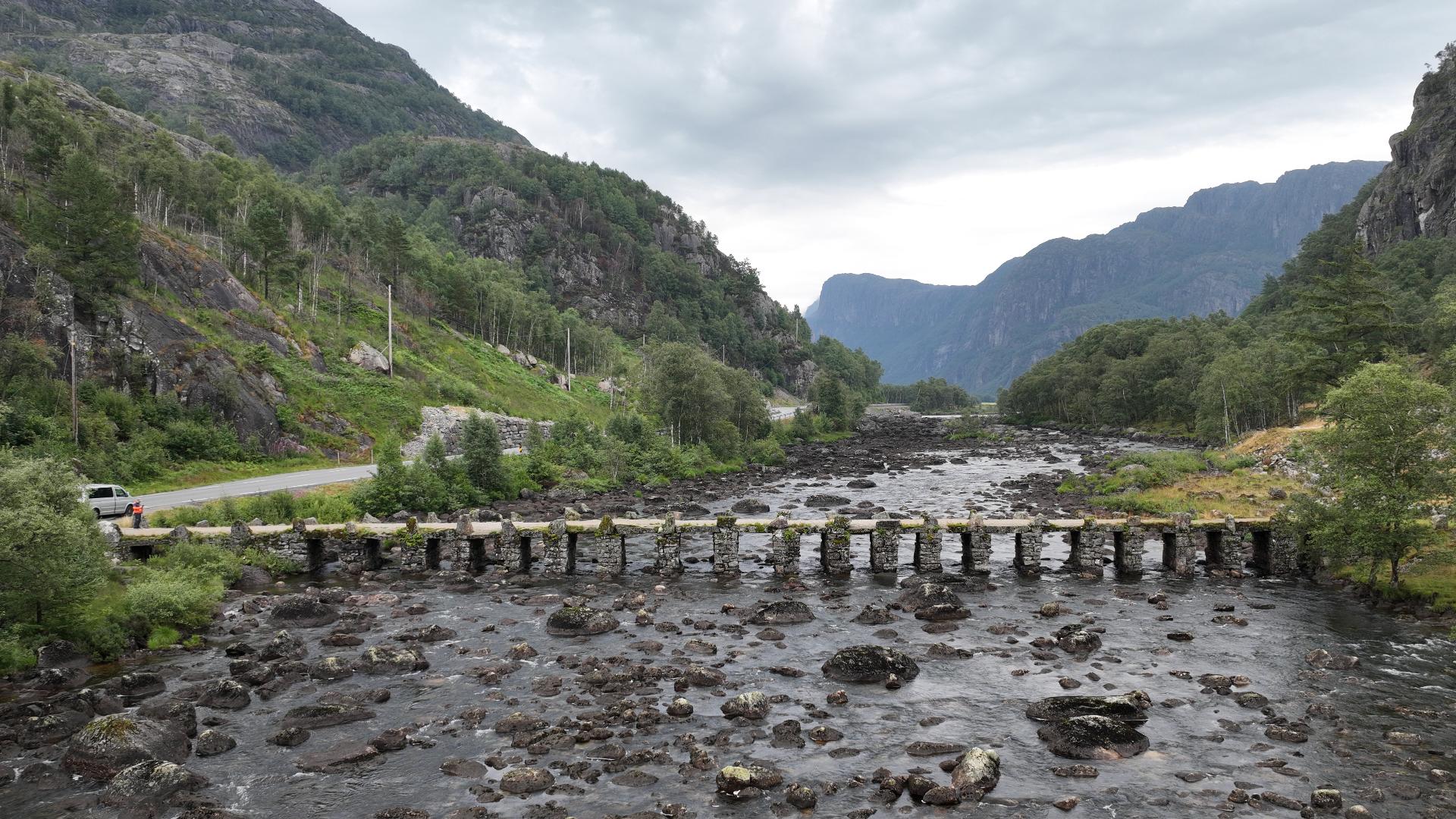
The rivers Sira and Kvina that feed this system are the same waterways that carved the valleys the railway follows through this part of Southern Norway.
The area around Sira is shaped by enormous hydropower infrastructure. The Sira-Kvina system, headquartered at nearby Tonstad, is one of Norway's largest hydroelectric operations. Tonstad Power Station alone produces 960 megawatts, making it Norway's single most productive power plant. Together the system's seven power plants generate 6,300 gigawatt-hours per year, roughly 5% of Norway's total electricity, drawn from a catchment area of 2,700 square kilometres spanning three counties.
The rivers Sira and Kvina that feed this system are the same waterways that carved the valleys the railway follows through this part of Southern Norway.