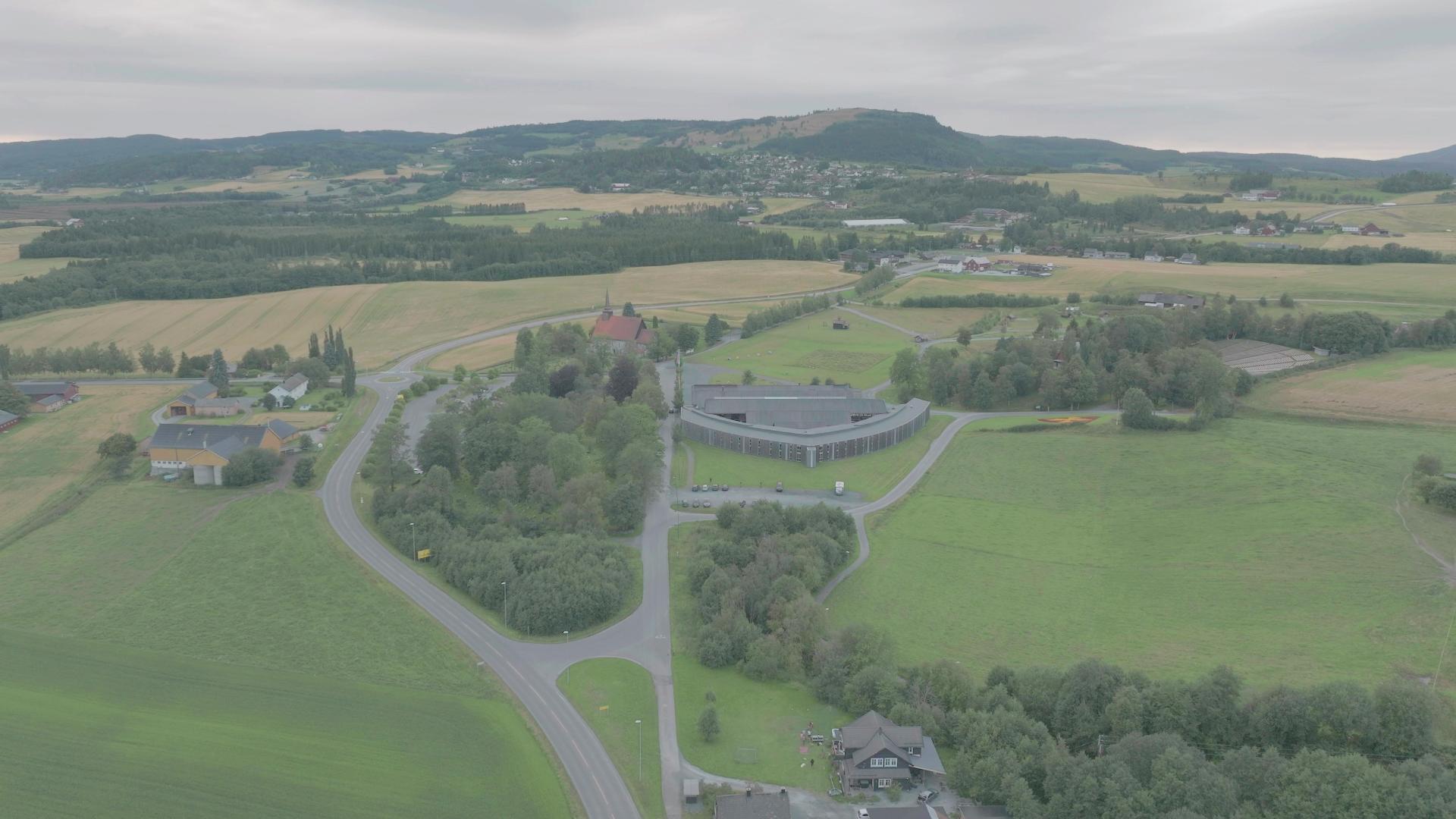
In the hills east of Levanger, the stone walls of Norway's most northerly Cistercian monastery still stand among the fields. Munkeby kloster was founded sometime between 1150 and 1180 by English monks, making it one of the earliest monastic settlements in central Norway.
The monastery's active life was short. When a new Cistercian house was established at Tautra in the Trondheimsfjorden around 1207, Munkeby was likely abandoned. But the stone church survived. It served as a parish church from 1475 until 1589, long after the monks had gone. Today only the church walls remain visible, managed by Fortidsminneforeningen, Norway's heritage preservation society.
In 2009, the story came full circle. Cistercian monks from the Abbey of Cîteaux in France, the very motherhouse of the entire Cistercian order, re-established a small monastic community on the site. The monks produce Munkeby cheese, a semi-hard variety that has won a following across Norway. So after 800 years, there are once again monks at Munkeby.
The monastery's active life was short. When a new Cistercian house was established at Tautra in the Trondheimsfjorden around 1207, Munkeby was likely abandoned. But the stone church survived. It served as a parish church from 1475 until 1589, long after the monks had gone. Today only the church walls remain visible, managed by Fortidsminneforeningen, Norway's heritage preservation society.
In 2009, the story came full circle. Cistercian monks from the Abbey of Cîteaux in France, the very motherhouse of the entire Cistercian order, re-established a small monastic community on the site. The monks produce Munkeby cheese, a semi-hard variety that has won a following across Norway. So after 800 years, there are once again monks at Munkeby.