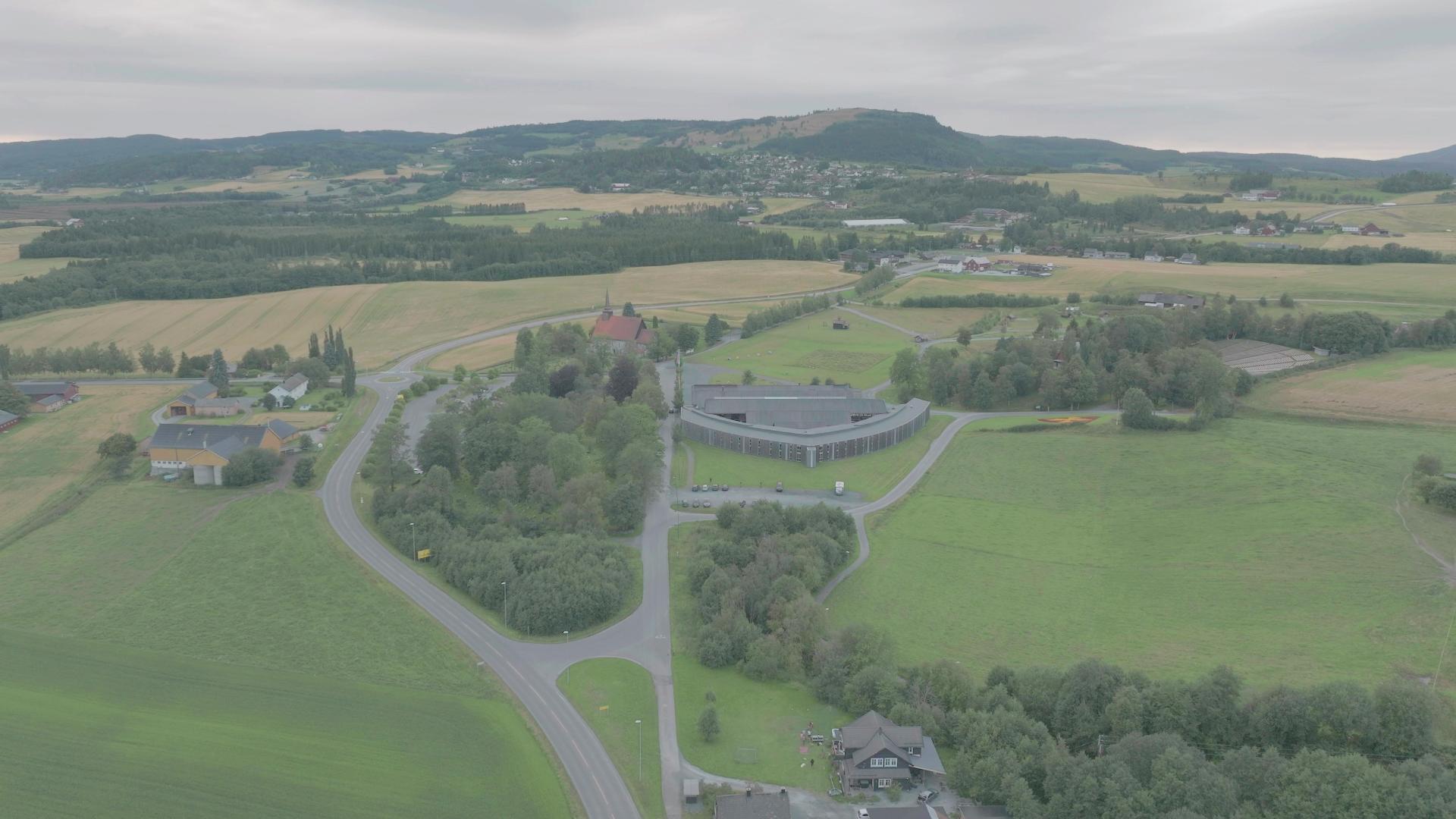
If the road here looks oddly new and temporary, there is a reason. On 30 August 2025, a massive quick clay landslide tore through the landscape at Nesvatnet near Ronglan, swallowing the E6 highway, the older parallel road, and a section of the Nordlandsbanen railway in one go. Norway's main north-south corridor was severed, and a Danish construction worker lost his life.
For over two months, northern Norway was effectively cut off by road. Detours ran either via Fosen on county road 755 or through Sweden on the E14. The closure sparked a heated public debate: local contractors argued they could have a bypass road built in about a week, but safety assessments and geotechnical drilling to find stable ground took weeks before construction could even begin. Work finally started on 9 October, and the temporary 1.2-kilometre bypass opened on 8 November, built by local firm Letnes Entreprenør at a cost of 50 to 70 million kroner.
The railway took even longer. The section between Åsen and Levanger reopened only in June 2026, nearly ten months after the slide. Investigations later revealed that three companies were suspected of having triggered the landslide through construction work in the sensitive clay.
Events like this are unfortunately not uncommon in Norway. Quick clay, steep terrain, and heavy rainfall make landslides a regular hazard, and roads and railways are closed by slides every year somewhere in the country. The same geology caused the Verdalsraset in 1893, just 25 kilometres up the valley, when 55 million cubic metres of clay collapsed and killed 116 people. The marine clays deposited after the last ice age look solid but can liquefy without warning when disturbed.
For over two months, northern Norway was effectively cut off by road. Detours ran either via Fosen on county road 755 or through Sweden on the E14. The closure sparked a heated public debate: local contractors argued they could have a bypass road built in about a week, but safety assessments and geotechnical drilling to find stable ground took weeks before construction could even begin. Work finally started on 9 October, and the temporary 1.2-kilometre bypass opened on 8 November, built by local firm Letnes Entreprenør at a cost of 50 to 70 million kroner.
The railway took even longer. The section between Åsen and Levanger reopened only in June 2026, nearly ten months after the slide. Investigations later revealed that three companies were suspected of having triggered the landslide through construction work in the sensitive clay.
Events like this are unfortunately not uncommon in Norway. Quick clay, steep terrain, and heavy rainfall make landslides a regular hazard, and roads and railways are closed by slides every year somewhere in the country. The same geology caused the Verdalsraset in 1893, just 25 kilometres up the valley, when 55 million cubic metres of clay collapsed and killed 116 people. The marine clays deposited after the last ice age look solid but can liquefy without warning when disturbed.