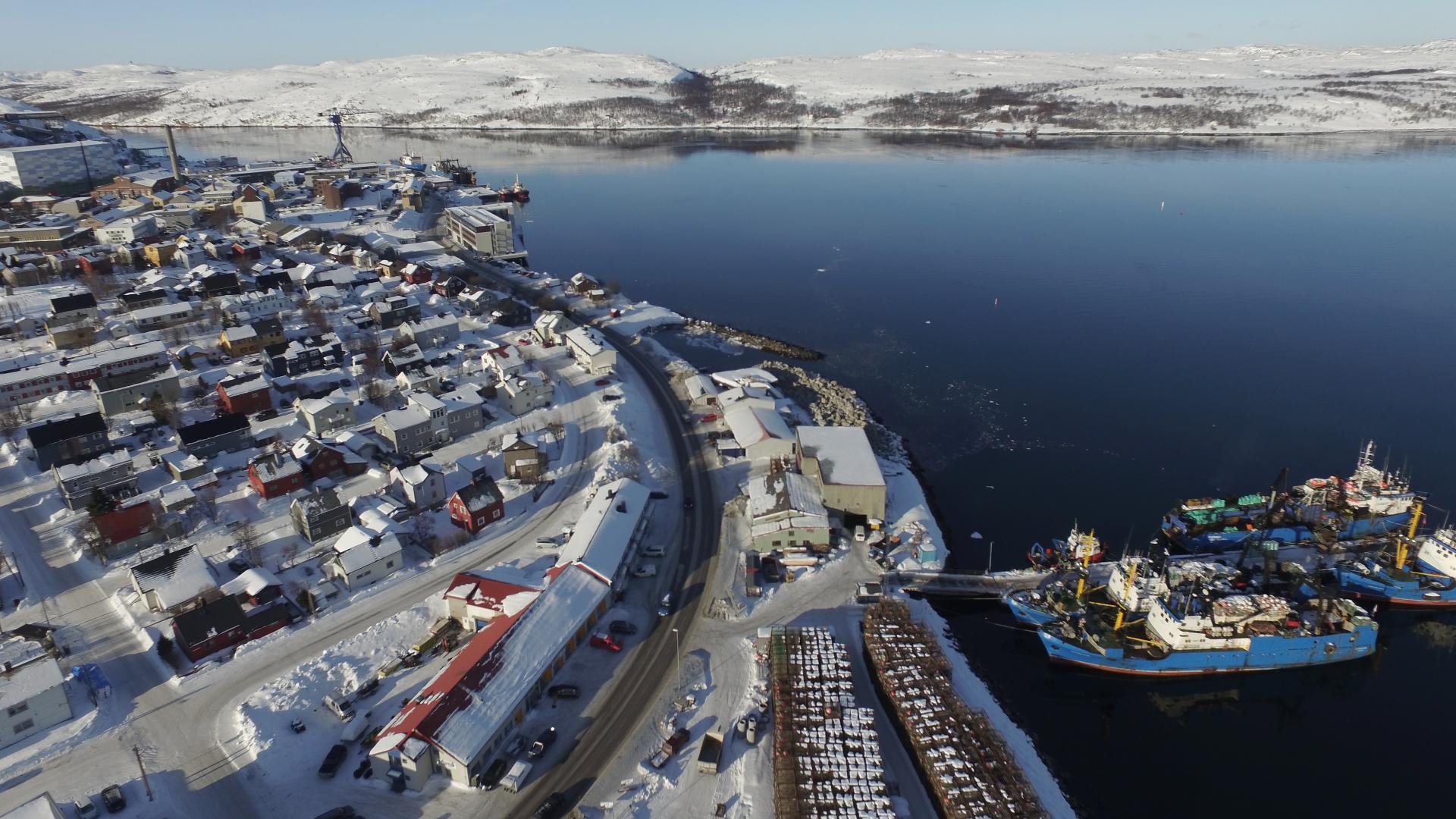
Kirkenes sits where Norway meets Russia, just 15 kilometres from the border and further east than Istanbul, Helsinki, and St. Petersburg. It is the turnaround point for the Hurtigruten coastal voyage and the end of the line for one of the world's great shipping routes.
During World War II, Kirkenes was bombed 328 times by Soviet forces, second only to Malta as the most bombed place in the war. The population survived largely underground, sheltering in the Andersgrotta bomb shelter, which is now open for guided tours. The town was liberated by the Red Army in October 1944, making it the only place in Norway freed by Soviet troops, then promptly destroyed by the retreating Germans under the scorched earth policy.
The town rebuilt itself around mining, fishing, and its unique border position. Road signs appear in Norwegian, Sami, and Finnish, reflecting the trilingual heritage of the region. During the Cold War, the border was one of NATO's most sensitive points. Today, the relationship with Russia defines the town's character: Russian grocery shoppers were once a common sight before sanctions tightened, and the Barents cooperation fostered cross-border cultural exchange for decades.
King crab is the town's most famous attraction. These Pacific invaders migrated west from Russian waters in the 1960s, and Norwegian fishermen now catch them aggressively to protect native marine ecosystems. King crab safaris offer an all-you-can-eat feast of the freshest crab you will ever taste, though the experience is more staged demonstration than real fishing expedition. The crabs are pre-staged in pots, and tourists no longer haul the traps themselves, but the meal is unforgettable. Skip breakfast.
Other experiences include the Snowhotel 365, a year-round ice hotel, Russian border excursions, and winter activities ranging from dog sledding to snowmobile safaris.
During World War II, Kirkenes was bombed 328 times by Soviet forces, second only to Malta as the most bombed place in the war. The population survived largely underground, sheltering in the Andersgrotta bomb shelter, which is now open for guided tours. The town was liberated by the Red Army in October 1944, making it the only place in Norway freed by Soviet troops, then promptly destroyed by the retreating Germans under the scorched earth policy.
The town rebuilt itself around mining, fishing, and its unique border position. Road signs appear in Norwegian, Sami, and Finnish, reflecting the trilingual heritage of the region. During the Cold War, the border was one of NATO's most sensitive points. Today, the relationship with Russia defines the town's character: Russian grocery shoppers were once a common sight before sanctions tightened, and the Barents cooperation fostered cross-border cultural exchange for decades.
King crab is the town's most famous attraction. These Pacific invaders migrated west from Russian waters in the 1960s, and Norwegian fishermen now catch them aggressively to protect native marine ecosystems. King crab safaris offer an all-you-can-eat feast of the freshest crab you will ever taste, though the experience is more staged demonstration than real fishing expedition. The crabs are pre-staged in pots, and tourists no longer haul the traps themselves, but the meal is unforgettable. Skip breakfast.
Other experiences include the Snowhotel 365, a year-round ice hotel, Russian border excursions, and winter activities ranging from dog sledding to snowmobile safaris.