Difficult
In 1899, the physicist Kristian Birkeland built the world's first permanent northern lights observatory on the 904-metre summit of Haldde, a sacred Sami mountain above Alta. Birkeland had visited in 1897 and recognised that the altitude, clear Arctic skies, and distance from any artificial light made this the ideal place to study the aurora. The Norwegian Parliament funded observatories on both Haldde and nearby Talviktoppen.
The research conducted here between 1899 and 1926 was groundbreaking. Birkeland's systematic observations laid the foundation for understanding how solar wind interacts with Earth's magnetic field to create the northern lights. His work is considered among the most important contributions to geophysics in Norwegian history, and his face appeared on the 200-kroner banknote until 2017.
The observatory buildings still stand on the summit. One has been converted into an unmanned DNT cabin with six beds, open year-round. Getting there is the challenge: the hike from the valley floor is steep and roughly 10 kilometres, gaining over 800 metres in elevation. In winter, guided snowmobile expeditions offer an alternative route to the top, combining the history with dramatic Arctic scenery.
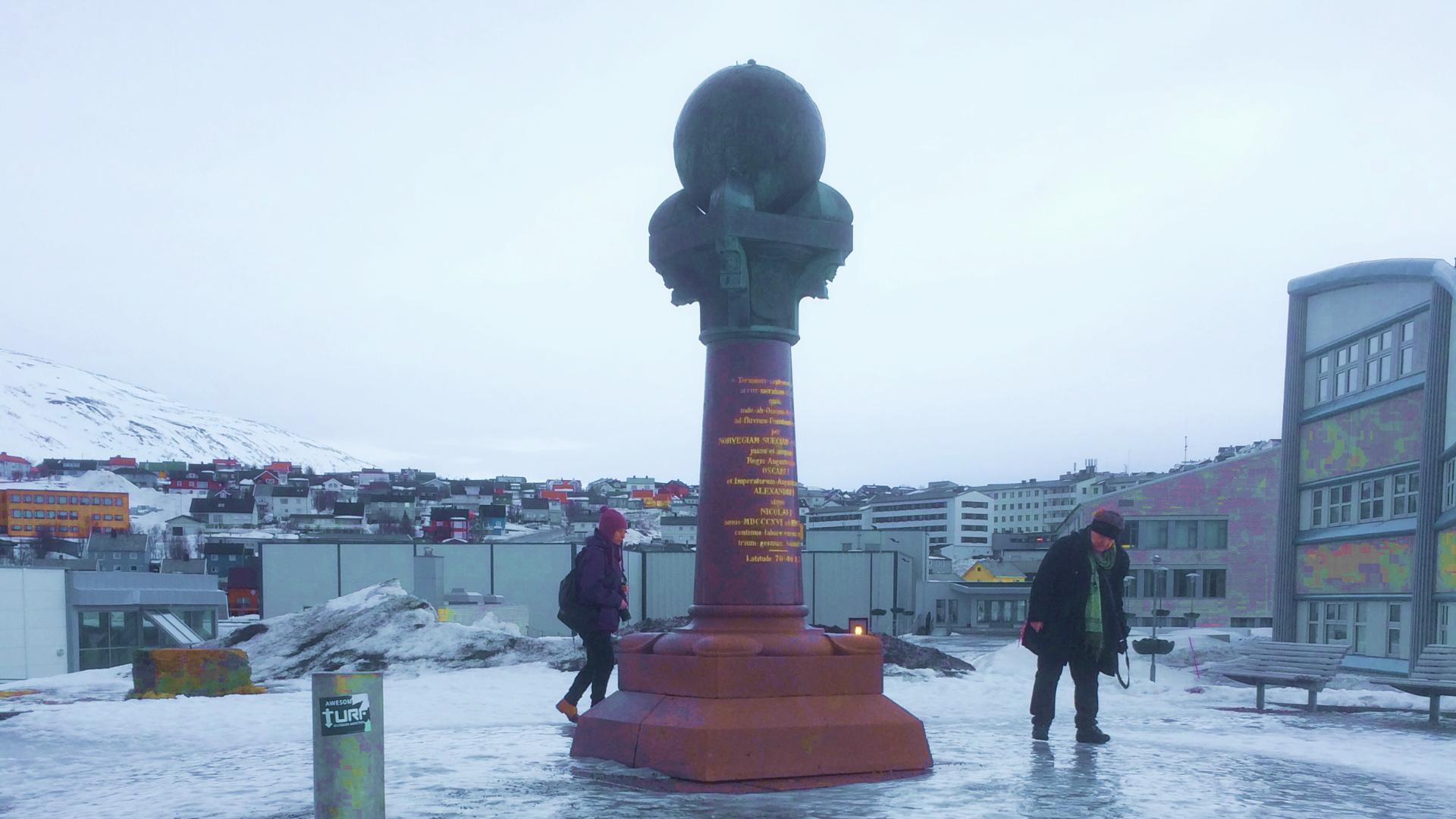
Haldde also connects to the Struve Geodetic Arc network. The mountain was one of the sightline stations used by surveyors triangulating from Lille-Raipas, visible across the valley. Between the Struve measurements, the northern lights research, and the Sami reverence for the mountain, Haldde carries more scientific and cultural weight per square metre than almost anywhere in Finnmark.
The research conducted here between 1899 and 1926 was groundbreaking. Birkeland's systematic observations laid the foundation for understanding how solar wind interacts with Earth's magnetic field to create the northern lights. His work is considered among the most important contributions to geophysics in Norwegian history, and his face appeared on the 200-kroner banknote until 2017.
The observatory buildings still stand on the summit. One has been converted into an unmanned DNT cabin with six beds, open year-round. Getting there is the challenge: the hike from the valley floor is steep and roughly 10 kilometres, gaining over 800 metres in elevation. In winter, guided snowmobile expeditions offer an alternative route to the top, combining the history with dramatic Arctic scenery.
Haldde also connects to the Struve Geodetic Arc network. The mountain was one of the sightline stations used by surveyors triangulating from Lille-Raipas, visible across the valley. Between the Struve measurements, the northern lights research, and the Sami reverence for the mountain, Haldde carries more scientific and cultural weight per square metre than almost anywhere in Finnmark.