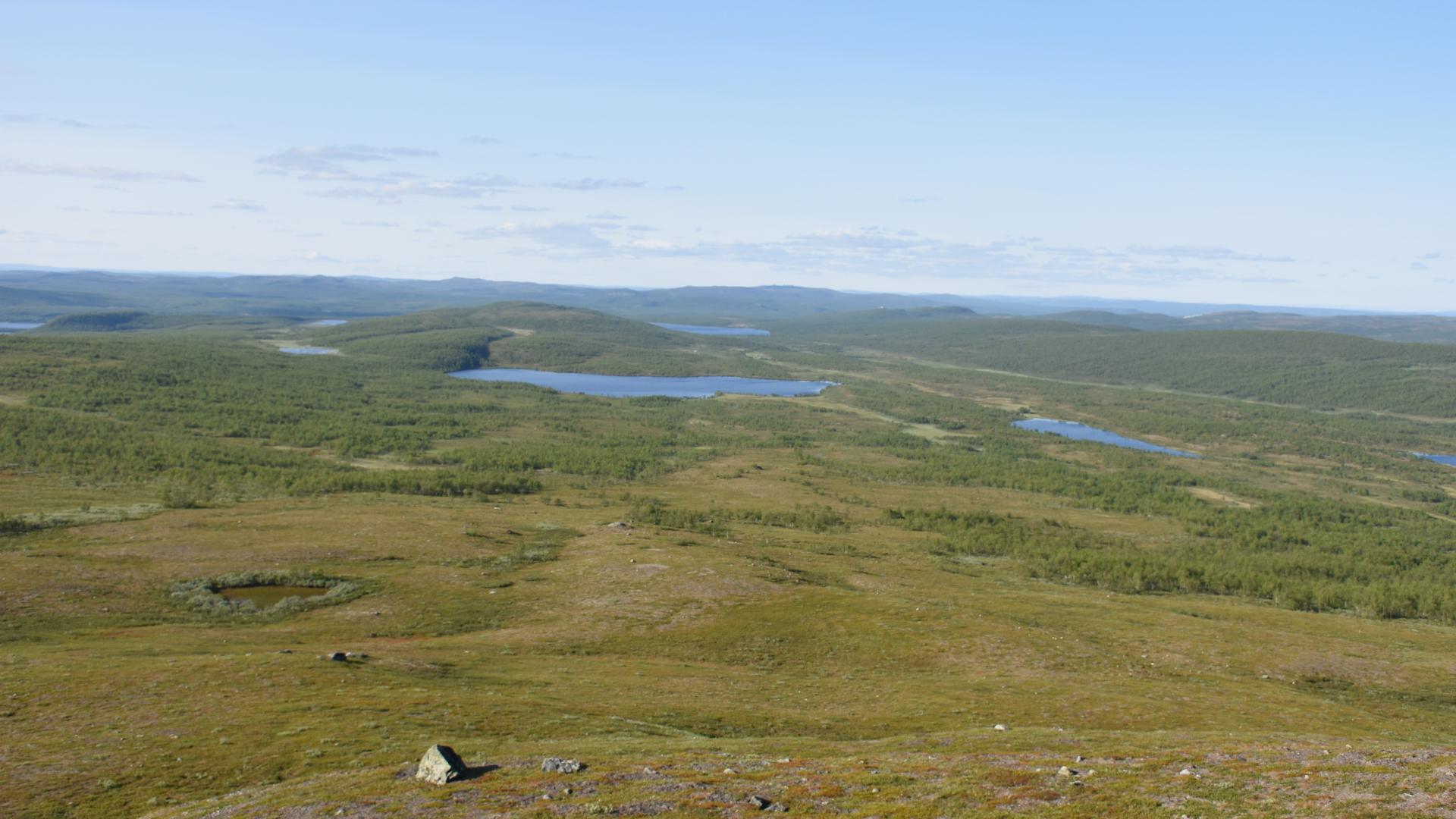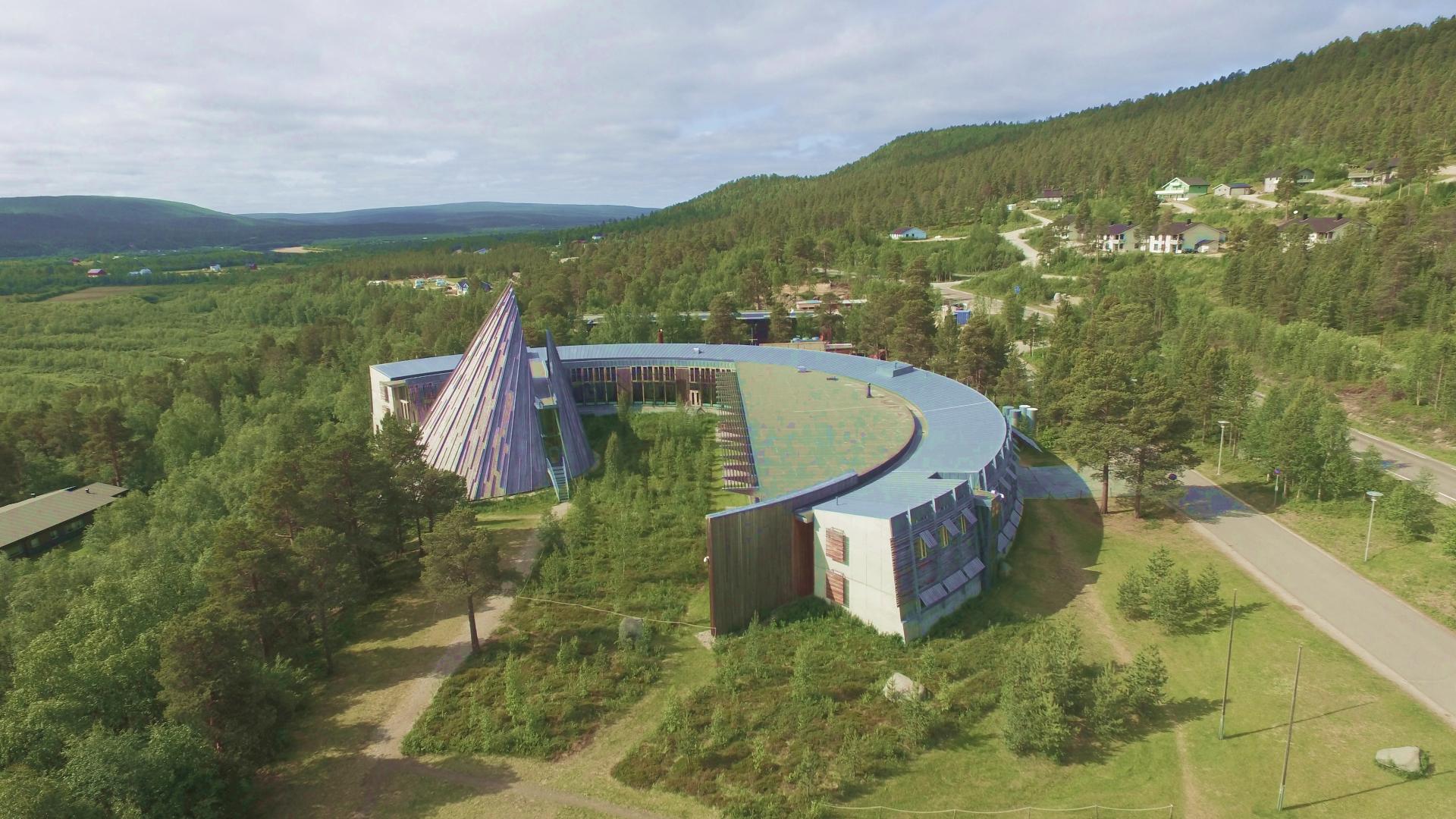
In 1973, a discovery was made at Jiepmaluokta, "bay of seals" in Northern Sami, that rewrote our understanding of Arctic prehistory. You will also see the name Hjemmeluft, which does not actually mean anything in Norwegian; it was simply taken from the Sami name and reshaped to sound Norwegian, a common pattern across Finnmark. More than 6,000 rock carvings have since been found across five sites around the Altafjorden. Rock carvings exist all over Norway, but nowhere else are so many concentrated in one place. UNESCO inscribed the site in 1985, Norway's only prehistoric World Heritage Site, and the museum won European Museum of the Year in 1993.
Compared to the famous cave paintings of southern and central Europe, which can be 30,000 years old or more, the Alta carvings are relatively young. They span roughly 5,000 years, from about 4200 BC, and the most recent ones date to around the time of the Roman Empire. What makes the site extraordinary is that you can literally walk through time: as Scandinavia rose out of the sea after the last Ice Age, each generation carved at the water's edge. The oldest carvings now sit highest on the hillside, the youngest near the bottom. The land itself became the timeline.
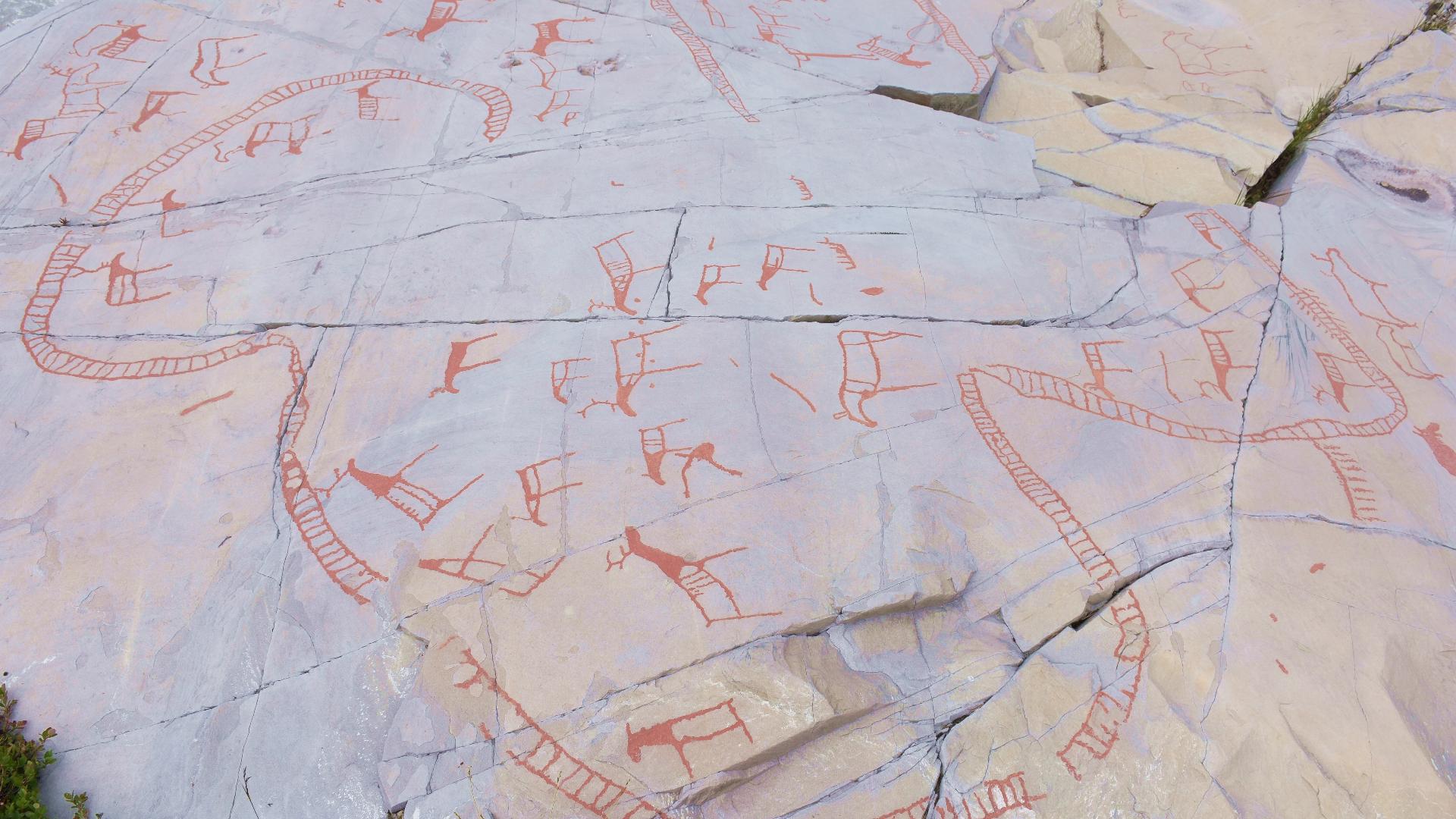
The imagery reveals a sophisticated culture. Reindeer dominate, shown in herds being both hunted and corralled behind fences, evidence of large cooperative hunts. Boats evolve from small fishing craft to vessels carrying 30 people with elaborate animal-head prows, hinting at long-distance coastal voyaging. But the most striking figures are the bears. At the Kåfjord site, over 350 bear tracks are carved into the rock, many running vertically through the panels while other animal tracks run horizontally. Researchers believe this reflects a bear cult: the vertical tracks suggest bears could travel between different layers of the world, connecting the living and the dead. Bear depictions suddenly cease around 1700 BC, pointing to a dramatic shift in belief systems. Figures wearing distinctive headgear appear in ritual processions and dances, likely shamans mediating between the human and spirit worlds.
The carvings are also tangled up in one of Norway's most important political events. Six years after their discovery, the government announced plans to dam the Alta-Kautokeino river. What followed, from 1979 to 1981, was Norway's largest act of civil disobedience: Sami activists hunger-struck outside parliament while over a thousand protesters chained themselves to the construction site at Stilla. At one point, ten percent of all Norwegian police were deployed to Alta. The dam was ultimately built, but the movement led directly to the creation of the Sámediggi, the Sami Parliament, in 1989.
A wooden boardwalk winds through the site along two routes: a short 1.2-kilometre loop and the full 3-kilometre trail. The carvings were all discovered unpainted, but some have since been filled with red pigment to make them stand out. Not all carvings are painted, and the untouched ones can be quite difficult to spot, so take your time and look carefully. The outdoor rock art is only accessible during the snow-free season, roughly May to October, though the indoor exhibitions are open year-round.
Compared to the famous cave paintings of southern and central Europe, which can be 30,000 years old or more, the Alta carvings are relatively young. They span roughly 5,000 years, from about 4200 BC, and the most recent ones date to around the time of the Roman Empire. What makes the site extraordinary is that you can literally walk through time: as Scandinavia rose out of the sea after the last Ice Age, each generation carved at the water's edge. The oldest carvings now sit highest on the hillside, the youngest near the bottom. The land itself became the timeline.
The imagery reveals a sophisticated culture. Reindeer dominate, shown in herds being both hunted and corralled behind fences, evidence of large cooperative hunts. Boats evolve from small fishing craft to vessels carrying 30 people with elaborate animal-head prows, hinting at long-distance coastal voyaging. But the most striking figures are the bears. At the Kåfjord site, over 350 bear tracks are carved into the rock, many running vertically through the panels while other animal tracks run horizontally. Researchers believe this reflects a bear cult: the vertical tracks suggest bears could travel between different layers of the world, connecting the living and the dead. Bear depictions suddenly cease around 1700 BC, pointing to a dramatic shift in belief systems. Figures wearing distinctive headgear appear in ritual processions and dances, likely shamans mediating between the human and spirit worlds.
The carvings are also tangled up in one of Norway's most important political events. Six years after their discovery, the government announced plans to dam the Alta-Kautokeino river. What followed, from 1979 to 1981, was Norway's largest act of civil disobedience: Sami activists hunger-struck outside parliament while over a thousand protesters chained themselves to the construction site at Stilla. At one point, ten percent of all Norwegian police were deployed to Alta. The dam was ultimately built, but the movement led directly to the creation of the Sámediggi, the Sami Parliament, in 1989.
A wooden boardwalk winds through the site along two routes: a short 1.2-kilometre loop and the full 3-kilometre trail. The carvings were all discovered unpainted, but some have since been filled with red pigment to make them stand out. Not all carvings are painted, and the untouched ones can be quite difficult to spot, so take your time and look carefully. The outdoor rock art is only accessible during the snow-free season, roughly May to October, though the indoor exhibitions are open year-round.