On a hilltop at Vangsnes, a colossal bronze figure gazes out over the Sognefjord. The statue of Fridtjov den frøkne, the bold Viking hero, stands 10.5 metres tall on a 12-metre platform, reaching a total height of 22.5 metres. It is one of the largest statues in all of Scandinavia.
The statue was a gift from German Kaiser Wilhelm II, who had spent twenty summers cruising the Norwegian fjords aboard his yacht. He became fascinated with the medieval Icelandic saga of Fridtjof, whose father Torstein Vikingsson supposedly lived at Framnes, today's Vangsnes. The saga tells how Fridtjof fell in love with Ingebjørg, the daughter of King Bele, but was rejected as unworthy. Exiled, he eventually returned, served the aging King Ring, and after Ring's death inherited both the kingdom and the queen. The Kaiser commissioned the Berlin sculptor Max Unger to create the statue, which was transported to Vangsnes in 15 separate pieces and erected by 100 German marines. It was unveiled on 31 July 1913, just a year before the outbreak of the First World War.
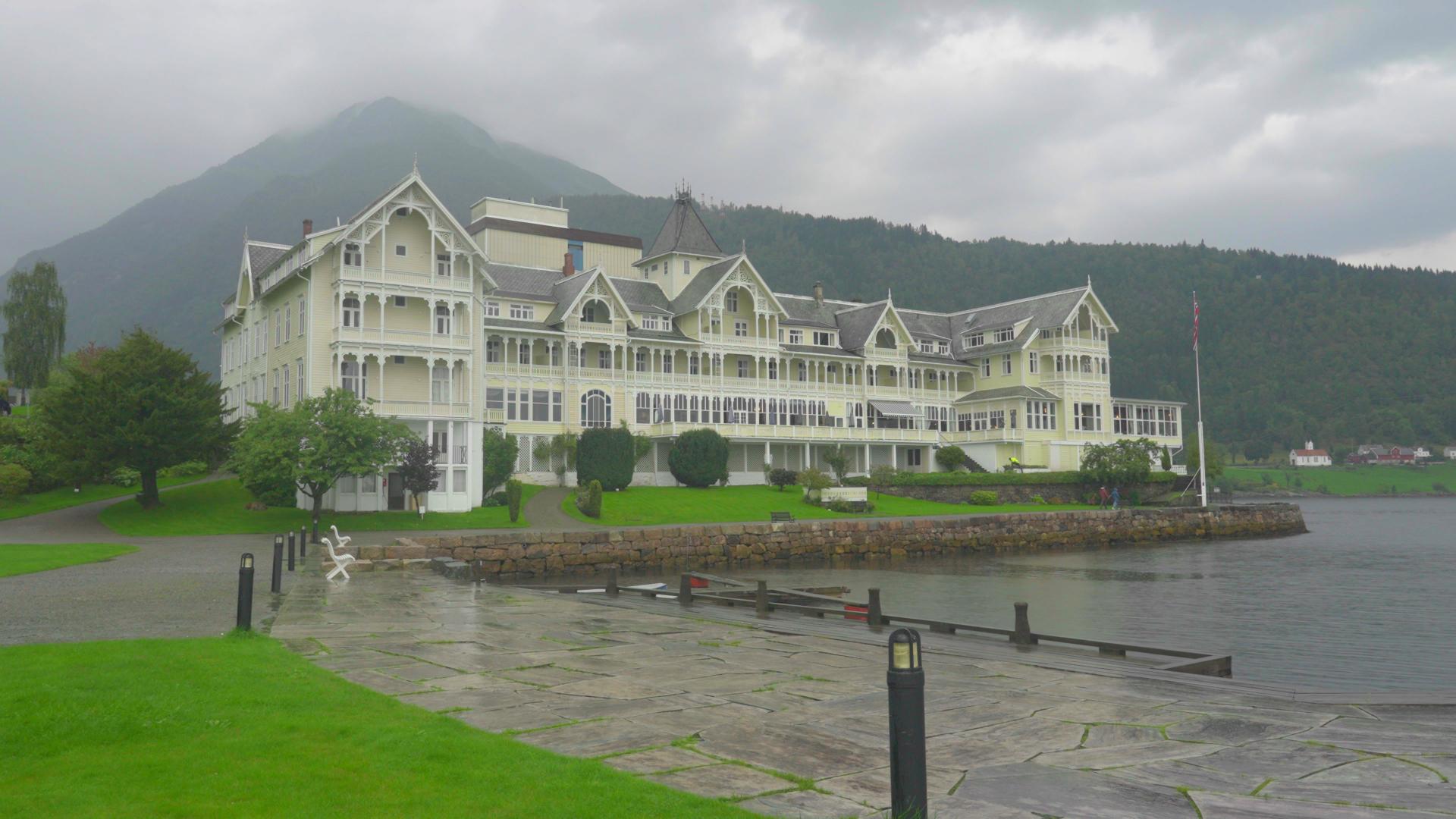
After both World Wars, there was public debate about tearing it down, given its German origins. But the statue survived, and today it stands as a curious reminder of a time when a German emperor expressed his love for Norway through a Viking legend. Across the fjord in Balestrand, a companion statue of King Bele stands on a burial mound, also commissioned by the Kaiser.
The statue was a gift from German Kaiser Wilhelm II, who had spent twenty summers cruising the Norwegian fjords aboard his yacht. He became fascinated with the medieval Icelandic saga of Fridtjof, whose father Torstein Vikingsson supposedly lived at Framnes, today's Vangsnes. The saga tells how Fridtjof fell in love with Ingebjørg, the daughter of King Bele, but was rejected as unworthy. Exiled, he eventually returned, served the aging King Ring, and after Ring's death inherited both the kingdom and the queen. The Kaiser commissioned the Berlin sculptor Max Unger to create the statue, which was transported to Vangsnes in 15 separate pieces and erected by 100 German marines. It was unveiled on 31 July 1913, just a year before the outbreak of the First World War.
After both World Wars, there was public debate about tearing it down, given its German origins. But the statue survived, and today it stands as a curious reminder of a time when a German emperor expressed his love for Norway through a Viking legend. Across the fjord in Balestrand, a companion statue of King Bele stands on a burial mound, also commissioned by the Kaiser.