Vistnestunet is the best-preserved farm environment from the late 1800s in Randaberg. The farmstead includes a traditional Jærhus, the characteristic house type of Jæren; a pole-construction barn built in 1847; a granite smokehouse from the early 1900s; and a Jæren-type windmill. The main farmhouse was built around 1875 by carpenter Tjerand Olsen Bø. The farm was donated to the local heritage museum in 1975 by the last private owner, Artur Vistnes, and is now managed by Jærmuseet. Norwegian spælsau sheep, chickens, and rabbits still live on the grounds.
A short walk from the farmstead lies Vistehola, also called Svarthola, one of Norway's most important Stone Age sites. The cave, roughly nine metres deep and five wide, was first settled around 6000 BC and used through the Migration Period around 500 AD. Excavations in 1907 and 1910 by Anton Wilhelm Brøgger uncovered remains of 36 bird species including the now-extinct great auk, 23 mammals, and 16 marine species. The most famous find is the Vistegutten, the Viste Boy: the best-preserved Stone Age human skeleton found in Norway, radiocarbon dated to roughly 6200 BC. The boy was about 14 to 15 years old and only 125 centimetres tall, with signs of premature skull suture fusion. Despite his small stature, his bones show powerful musculature. The skeleton is displayed at the Archaeological Museum in Stavanger; in 2023, a facial reconstruction was created by Swedish sculptor Oscar Nilsson.
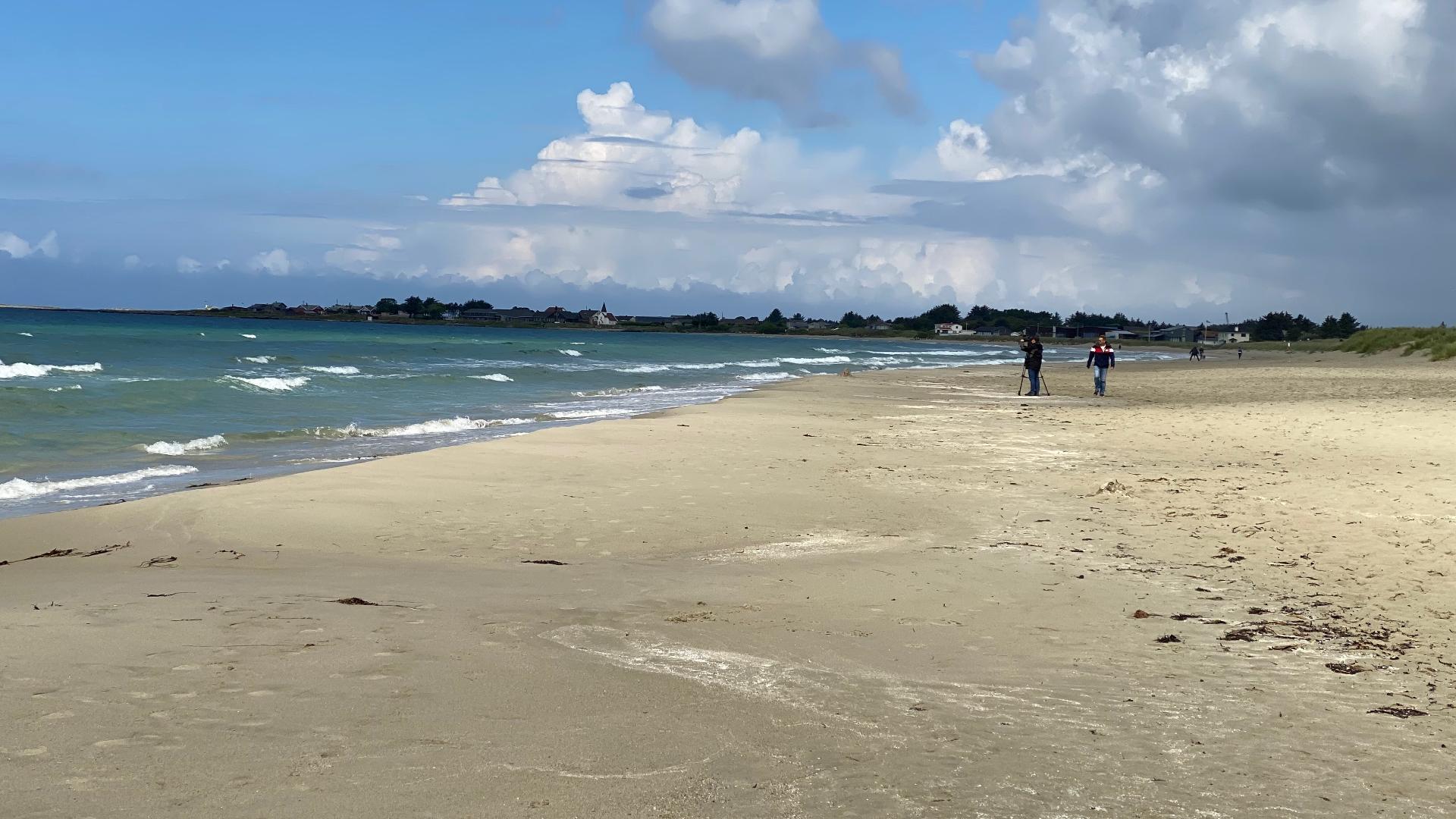
The headland of Vistneset between the farm and the sea offers walking trails, a day-trip cabin with panoramic views, well-preserved boathouses, and WWII fortifications. A statue of Randabergmannen, a Stone Age man, was erected in front of Randaberg Church in 1989 to commemorate the settlement.
A short walk from the farmstead lies Vistehola, also called Svarthola, one of Norway's most important Stone Age sites. The cave, roughly nine metres deep and five wide, was first settled around 6000 BC and used through the Migration Period around 500 AD. Excavations in 1907 and 1910 by Anton Wilhelm Brøgger uncovered remains of 36 bird species including the now-extinct great auk, 23 mammals, and 16 marine species. The most famous find is the Vistegutten, the Viste Boy: the best-preserved Stone Age human skeleton found in Norway, radiocarbon dated to roughly 6200 BC. The boy was about 14 to 15 years old and only 125 centimetres tall, with signs of premature skull suture fusion. Despite his small stature, his bones show powerful musculature. The skeleton is displayed at the Archaeological Museum in Stavanger; in 2023, a facial reconstruction was created by Swedish sculptor Oscar Nilsson.
The headland of Vistneset between the farm and the sea offers walking trails, a day-trip cabin with panoramic views, well-preserved boathouses, and WWII fortifications. A statue of Randabergmannen, a Stone Age man, was erected in front of Randaberg Church in 1989 to commemorate the settlement.