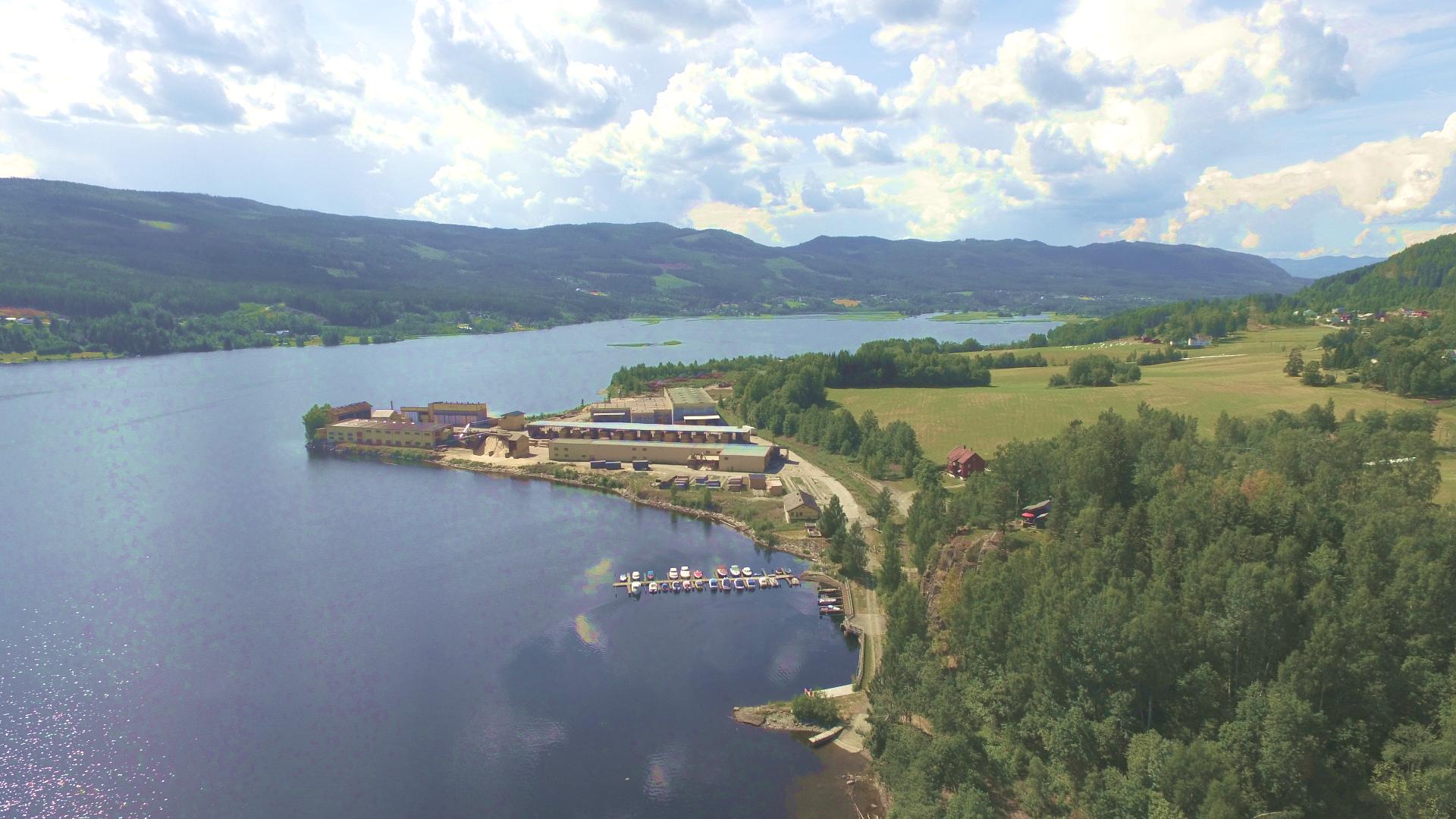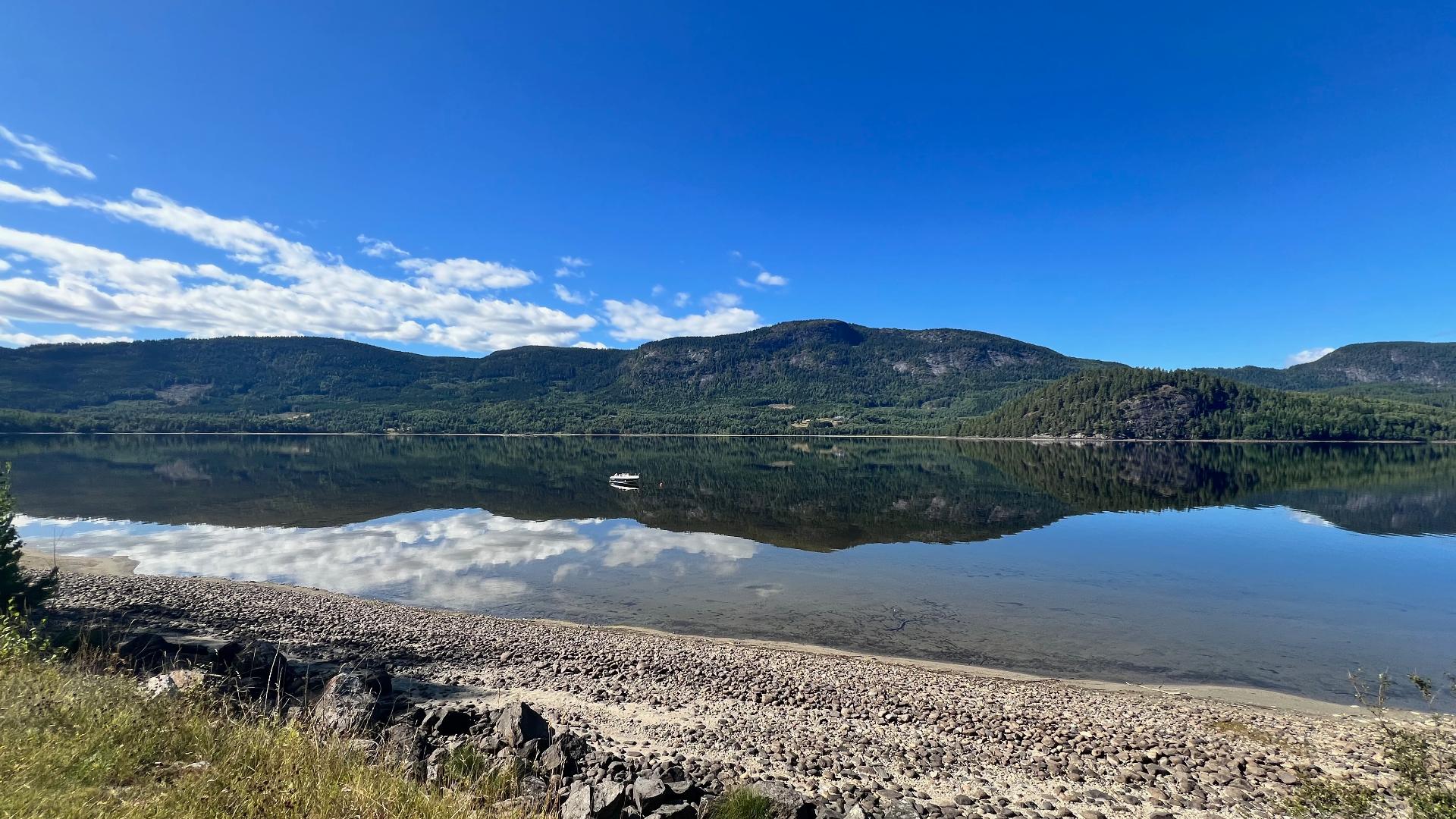
You're now approaching Lake Sperillen, one of Norway's larger inland lakes. It stretches 26 kilometres from north to south and covers about 37 square kilometres. At its deepest point, the water goes down 108 metres. It's actually the 33rd largest lake in the country.
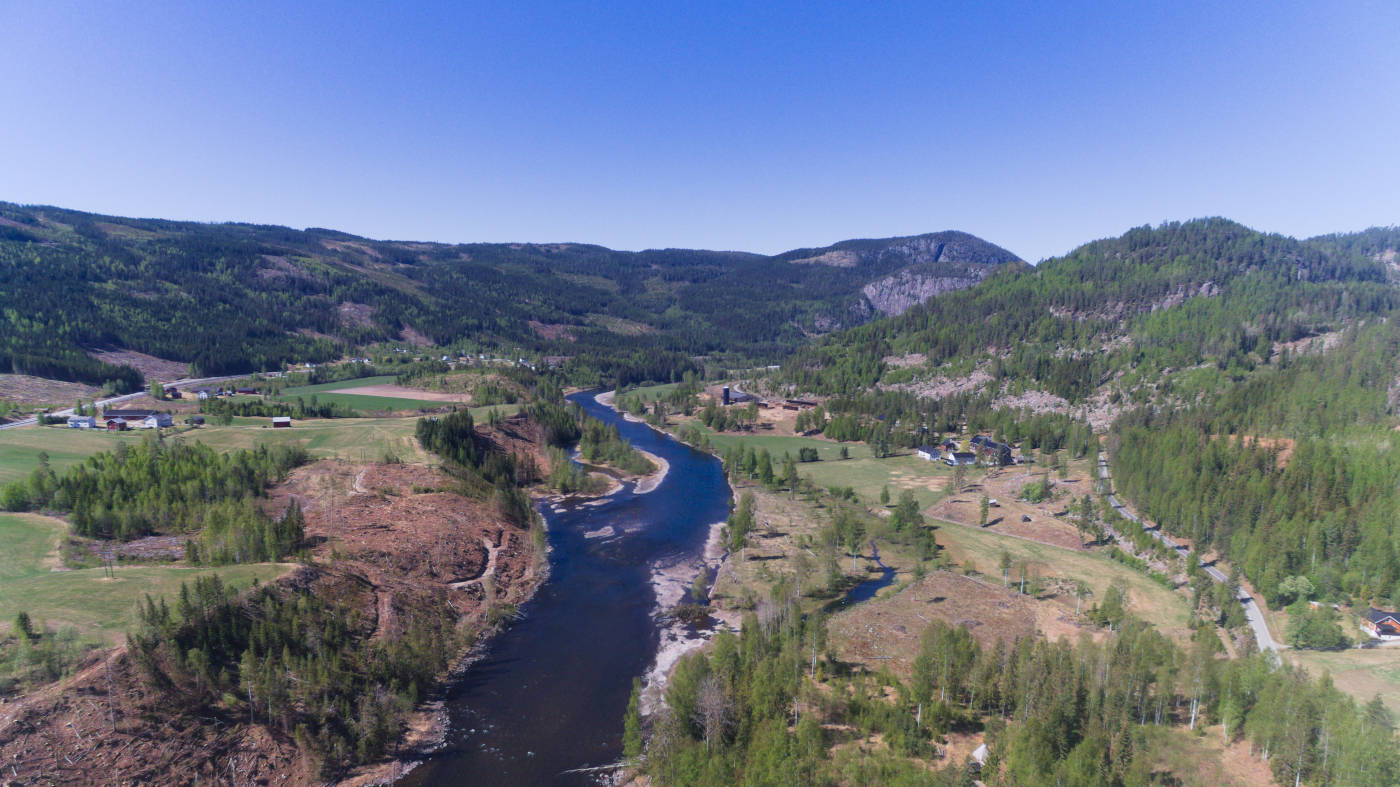
The lake sits in the Ådal valley at about 150 metres above sea level. Two rivers feed into it from the north: the Begna, which flows down from Begnadalen, and the Urula, coming from Hedalen. At the southern end near Ringmoen, there's a dam that controls the water level. The outflow becomes the Ådalselva river, which eventually joins with the Randselva at Hønefoss.
What makes Sperillen unusual is that it's one of the few Norwegian lakes that still has a commercial fishery. Most lakes here are just for sport fishing, but Sperillen has been commercially fished for generations. The lake is known for whitefish, Arctic char, and trout. If you want to fish here yourself, remember you'll need the correct fishing permit.
The lake also has an interesting transport history. Back in 1868, a steamship called DS Bægna started running ferry services from the southern end at Finstad all the way to Sørum in Sør-Aurdal at the northern end. This was the main way to move people and goods through the valley before proper roads were built. The steamship ran until 1929, when it was replaced by a motor vessel called DS Sperillen. The ferry service connected with the Sperillbanen railway we talked about earlier, which was built specifically to link the main rail network with the lake ferry.
On the western shore of the lake, you'll find Viker Church. This is actually the oldest preserved wooden church in the Ringerike area. It was built in the 1690s and consecrated in 1702. Before this church, there was a medieval stave church on the same site, first mentioned in records from 1462. When they built the new church, they moved the altar and pulpit from the old one. The altar dates back to the 1600s. Archaeological finds around the church show that people have lived here since the Stone Age, and there are several Iron Age burial mounds in the area.
Around the lake, you'll find several beaches and camping sites. The area is popular with locals during summer, but it doesn't get the tourist crowds you'd find at more famous lakes. It's a quieter part of Norway.