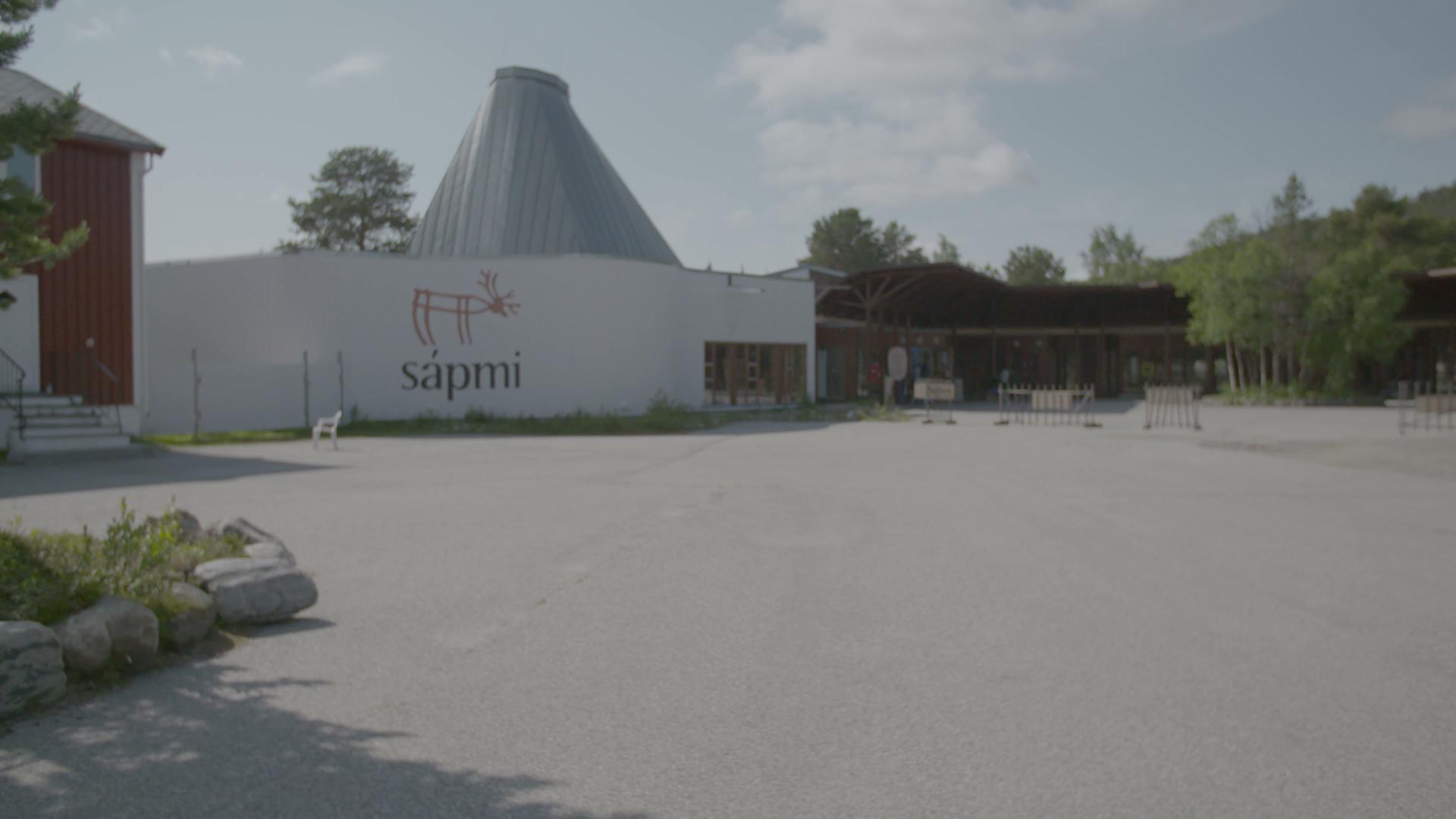
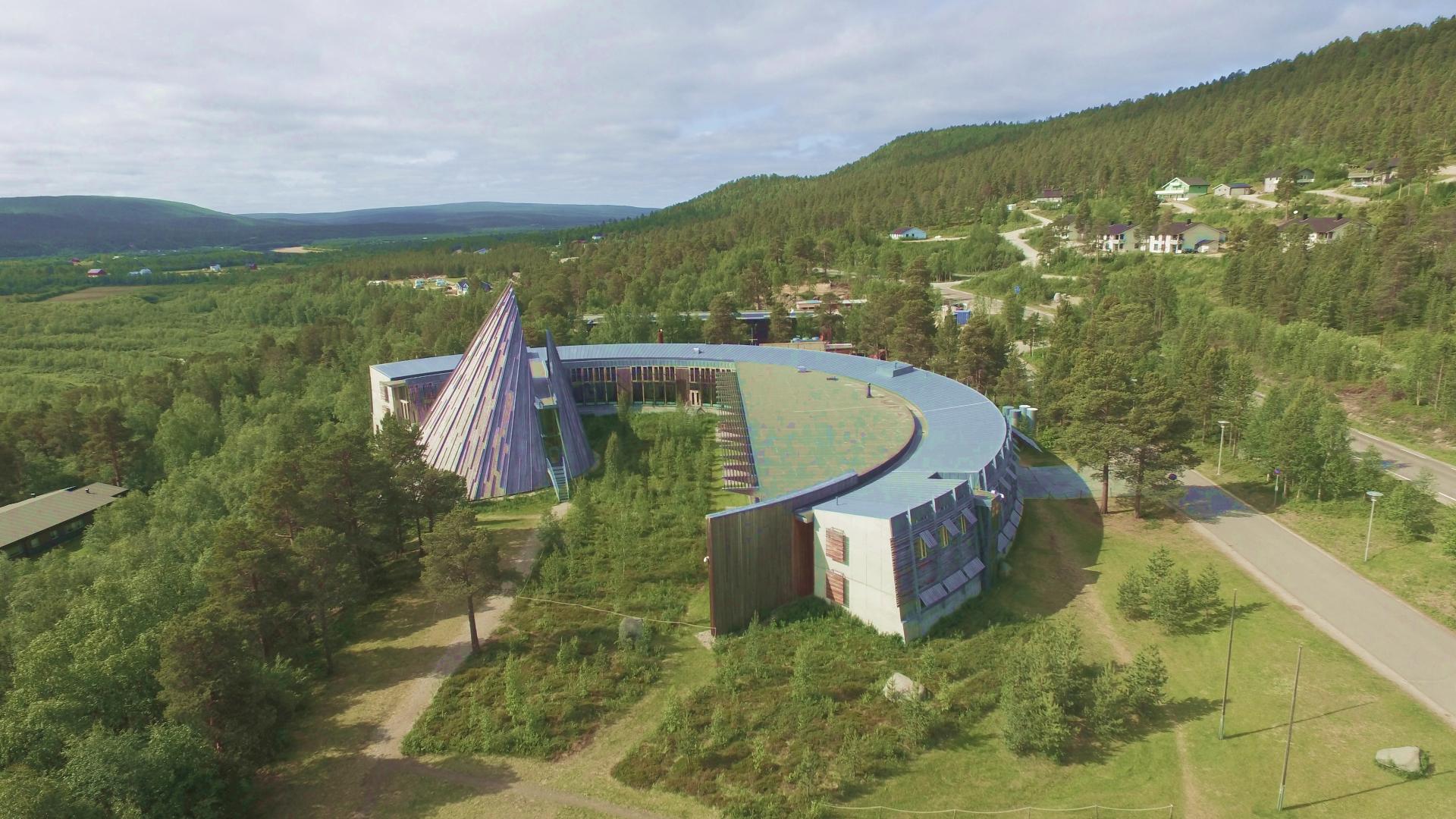
Nesseby, or Unjargga in Northern Sami and Uuniemi in Kven, is a small municipality on the inner Varangerfjord that represents the old Sami heartland of Varanger. While neighbouring Vardø and Vadsø were shaped by Norwegian and Finnish settlers, Nesseby remained predominantly Sami, and the landscape still carries the marks of centuries of reindeer herding and coastal Sami fishing culture.
The wooden parish church, designed by Christian Heinrich Grosch and completed in 1858, overlooks the Varangerfjord from a grassy knoll. It is one of the few old buildings in Finnmark to survive the German scorched earth retreat of 1944, though the exact circumstances of its survival are unclear. Inside, the prayer books are in Northern Sami, a reminder that this is not just a Norwegian church on Sami land but a Sami church in a Sami community.
The area around Nesseby holds some of the oldest archaeological sites on the Varangerfjord. Mortensnes, a few kilometres east along the E75 Varanger National Tourist Route, has evidence of 10,000 years of continuous human settlement, including 250 to 300 Sami graves and Stone Age tent rings. It is one of the most important Sami cultural landscapes in Norway and is freely accessible from a marked path along the shore.
The drive along the inner Varangerfjord through Nesseby is one of the quieter stretches of the E75, with views across the water to the Varanger peninsula and a sense of deep time that is hard to find elsewhere.
The wooden parish church, designed by Christian Heinrich Grosch and completed in 1858, overlooks the Varangerfjord from a grassy knoll. It is one of the few old buildings in Finnmark to survive the German scorched earth retreat of 1944, though the exact circumstances of its survival are unclear. Inside, the prayer books are in Northern Sami, a reminder that this is not just a Norwegian church on Sami land but a Sami church in a Sami community.
The area around Nesseby holds some of the oldest archaeological sites on the Varangerfjord. Mortensnes, a few kilometres east along the E75 Varanger National Tourist Route, has evidence of 10,000 years of continuous human settlement, including 250 to 300 Sami graves and Stone Age tent rings. It is one of the most important Sami cultural landscapes in Norway and is freely accessible from a marked path along the shore.
The drive along the inner Varangerfjord through Nesseby is one of the quieter stretches of the E75, with views across the water to the Varanger peninsula and a sense of deep time that is hard to find elsewhere.