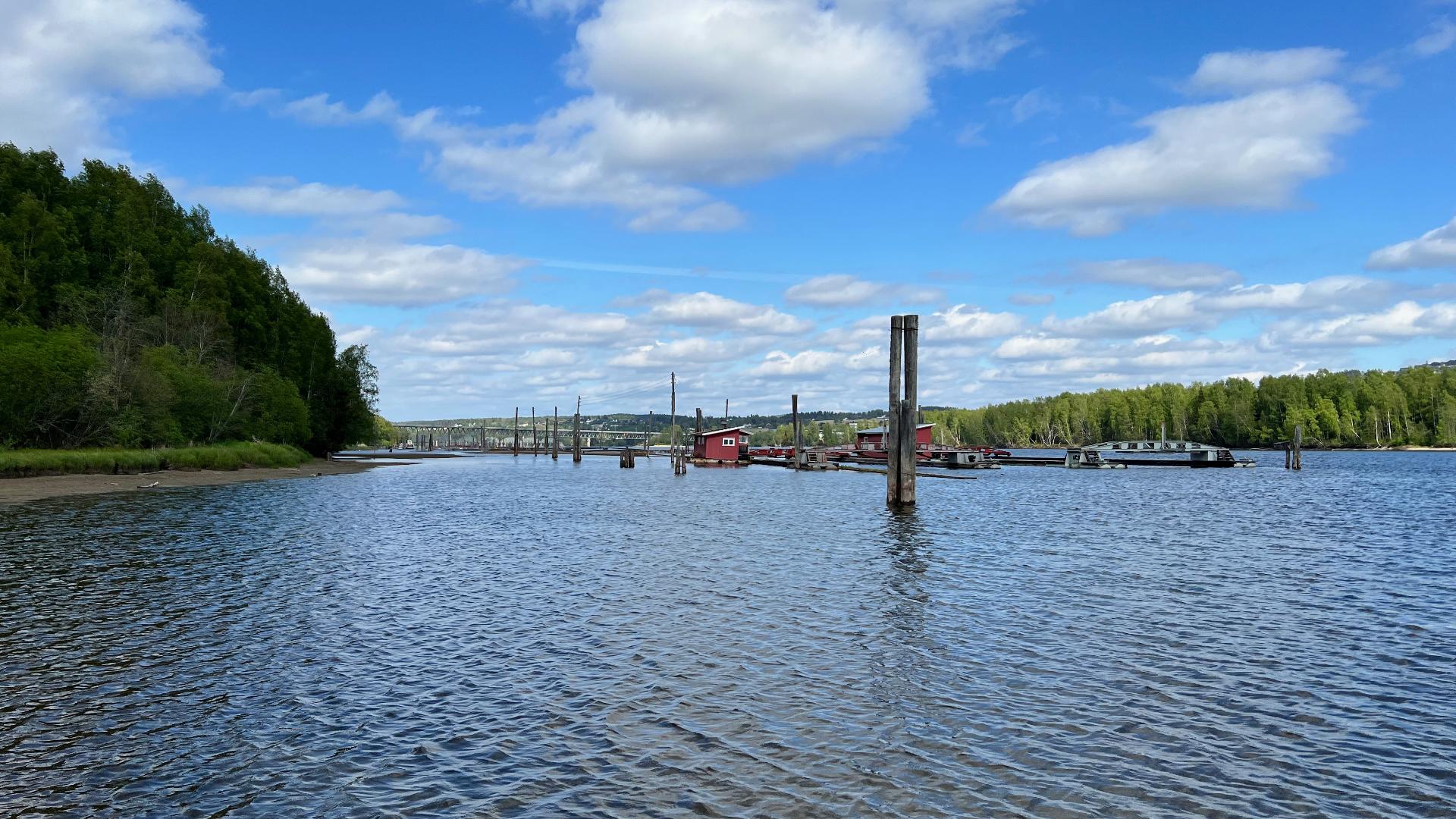
For over 130 years, the timber boom at Nes in Skiptvet sorted and directed logs floating down the Glomma. Built in 1853, the boom stretched across the wide, slow-flowing section of the river, catching logs and directing them to the right sawmills and buyers downstream. At its peak, around 300 men worked the boom, many of them local farmers earning extra income during the floating season.
The work was physical and dangerous: walking on wet timber, manoeuvring heavy logs with pike poles, working in all weather from spring thaw until the last logs came through in autumn. The boom closed in 1985, ending a tradition that had shaped the economy and culture of the Glomma valley for centuries.
The museum, opened in 1993, preserves the original buildings: the dining barrack where workers ate communal meals, the carpentry workshop with its smithy, the power station and sawmill. The setting beside the river is beautiful and peaceful, a contrast to the hard labour that once defined this spot. The museum is owned by Skiptvet municipality.
The work was physical and dangerous: walking on wet timber, manoeuvring heavy logs with pike poles, working in all weather from spring thaw until the last logs came through in autumn. The boom closed in 1985, ending a tradition that had shaped the economy and culture of the Glomma valley for centuries.
The museum, opened in 1993, preserves the original buildings: the dining barrack where workers ate communal meals, the carpentry workshop with its smithy, the power station and sawmill. The setting beside the river is beautiful and peaceful, a contrast to the hard labour that once defined this spot. The museum is owned by Skiptvet municipality.