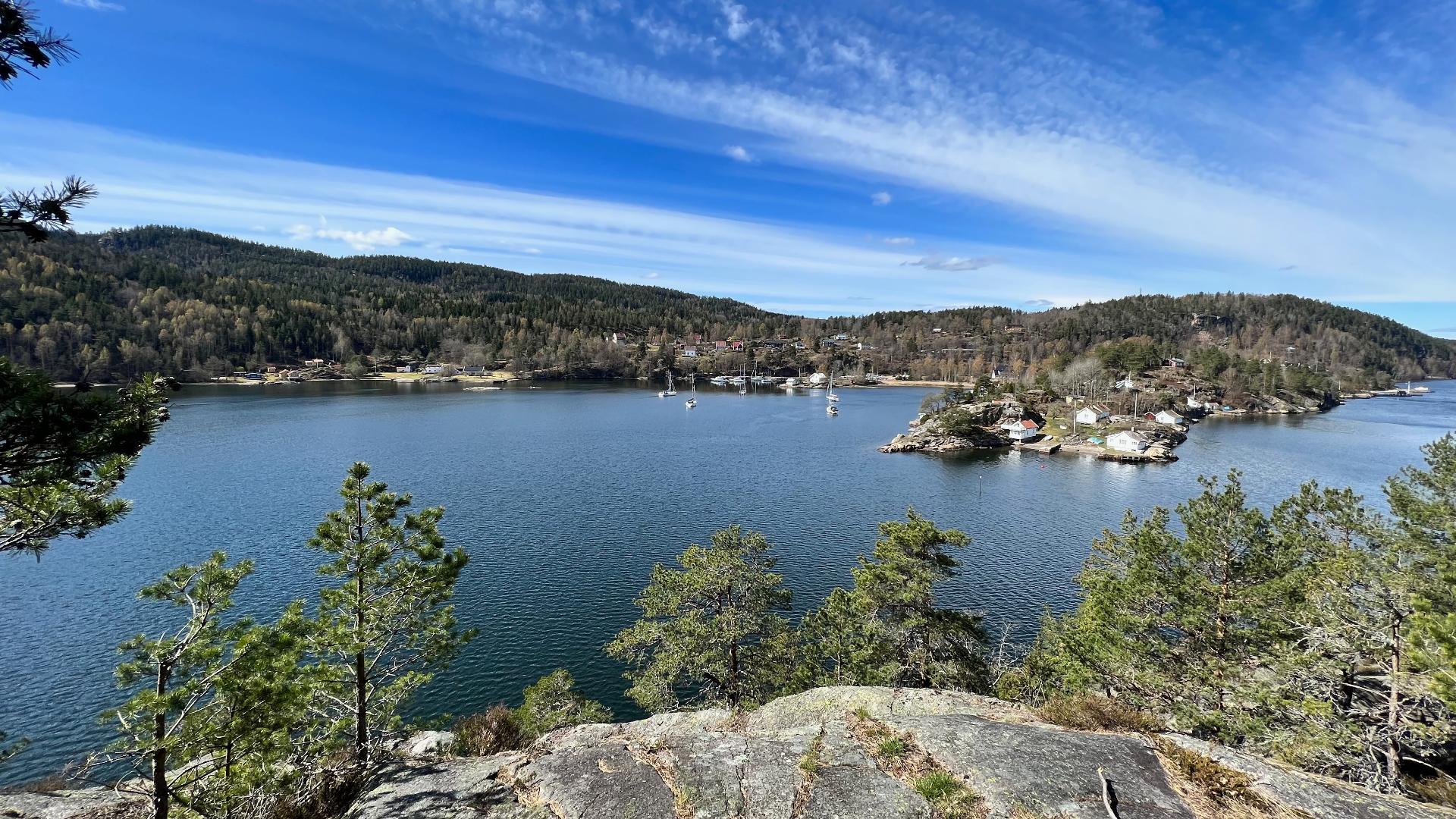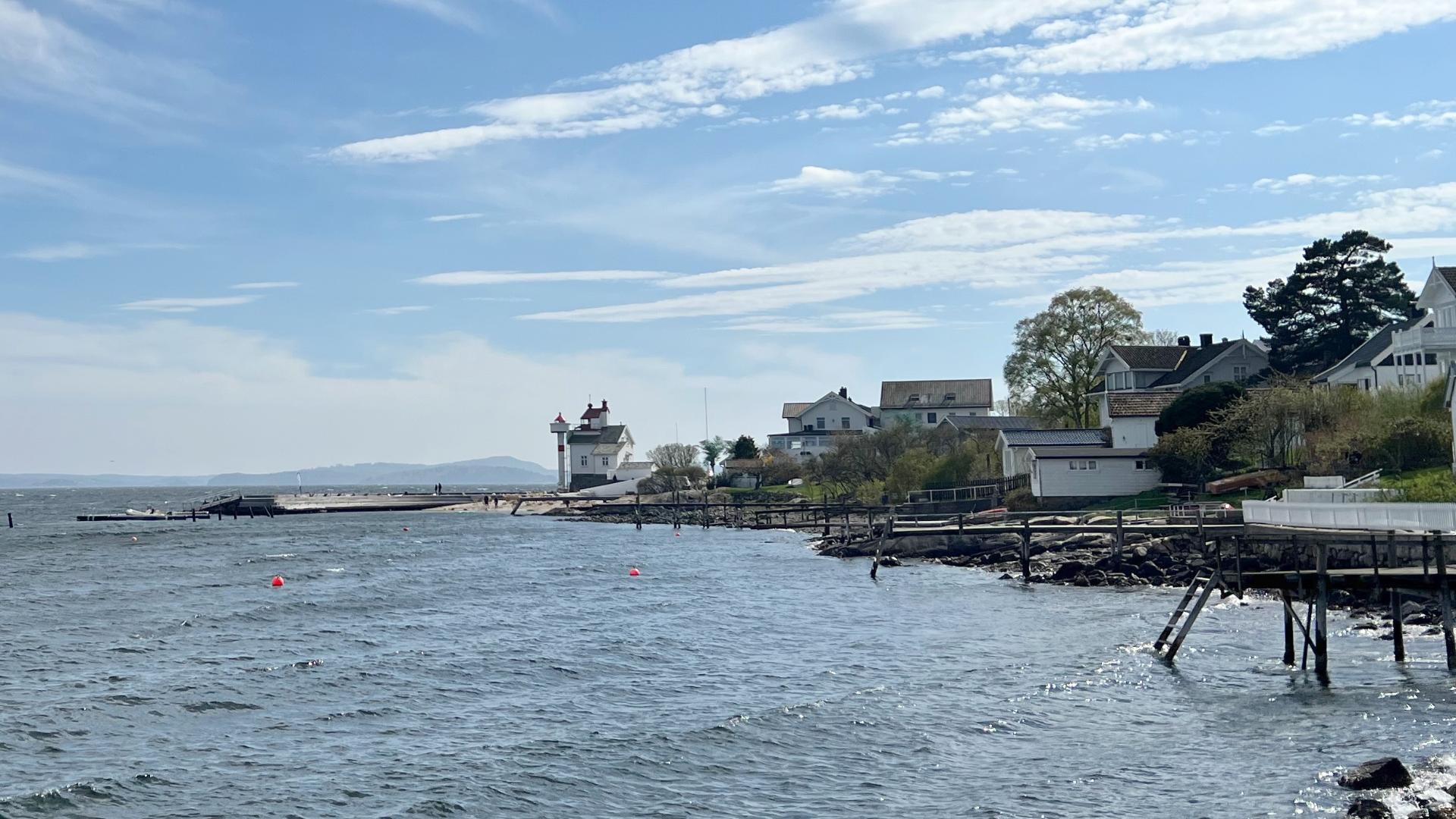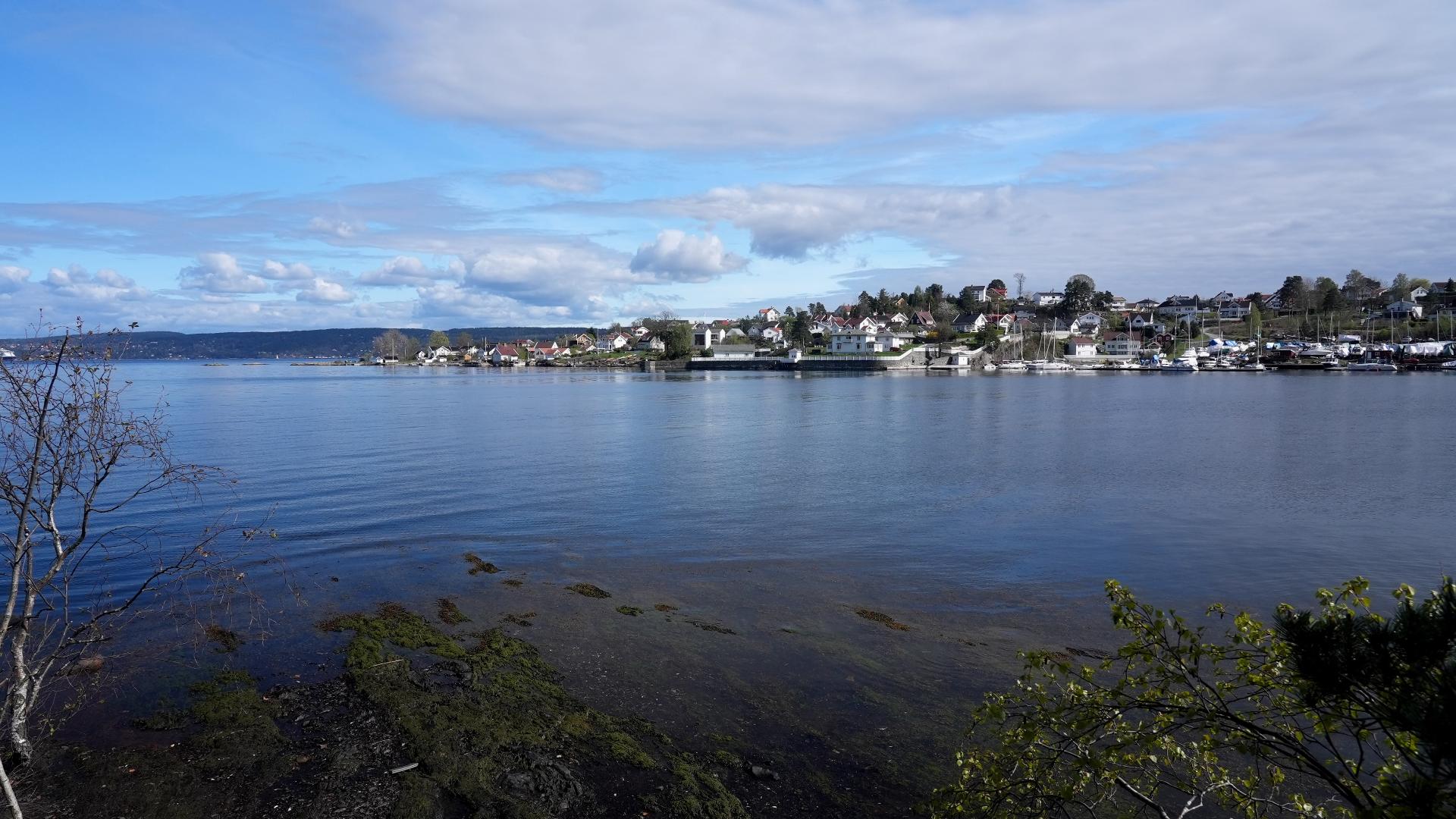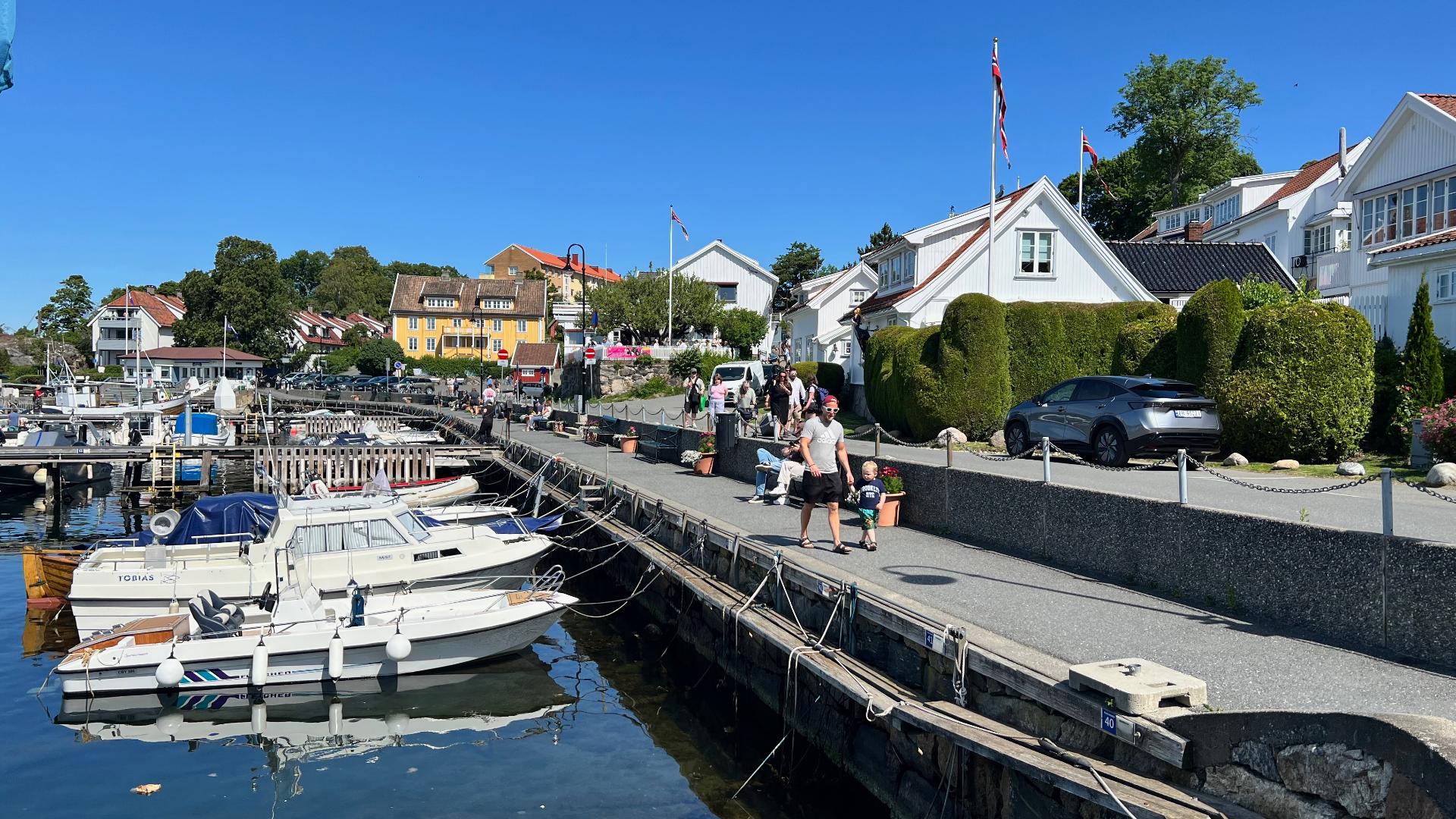
Drøbak sits at the narrowest point of the Oslofjord, a small coastal town of about 14,000 people in Frogn municipality. The name likely comes from Old Norse Drjúgbakkr, meaning the steep or hard hill.
For centuries, this was Oslo's ice-free winter harbour. When the capital's port froze over, ships docked here instead, and timber from the inland forests was loaded for export to the Netherlands and England. The town got city rights in 1842, lost them in 1962 when it was merged into Frogn, and regained them in 2006.
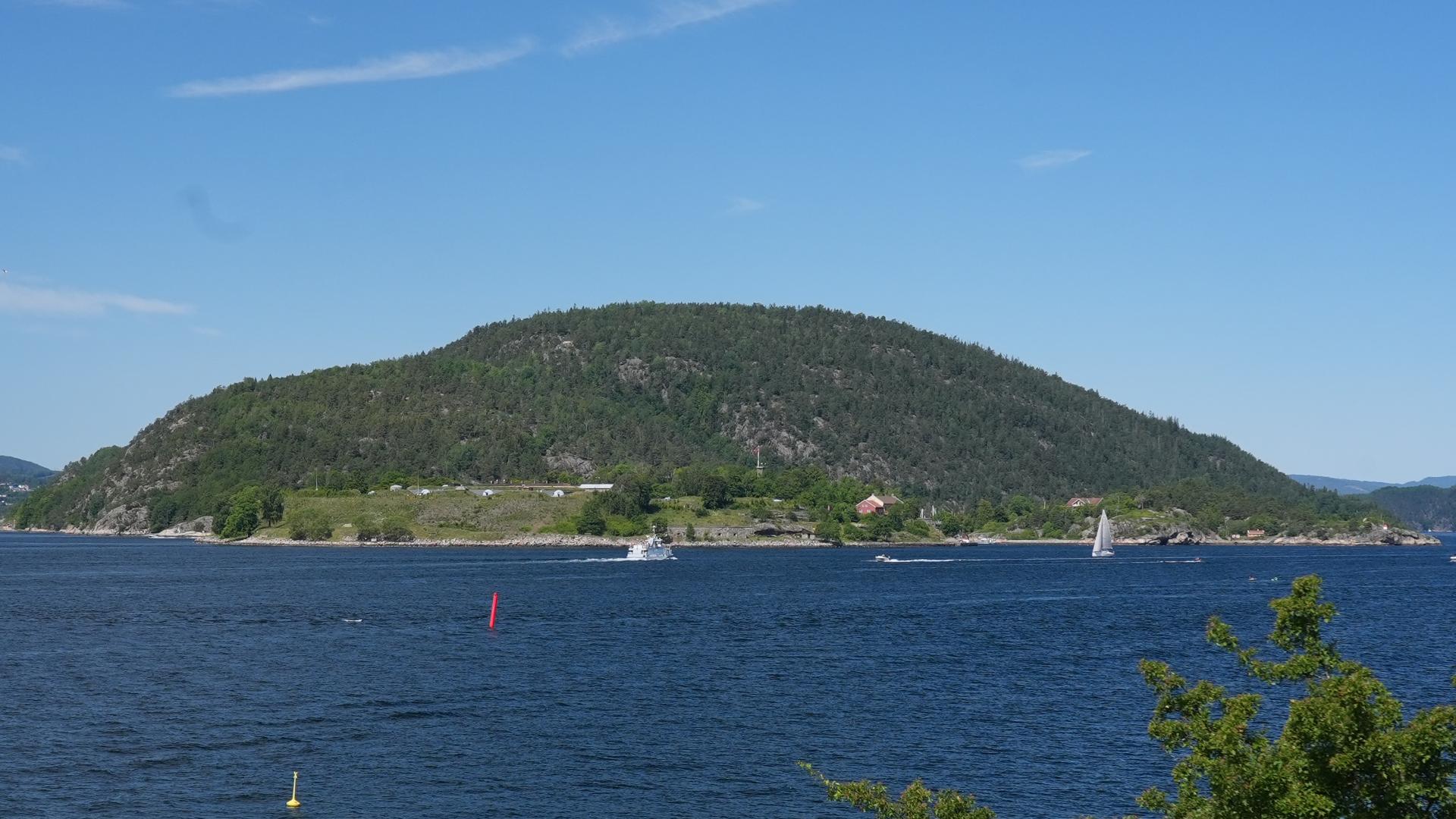
The narrow strait here is also where Oscarsborg fortress sits on its island, just offshore. That fortress has its own story, covered in a separate entry.
Today Drøbak is best known as Norway's Christmas town. According to Norwegian tradition, Julenissen, the Norwegian Santa Claus, lives here. Tregaardens Julehus is a year-round Christmas shop with a Santa Claus post office that receives thousands of letters from children every December. The town leans into it fully, with Christmas decorations and events that draw visitors year-round.
The old town centre has well-preserved wooden houses, including Skrivergården from 1757 and the church Drøbak kirke, a rococo-style building opened in 1776. Three bronze mermaid sculptures by Reidar Finsrud, called Havfruene, stand along the waterfront since 1999. The University of Oslo has run a marine biological station here since 1894, one of the oldest in Scandinavia.
A car ferry connected Drøbak to Hurum across the fjord from 1932 until the Oslofjordtunnel opened on 29 June 2000. The ferry company was dissolved in 2021. Its first hull had been bought from a convicted liquor smuggler.
For centuries, this was Oslo's ice-free winter harbour. When the capital's port froze over, ships docked here instead, and timber from the inland forests was loaded for export to the Netherlands and England. The town got city rights in 1842, lost them in 1962 when it was merged into Frogn, and regained them in 2006.
The narrow strait here is also where Oscarsborg fortress sits on its island, just offshore. That fortress has its own story, covered in a separate entry.
Today Drøbak is best known as Norway's Christmas town. According to Norwegian tradition, Julenissen, the Norwegian Santa Claus, lives here. Tregaardens Julehus is a year-round Christmas shop with a Santa Claus post office that receives thousands of letters from children every December. The town leans into it fully, with Christmas decorations and events that draw visitors year-round.
The old town centre has well-preserved wooden houses, including Skrivergården from 1757 and the church Drøbak kirke, a rococo-style building opened in 1776. Three bronze mermaid sculptures by Reidar Finsrud, called Havfruene, stand along the waterfront since 1999. The University of Oslo has run a marine biological station here since 1894, one of the oldest in Scandinavia.
A car ferry connected Drøbak to Hurum across the fjord from 1932 until the Oslofjordtunnel opened on 29 June 2000. The ferry company was dissolved in 2021. Its first hull had been bought from a convicted liquor smuggler.