On a terrace above the village of Vik, eight burial mounds still rise from the grass, remnants of a cemetery that served the chieftain's homestead at Hove for close to a thousand years. Called Moahaugane, they were likely built between AD 300 and 500, but continued to receive the dead until Christian burial customs took hold around AD 1000. Many more mounds once stood here, particularly from the Viking Age, but have been levelled over the centuries by farming and treasure hunters.
Building just one of these mounds took up to 600 man-days of labour, a powerful statement about the status of the families buried inside. The dead were placed in stone-lined chambers, sometimes cremated, sometimes laid out fully clothed on bearskins. Bear claws turn up in grave after grave. Excavations have uncovered remarkable finds: a green glass chalice from the Black Sea region dating to the 300s, gilded silver clasps with animal motifs, amber bead necklaces, game pieces, and bone dice.
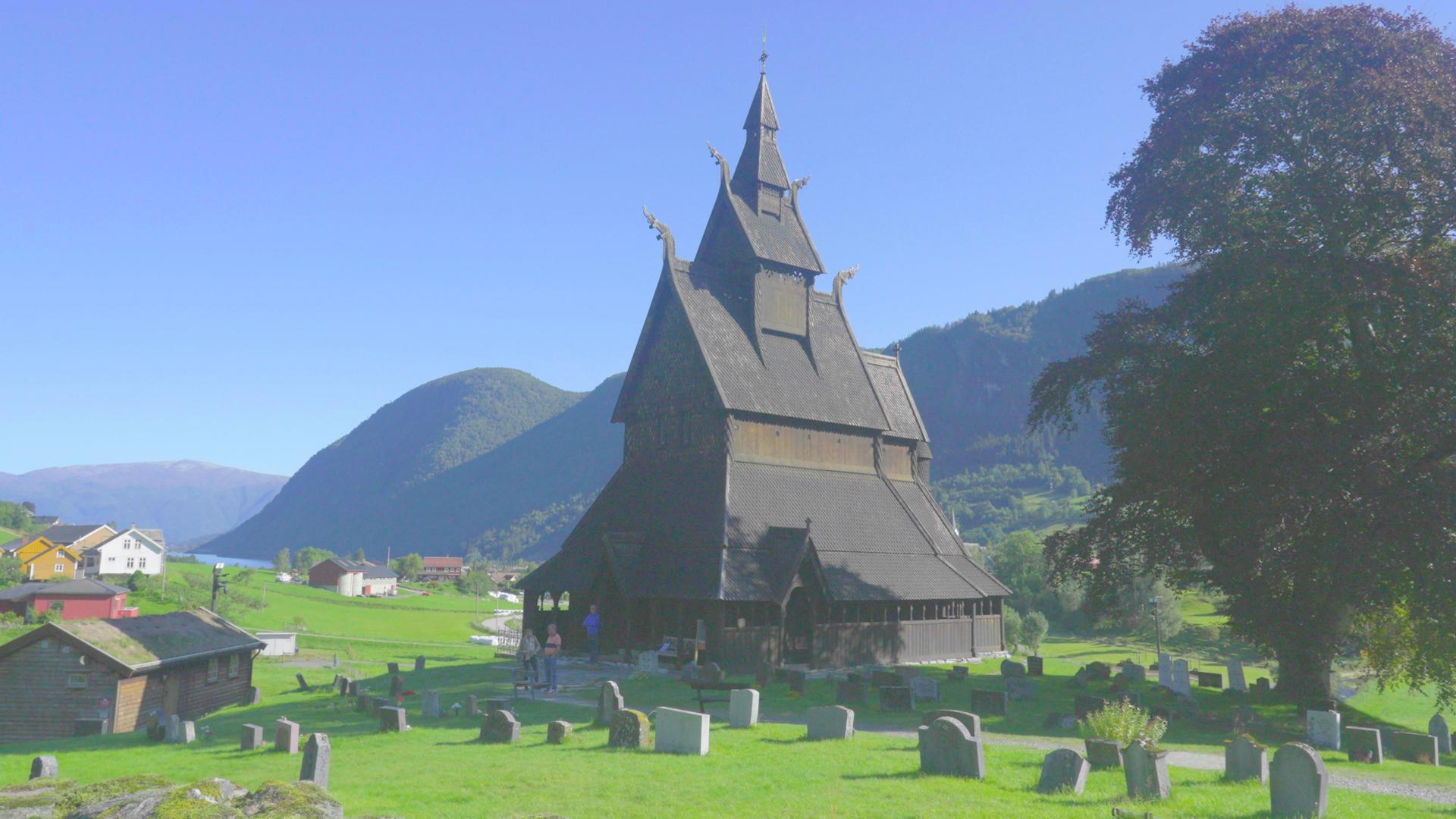
One grave stands out. Mound 7 contained a man from around AD 900, buried in a boat with a full set of weapons, a hoe, and a scythe. It is the only ship burial ever found at Hove. In Mound 6, three separate burials took place within just 40 years during the 500s. Two men were cremated on bearskins, possibly killed in battle or by the plague that swept through Scandinavia in that century. The Moahaugane site shows that Hove was the leading farm in Vik for centuries, a seat of power long before the nearby Hopperstad stave church was built.
Building just one of these mounds took up to 600 man-days of labour, a powerful statement about the status of the families buried inside. The dead were placed in stone-lined chambers, sometimes cremated, sometimes laid out fully clothed on bearskins. Bear claws turn up in grave after grave. Excavations have uncovered remarkable finds: a green glass chalice from the Black Sea region dating to the 300s, gilded silver clasps with animal motifs, amber bead necklaces, game pieces, and bone dice.
One grave stands out. Mound 7 contained a man from around AD 900, buried in a boat with a full set of weapons, a hoe, and a scythe. It is the only ship burial ever found at Hove. In Mound 6, three separate burials took place within just 40 years during the 500s. Two men were cremated on bearskins, possibly killed in battle or by the plague that swept through Scandinavia in that century. The Moahaugane site shows that Hove was the leading farm in Vik for centuries, a seat of power long before the nearby Hopperstad stave church was built.