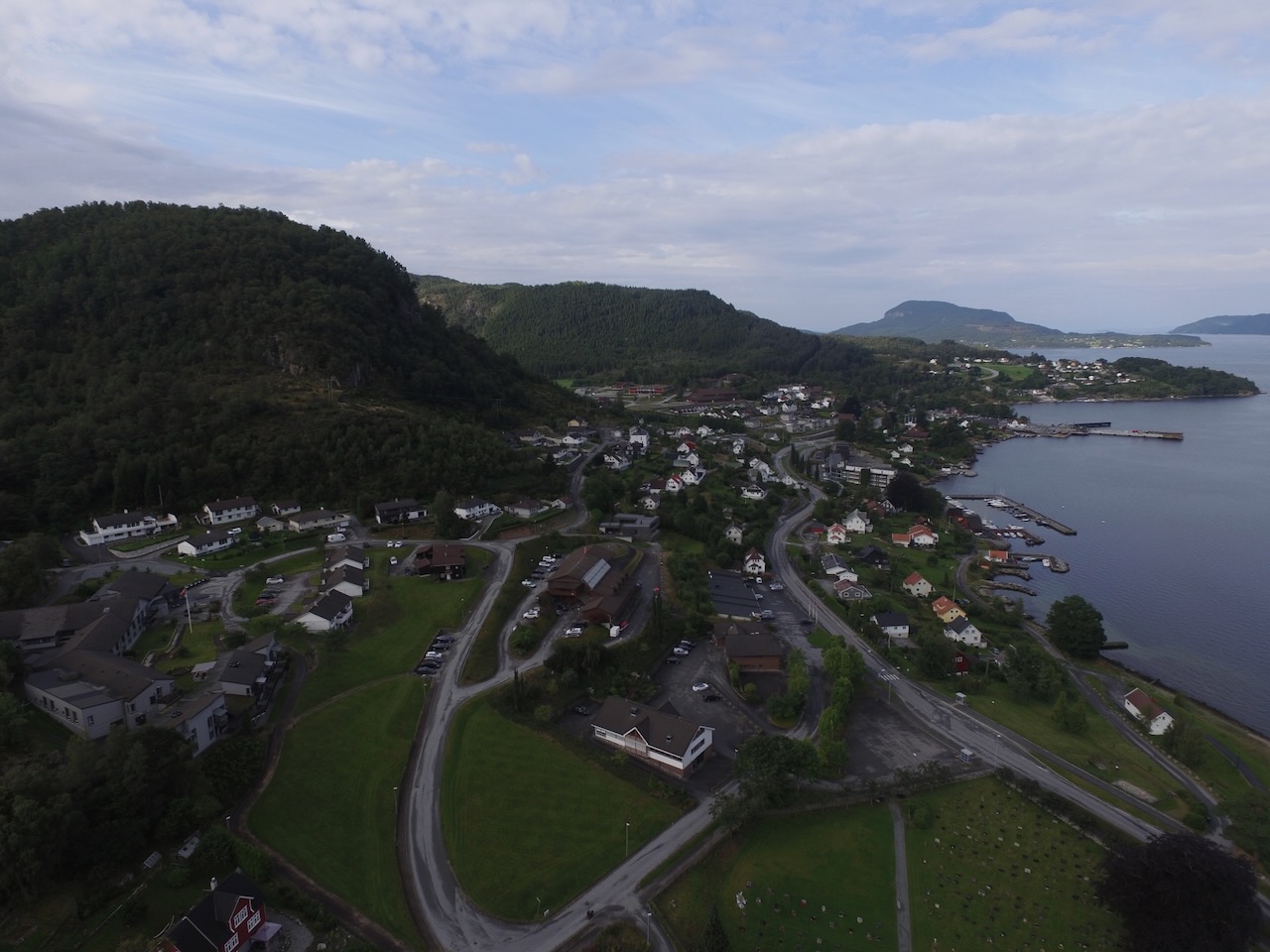
The waterfall on Jørpelandselva drops about 20 metres through the heart of Jørpeland, the main settlement in Strand municipality. A salmon ladder built alongside the falls lets visitors watch Atlantic salmon fighting their way upstream during the run from July to August. Above the waterfall lies Stemmen, a popular swimming hole where locals jump from a rock formation called Stolen, the Chair, into the churning water below. The Selemork nature loop, starting from the harbour, follows both banks of the river past the falls, an old power station, and the ruins of a historic blacksmith's forge called Kokhølsmeden.
The river became a flashpoint in 2006 when the government approved hydropower development despite fierce local opposition. Jørpelandselvas Venner, Friends of the River, called the decision a death sentence. The local fishing association had maintained a hatchery for nearly 40 years, rearing 60,000 fry annually on volunteer labour, and threatened to shut it down. Environmentalists named Jørpelandselva their most important campaign of the year. The Jossang and Dalen power stations, completed in 2010, now produce a combined 115 GWh annually, but the river still supports a salmon run, with a record catch of 347 kilograms in 2012.
The river shaped the town itself. Jørpeland Stålverk, a steel mill founded in 1910, produced its first steel on 8 March 1913 and transformed a hamlet of 450 people into a town of 7,000. Near the harbour, Jørpelands Brug, an old furniture factory from the 1880s, was saved from demolition after a long preservation campaign and now stands as a cultural heritage landmark.
The river became a flashpoint in 2006 when the government approved hydropower development despite fierce local opposition. Jørpelandselvas Venner, Friends of the River, called the decision a death sentence. The local fishing association had maintained a hatchery for nearly 40 years, rearing 60,000 fry annually on volunteer labour, and threatened to shut it down. Environmentalists named Jørpelandselva their most important campaign of the year. The Jossang and Dalen power stations, completed in 2010, now produce a combined 115 GWh annually, but the river still supports a salmon run, with a record catch of 347 kilograms in 2012.
The river shaped the town itself. Jørpeland Stålverk, a steel mill founded in 1910, produced its first steel on 8 March 1913 and transformed a hamlet of 450 people into a town of 7,000. Near the harbour, Jørpelands Brug, an old furniture factory from the 1880s, was saved from demolition after a long preservation campaign and now stands as a cultural heritage landmark.