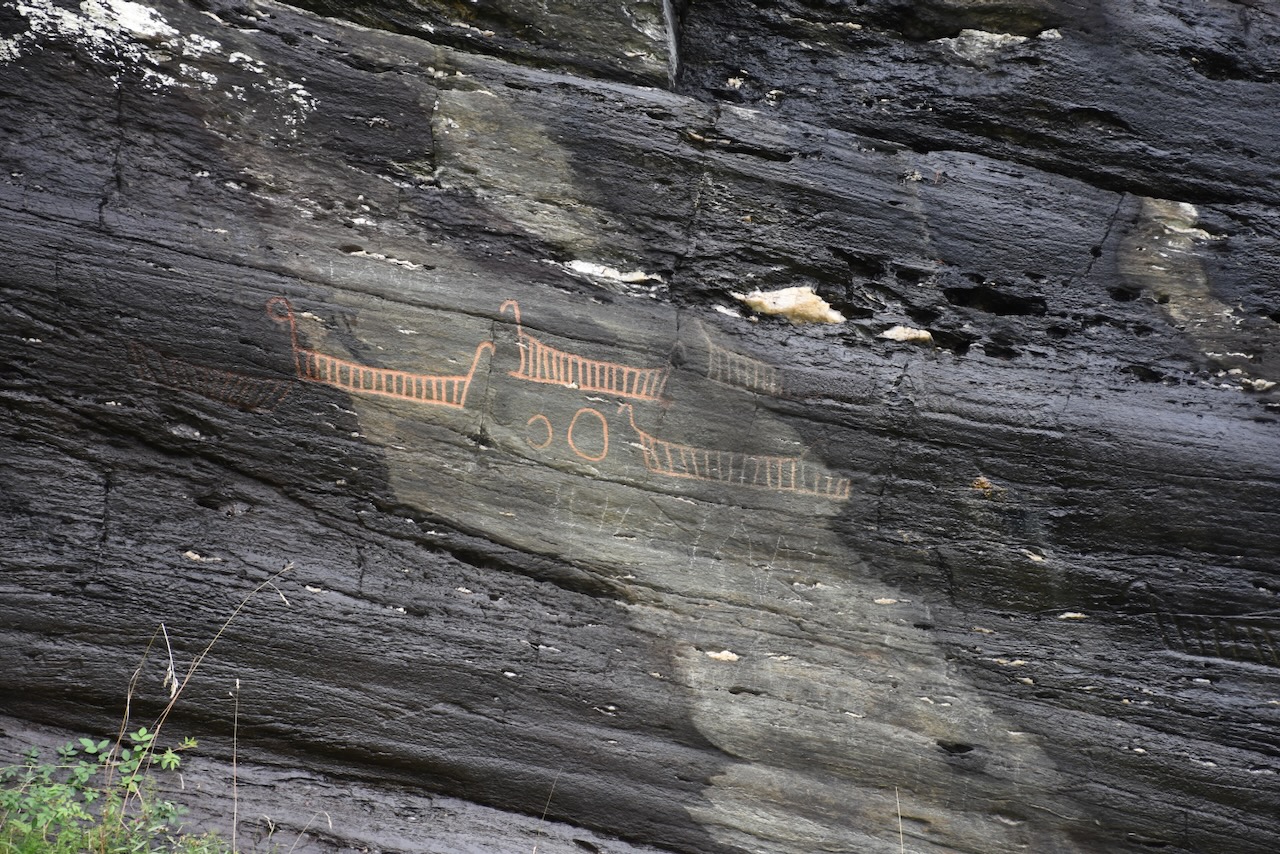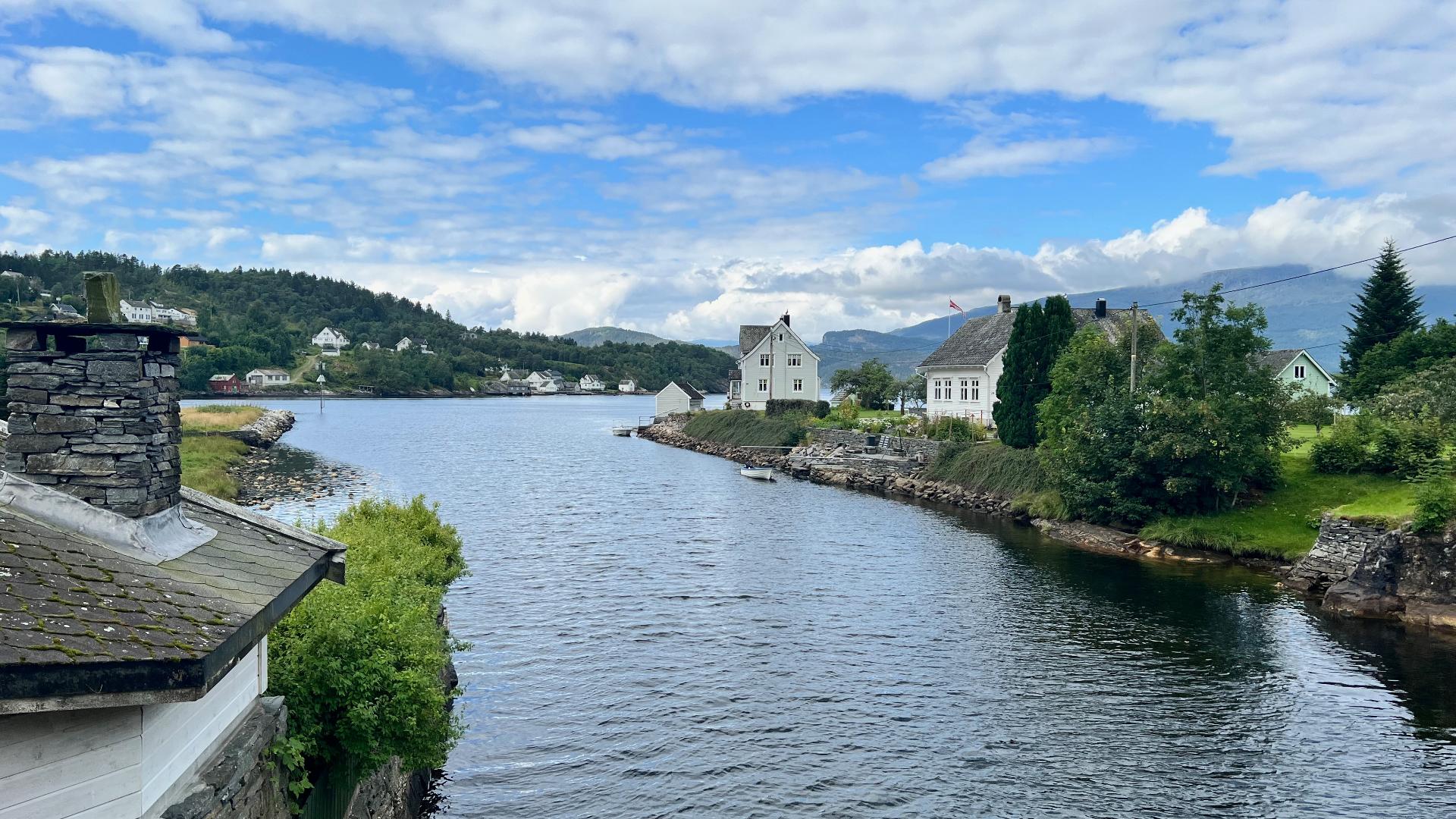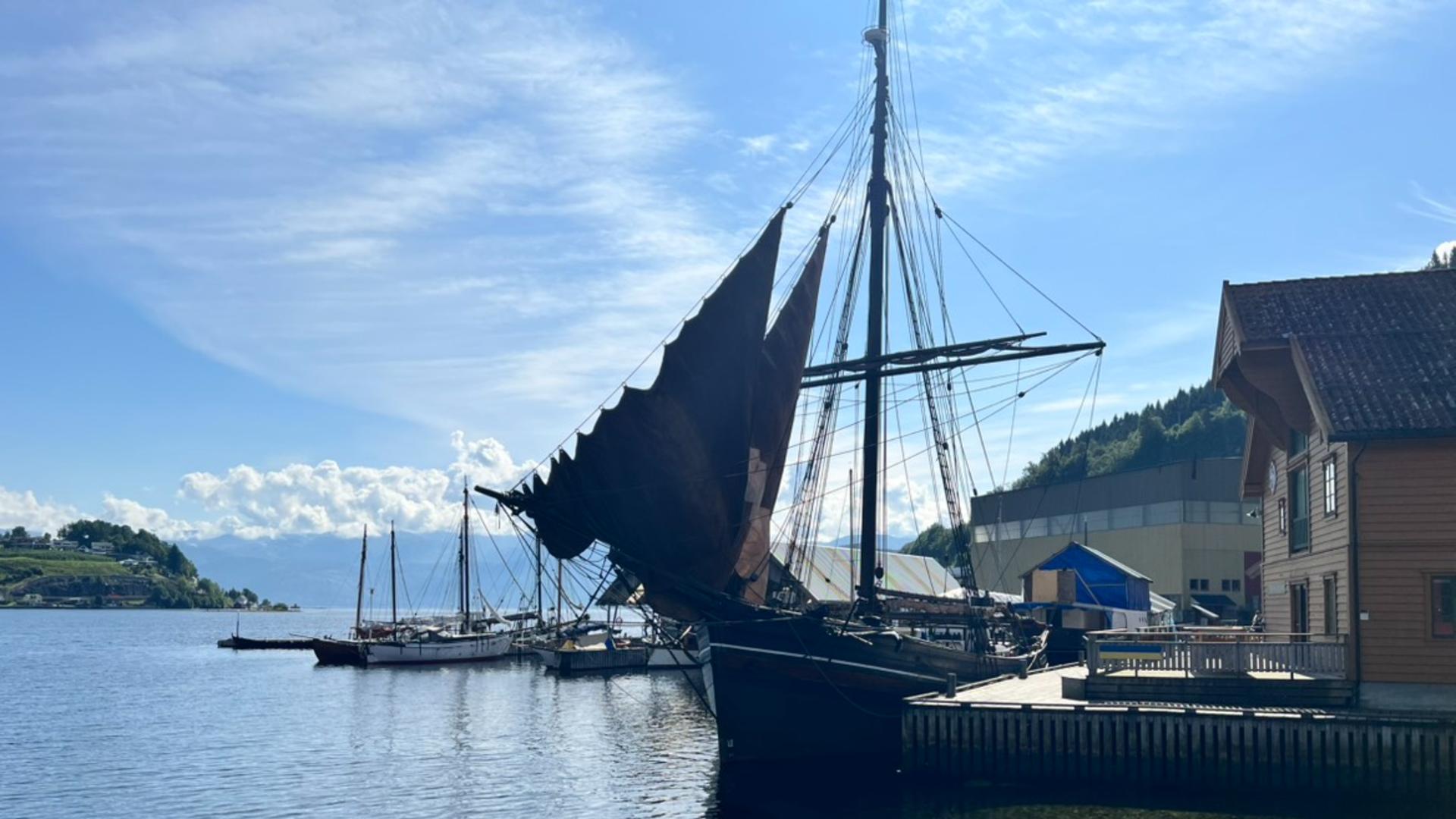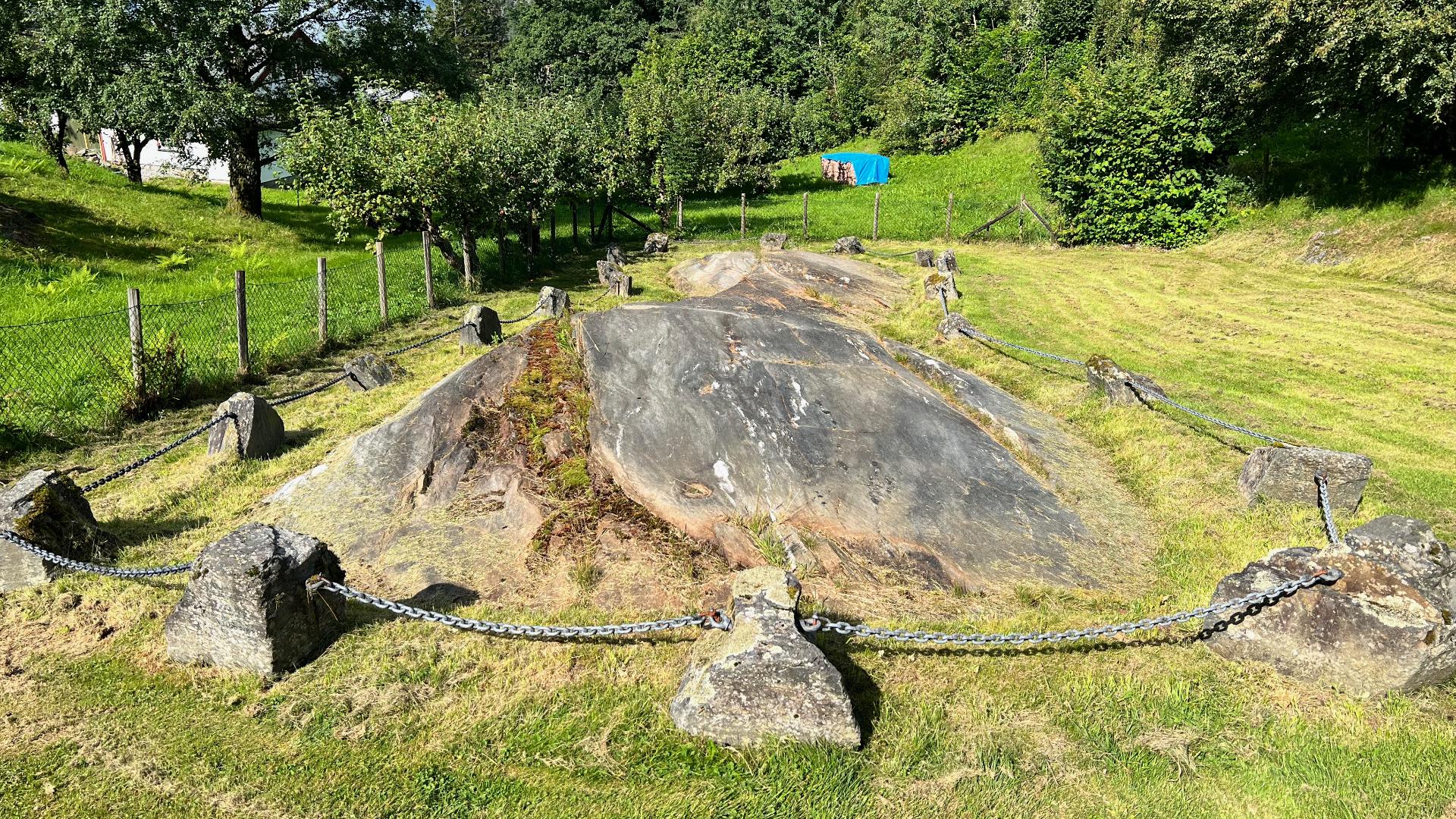
At the farm Bakko in Herand, along the Hardangerfjord, two rock faces hold around 150 Bronze Age carvings from roughly 1100-500 BC. The figures are painted red to make them visible.
What makes Bakko unusual for western Norway is the number of human figures. In all, 23 people have been carved here, many of them in pairs. Several pairs are explicitly sexual, and researchers believe they are connected to fertility cult practices rather than Bronze Age graffiti. Some pairs appear one after another, almost like a procession.
The rest of the carvings follow the usual Bronze Age pattern: ships, rings, and geometric figures. They belong to the "jordbruksristninger" tradition, meaning they were made by farming societies, not the older hunter-gatherer cultures.
The carvings are on two rock faces in a dip just below the highway, near Herandsvatnet. They are easy to miss if you are not looking. A second rock with more carvings is a short distance from the main one.
Herand also has a cultural history centre in the old schoolhouse, covering 9,000 years of local history.
What makes Bakko unusual for western Norway is the number of human figures. In all, 23 people have been carved here, many of them in pairs. Several pairs are explicitly sexual, and researchers believe they are connected to fertility cult practices rather than Bronze Age graffiti. Some pairs appear one after another, almost like a procession.
The rest of the carvings follow the usual Bronze Age pattern: ships, rings, and geometric figures. They belong to the "jordbruksristninger" tradition, meaning they were made by farming societies, not the older hunter-gatherer cultures.
The carvings are on two rock faces in a dip just below the highway, near Herandsvatnet. They are easy to miss if you are not looking. A second rock with more carvings is a short distance from the main one.
Herand also has a cultural history centre in the old schoolhouse, covering 9,000 years of local history.