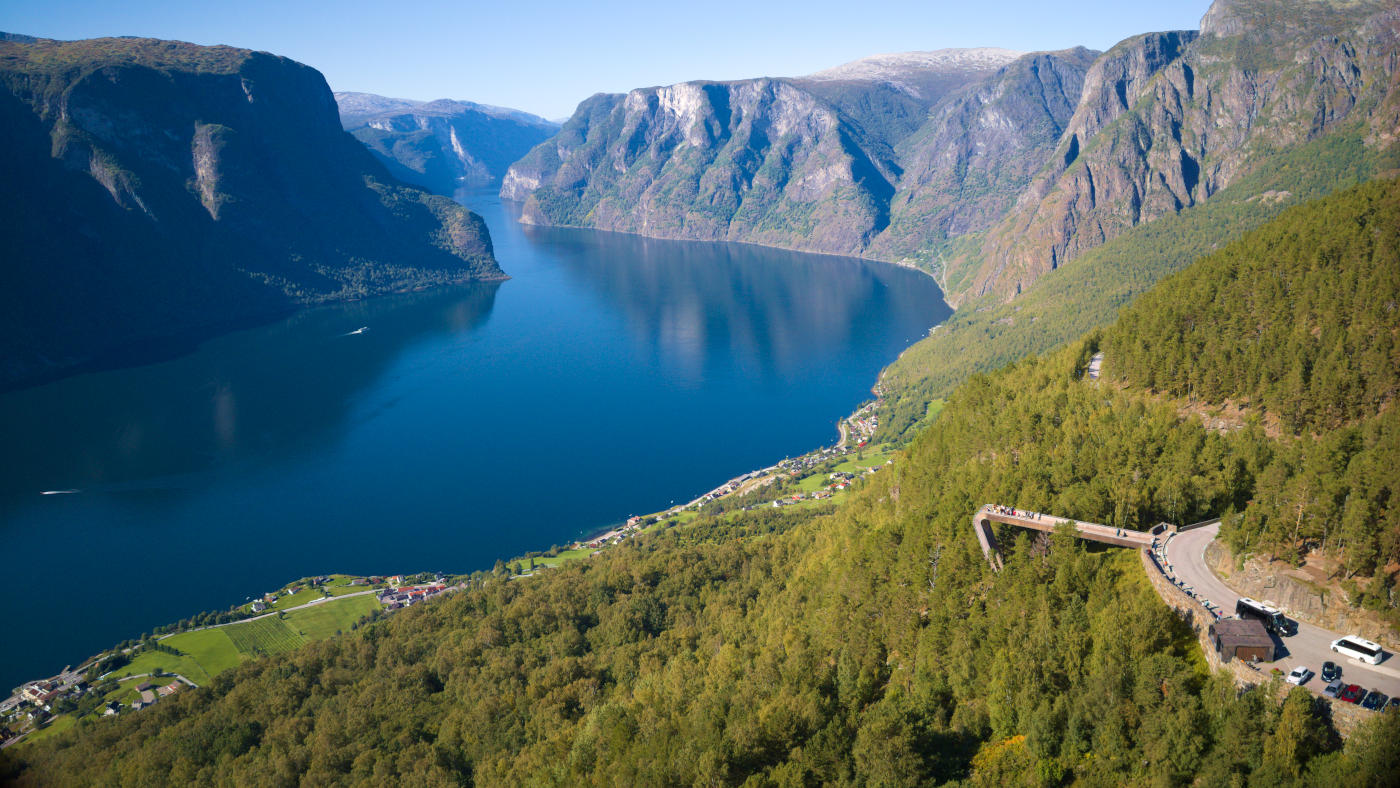
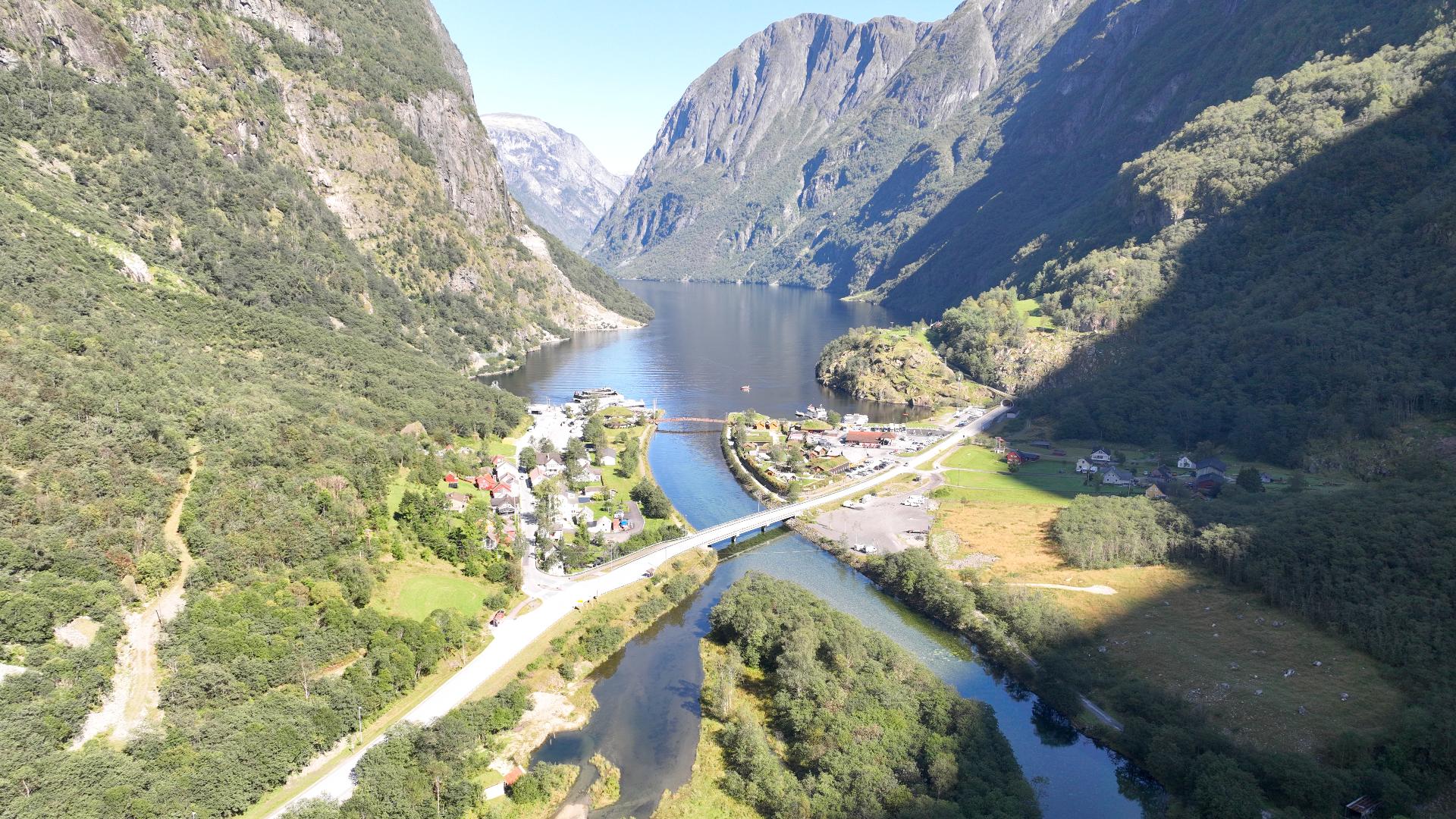
Flåm is essentially a railway station, a harbour, and a hotel at the end of the Aurlandsfjord. The actual village lies further up the valley. What exists here today was built to connect ships on the Sognefjord with the mountain railway above. When they tried to close the line in the 1960s, it had already become popular with tourists, so it stayed open and kept growing.
Two million tourists now visit every year. On summer days, up to 20,000 people pass through - in a place with fewer than 300 permanent residents. Everything here is geared towards extracting maximum money from visitors. This is not representative of Norway.
On days with multiple cruise ships, a visible layer of smog can hang over the fjord. Locals have described it as embarrassing. Research has shown that the narrow valley creates pollution pockets where exhaust lingers, especially on calm days. NOx levels have been measured at health-concerning levels. New regulations will require zero-emission ships in the UNESCO fjords from 2026 for smaller vessels and 2032 for larger ones. Some of the most polluting ships have already been banned.
Surveys show two-thirds of locals in areas like this are unhappy with the situation. There have been complaints about tourists wandering into private gardens and ignoring basic courtesies. Respect the signs.
There are no actual sights in Flåm itself - the attractions everyone wants to see are elsewhere, reached by train, boat, or car. Most people spend 2-3 hours between connections. If the train or boat isn't part of the plan, there's not much reason to stay longer.
Accommodation runs 3,000-4,000 NOK per night. A better strategy is to stay somewhere like Voss, Sogndal, or Kaupanger and visit as a day trip.