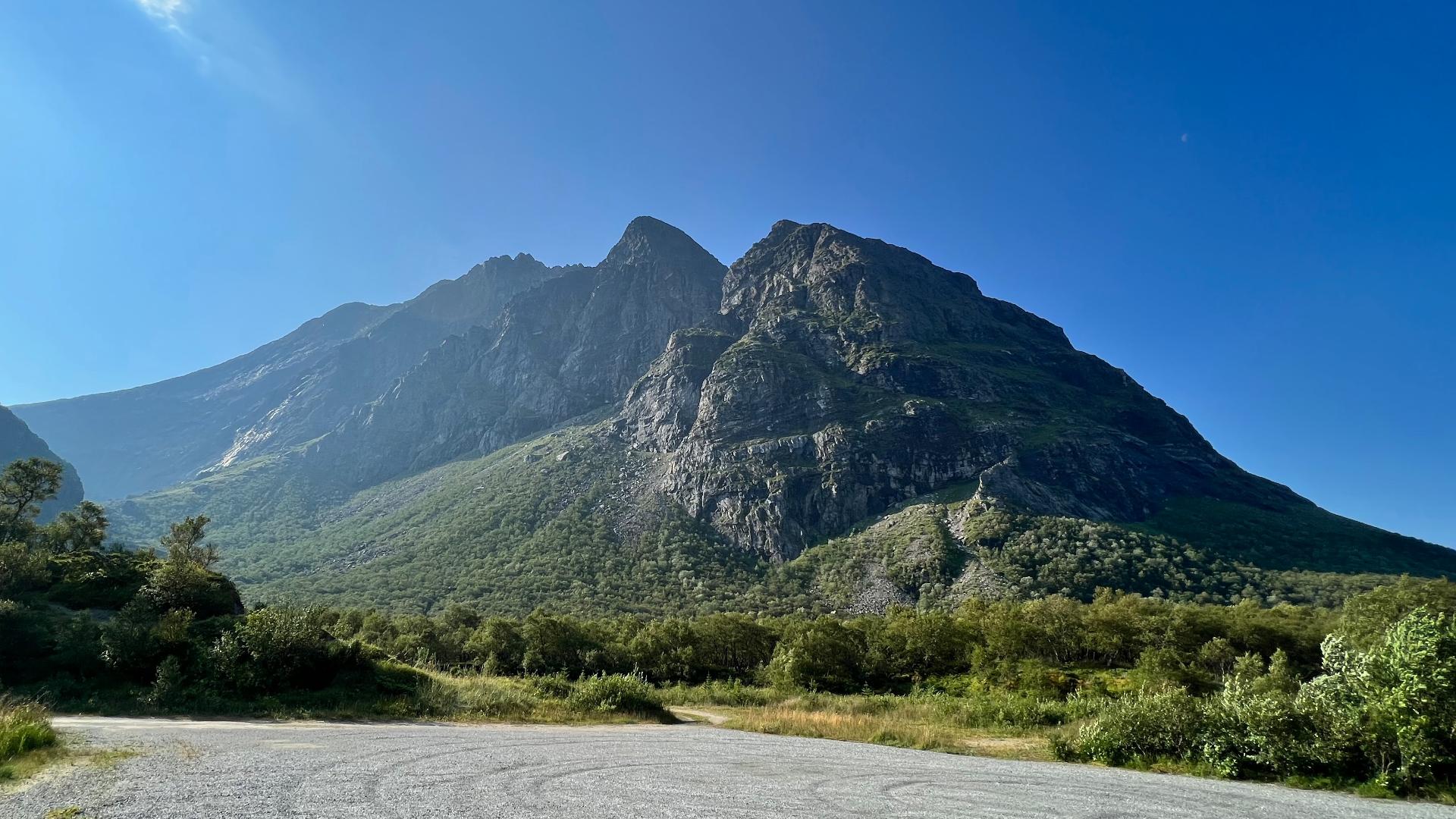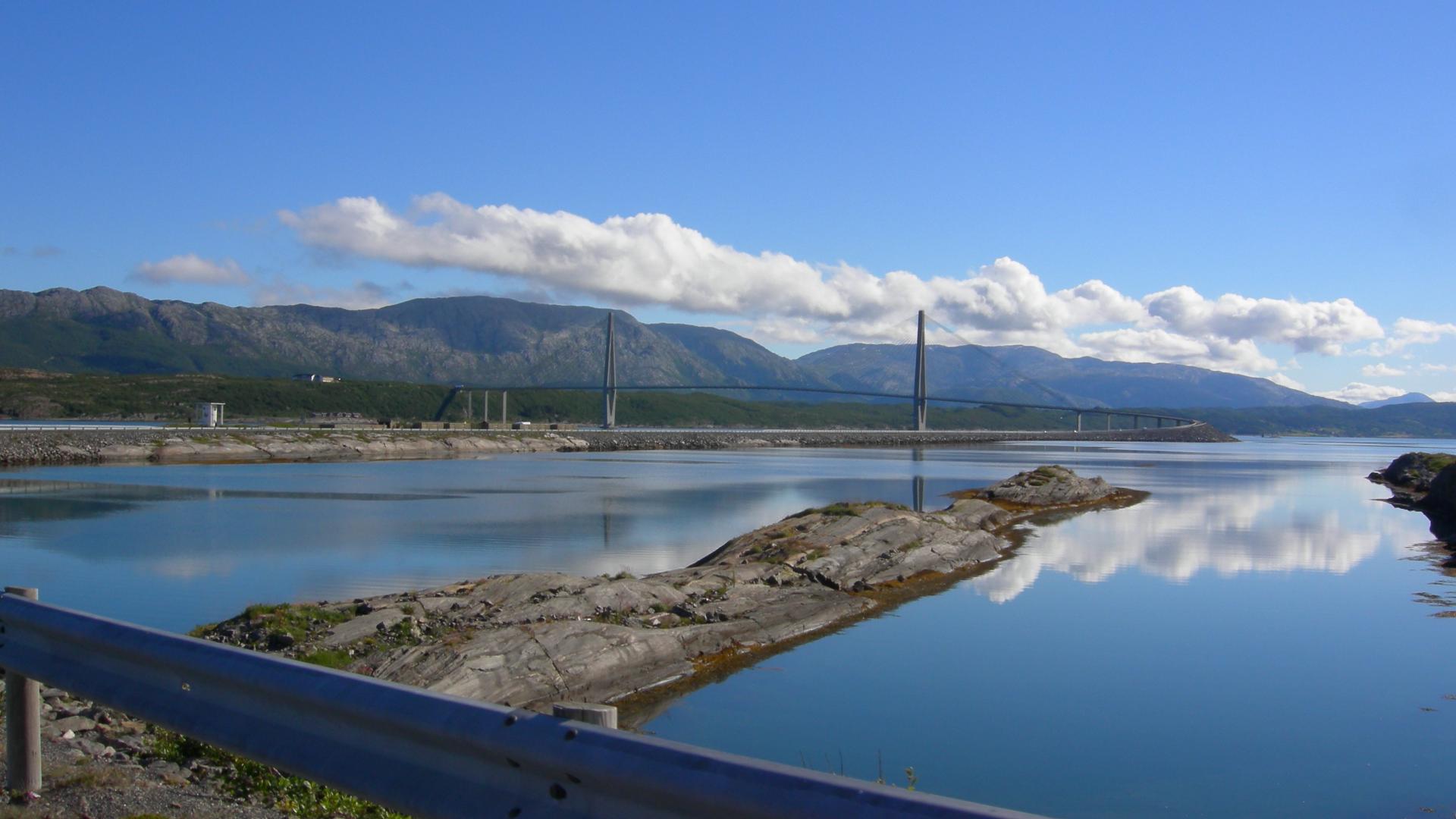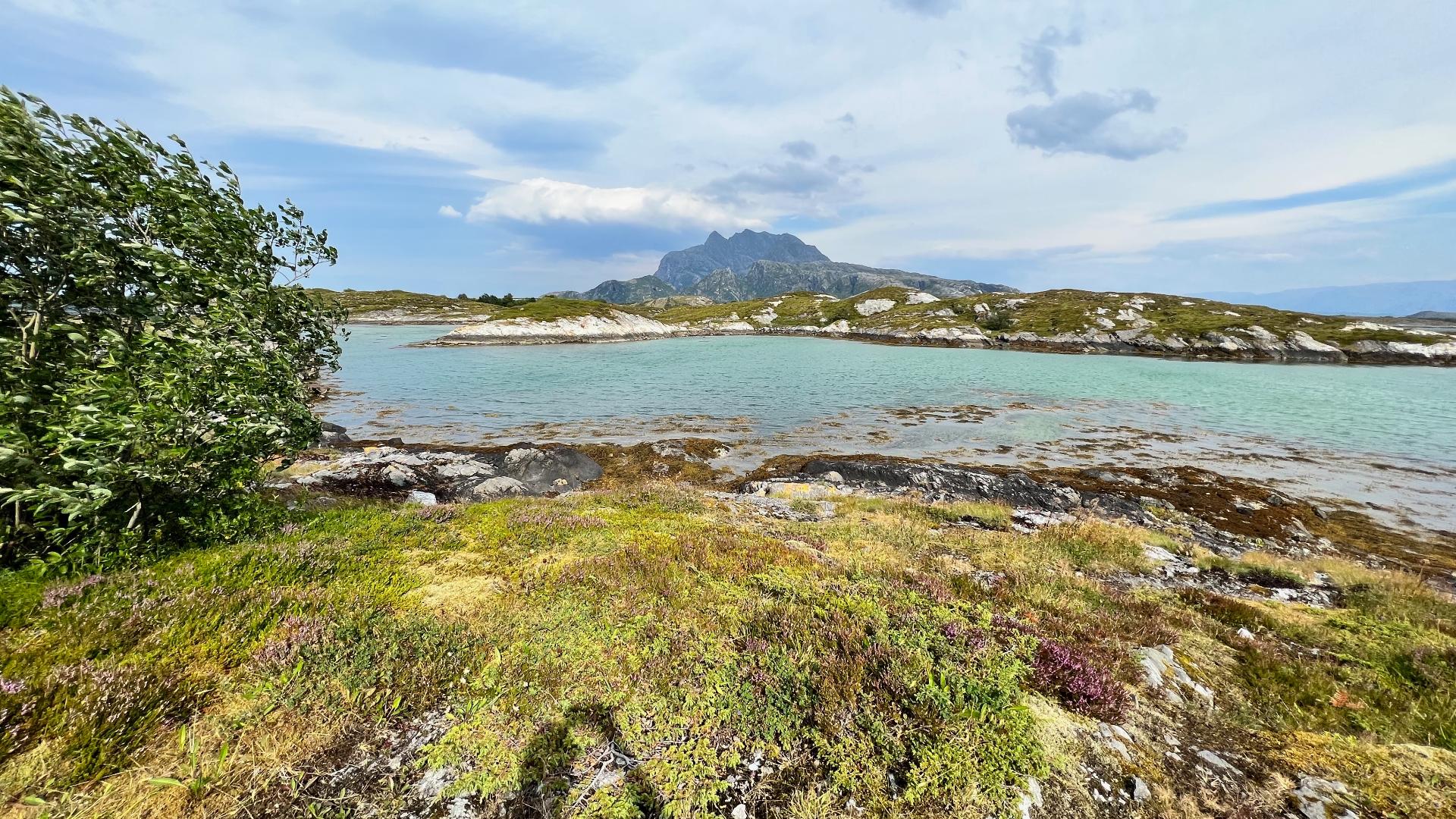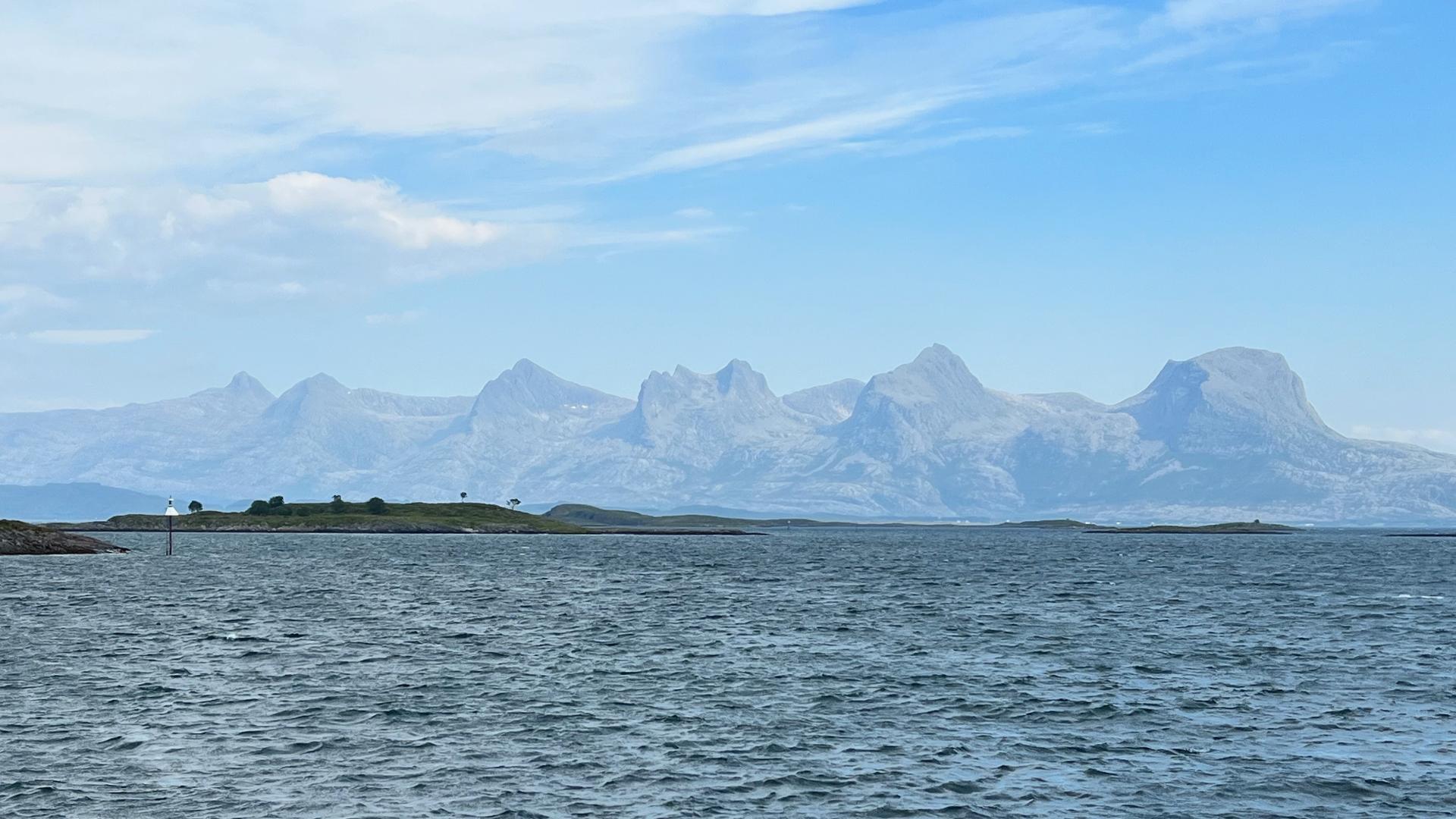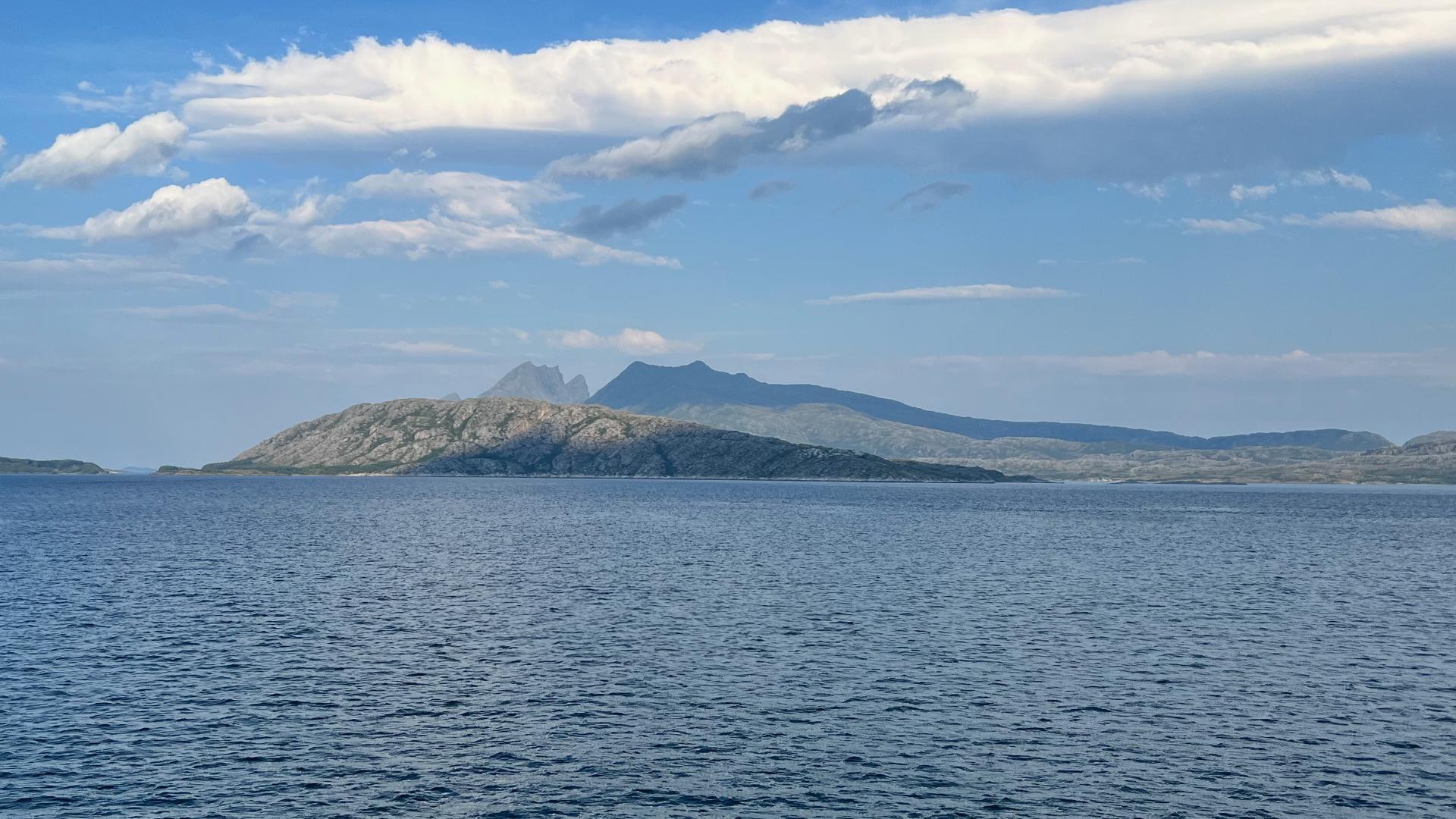
Dønna is a mountainous island on the Helgeland coast, connected to its flat neighbour Herøy by a bridge. Despite being next to each other, the two islands could not look more different: Herøy is low and open, while Dønna is dominated by dramatic peaks, the most striking being Dønnamannen, a mountain whose three summits form the profile of a man's face when seen from the sea.
But Dønna is more than mountains. Dønnes Church, built in the 13th century, has been called the most beautiful medieval church in Northern Norway. It was originally a private chapel for Dønnesgodset, one of the greatest landed estates in the north. Beneath the church lies its most remarkable feature: a mausoleum added in the late 1600s, containing 22 coffins from the Tønder and Coldevin families. It is the largest and best-preserved mausoleum in Norway. The estate itself, Dønnes Gård, dates back to the 1200s. In 1675 it was bought by Amtmann Peder Tønder, and from 1751 the Coldevin family ran it for five generations, pioneering Northern Norwegian agriculture: they built a dairy, collected milk by tanker boat, planted forests, and in 1908 bought what is believed to be the first tractor in Norway. The estate went bankrupt in 1911, but the buildings survive and you can stay there today.
On the other side of the island, at Glein, stands Northern Europe's largest marble phallus, part of a fertility exhibition displaying symbols from cultures around the world, some dating back 25,000 to 30,000 years.
Dønna also produced one of Norway's most important emigrant writers. Ole Edvart Rølvaag was born here in 1876, the son of a fisherman. At 20 he emigrated to America, eventually becoming a professor at St. Olaf College in Minnesota. His novel I de dage ("Giants in the Earth"), published in 1927, is considered one of the great works of Norwegian-American literature: a raw, unromantic account of immigrant life on the Dakota prairies. An exhibition on the island tells his story, with a complete collection of his first editions.
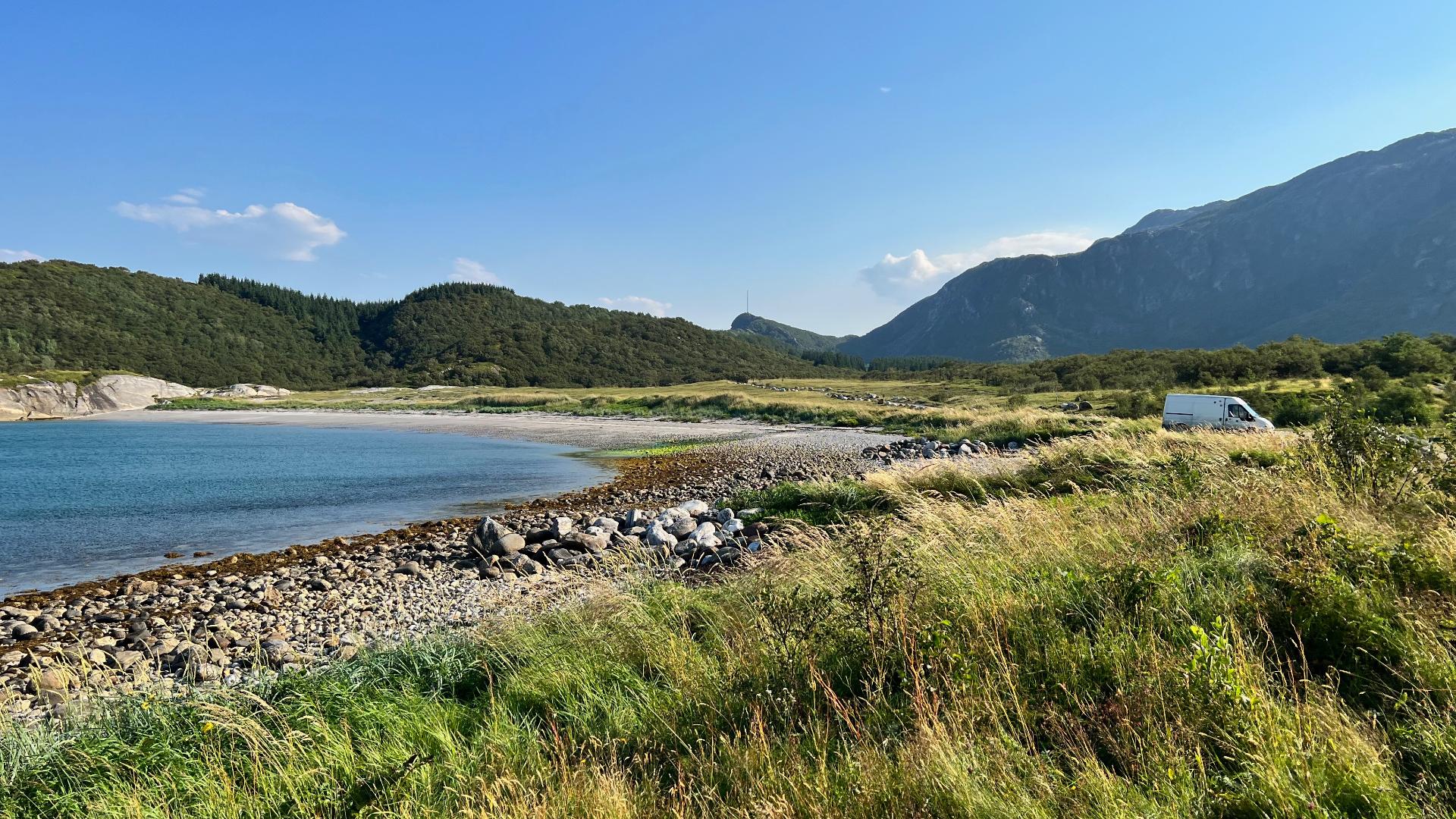
At Sandstrak, on the western shore, a large sandy beach with surprisingly blue water marks the starting point for the Dønnamannen hike. The most popular summit is "the Lip." The exposed ridge sections can be dangerous in strong wind; locals regularly turn back on bad days, and visitors should do the same.
But Dønna is more than mountains. Dønnes Church, built in the 13th century, has been called the most beautiful medieval church in Northern Norway. It was originally a private chapel for Dønnesgodset, one of the greatest landed estates in the north. Beneath the church lies its most remarkable feature: a mausoleum added in the late 1600s, containing 22 coffins from the Tønder and Coldevin families. It is the largest and best-preserved mausoleum in Norway. The estate itself, Dønnes Gård, dates back to the 1200s. In 1675 it was bought by Amtmann Peder Tønder, and from 1751 the Coldevin family ran it for five generations, pioneering Northern Norwegian agriculture: they built a dairy, collected milk by tanker boat, planted forests, and in 1908 bought what is believed to be the first tractor in Norway. The estate went bankrupt in 1911, but the buildings survive and you can stay there today.
On the other side of the island, at Glein, stands Northern Europe's largest marble phallus, part of a fertility exhibition displaying symbols from cultures around the world, some dating back 25,000 to 30,000 years.
Dønna also produced one of Norway's most important emigrant writers. Ole Edvart Rølvaag was born here in 1876, the son of a fisherman. At 20 he emigrated to America, eventually becoming a professor at St. Olaf College in Minnesota. His novel I de dage ("Giants in the Earth"), published in 1927, is considered one of the great works of Norwegian-American literature: a raw, unromantic account of immigrant life on the Dakota prairies. An exhibition on the island tells his story, with a complete collection of his first editions.
At Sandstrak, on the western shore, a large sandy beach with surprisingly blue water marks the starting point for the Dønnamannen hike. The most popular summit is "the Lip." The exposed ridge sections can be dangerous in strong wind; locals regularly turn back on bad days, and visitors should do the same.