The coastal headland of Børaunen at Ytre Bø in Randaberg holds one of the largest storm-deposited boulder mounds in northern Europe: a half-moon shaped ridge of perfectly rounded stones built up over thousands of years by the force of North Sea waves. The peninsula lies within the Jærstrendene landscape protection area, established in 1977, which covers roughly 70 kilometres of coastline. Two distinctive cairns, Einarsvarden, mark the tip of the headland. North of the cairns, a year-round bird protection area begins where dogs must be leashed at all times and the trail is rerouted inland to avoid disturbing nesting and resting seabirds.
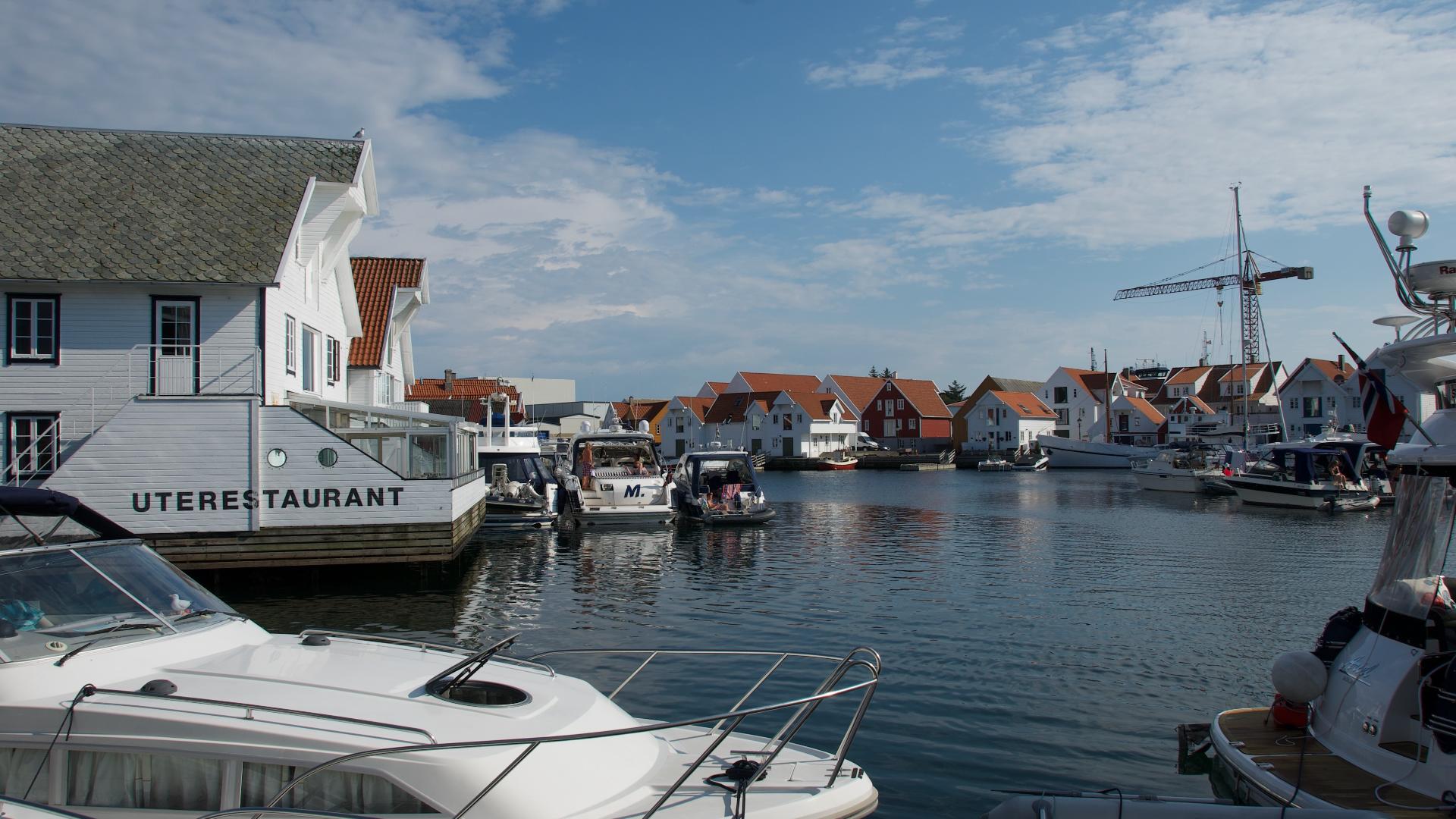
Stone walls crisscrossing the peninsula date from 1838, when the former common pasture was divided between the farms at Ytre Bø. A herring salting facility operated here in the 1800s, tied to the seasonal fisheries that were the economic backbone of coastal Norway. Traditional boathouses and small piers still line the trail at Bøvika.
The most evocative layer is the WWII German coastal fort. Bø Kystfort was built in 1942 by Russian prisoners of war. The complex included a large R636 command bunker, five gun emplacements, and four barracks. Nearby farmhouses were confiscated for use as an infirmary, gunsmith workshop, and canteen. The entire facility was disguised as an ordinary farm using stone fences and camouflage, with hidden trenches connecting the bunker to the gun batteries. More than 100 soldiers were stationed here. Today the concrete command bunker protrudes from the grassy terrain, and German inscriptions remain visible on the interior walls.
Stone walls crisscrossing the peninsula date from 1838, when the former common pasture was divided between the farms at Ytre Bø. A herring salting facility operated here in the 1800s, tied to the seasonal fisheries that were the economic backbone of coastal Norway. Traditional boathouses and small piers still line the trail at Bøvika.
The most evocative layer is the WWII German coastal fort. Bø Kystfort was built in 1942 by Russian prisoners of war. The complex included a large R636 command bunker, five gun emplacements, and four barracks. Nearby farmhouses were confiscated for use as an infirmary, gunsmith workshop, and canteen. The entire facility was disguised as an ordinary farm using stone fences and camouflage, with hidden trenches connecting the bunker to the gun batteries. More than 100 soldiers were stationed here. Today the concrete command bunker protrudes from the grassy terrain, and German inscriptions remain visible on the interior walls.