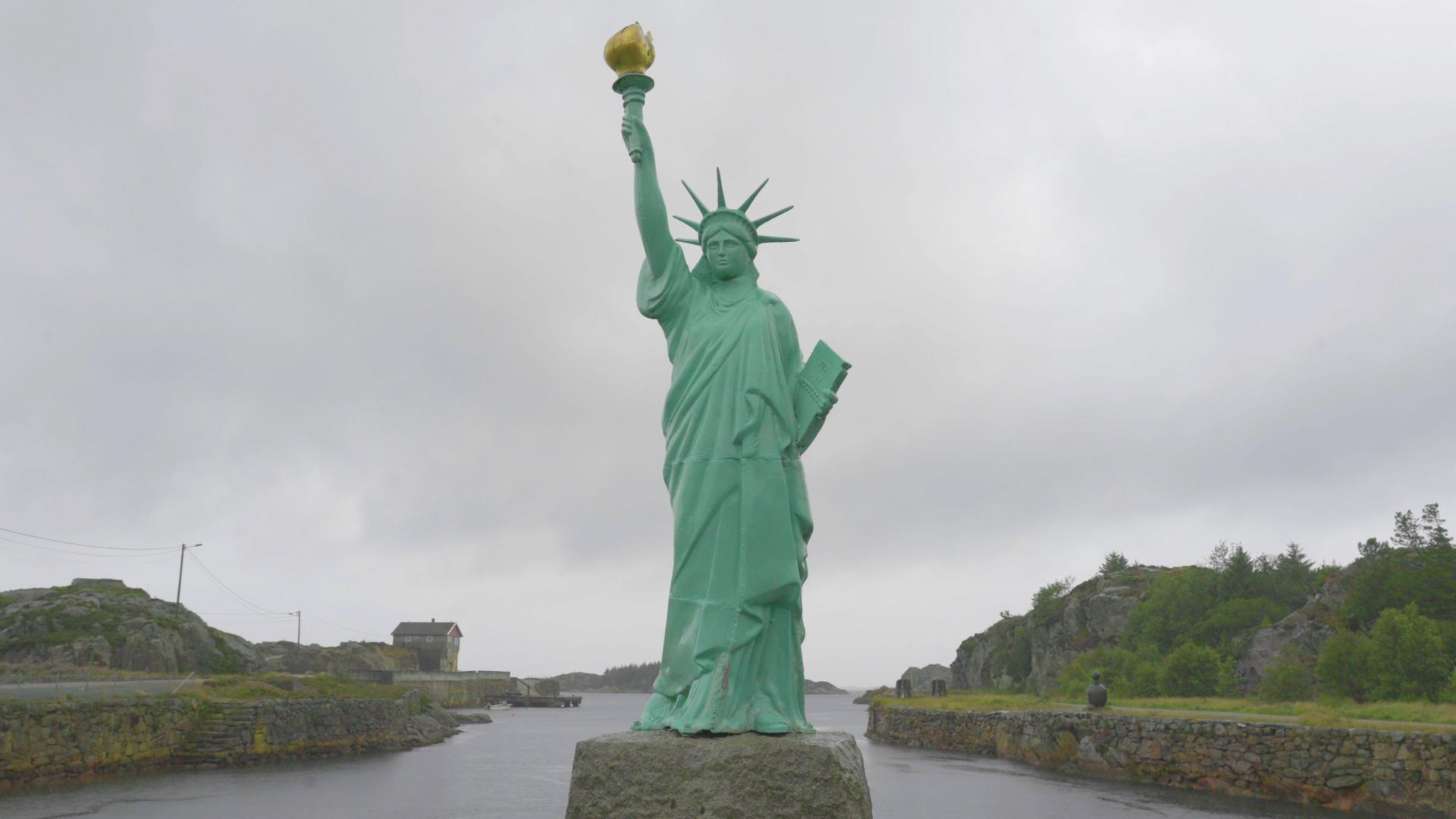
A small replica of the Statue of Liberty stands on the shore at Visnes, on the western coast of Karmøy. It is there because the copper in the original Statue of Liberty in New York likely came from the mines right here.
The Visnes copper mines were among the largest in northern Europe in the 1870s and 1880s, and around 80 tons of copper were shipped from here to France, where Frédéric Auguste Bartholdi was building his statue. In 1986, researchers at Bell Laboratories tested copper samples from the Statue of Liberty and matched them to Visnes ore. The connection is not 100 percent certain, since a fire destroyed some of the old mine records, but the scientific analysis is strong evidence.
The replica was erected after the copper match was confirmed. It is not very large, but it makes for a good photo, especially with the North Sea behind it. The statue sits in the garden area of the Visnes Mining Museum, so if you are visiting one, you will see the other.
On its own, the statue is a five-minute stop. Combine it with the mining museum next door to get the full story.
The Visnes copper mines were among the largest in northern Europe in the 1870s and 1880s, and around 80 tons of copper were shipped from here to France, where Frédéric Auguste Bartholdi was building his statue. In 1986, researchers at Bell Laboratories tested copper samples from the Statue of Liberty and matched them to Visnes ore. The connection is not 100 percent certain, since a fire destroyed some of the old mine records, but the scientific analysis is strong evidence.
The replica was erected after the copper match was confirmed. It is not very large, but it makes for a good photo, especially with the North Sea behind it. The statue sits in the garden area of the Visnes Mining Museum, so if you are visiting one, you will see the other.
On its own, the statue is a five-minute stop. Combine it with the mining museum next door to get the full story.