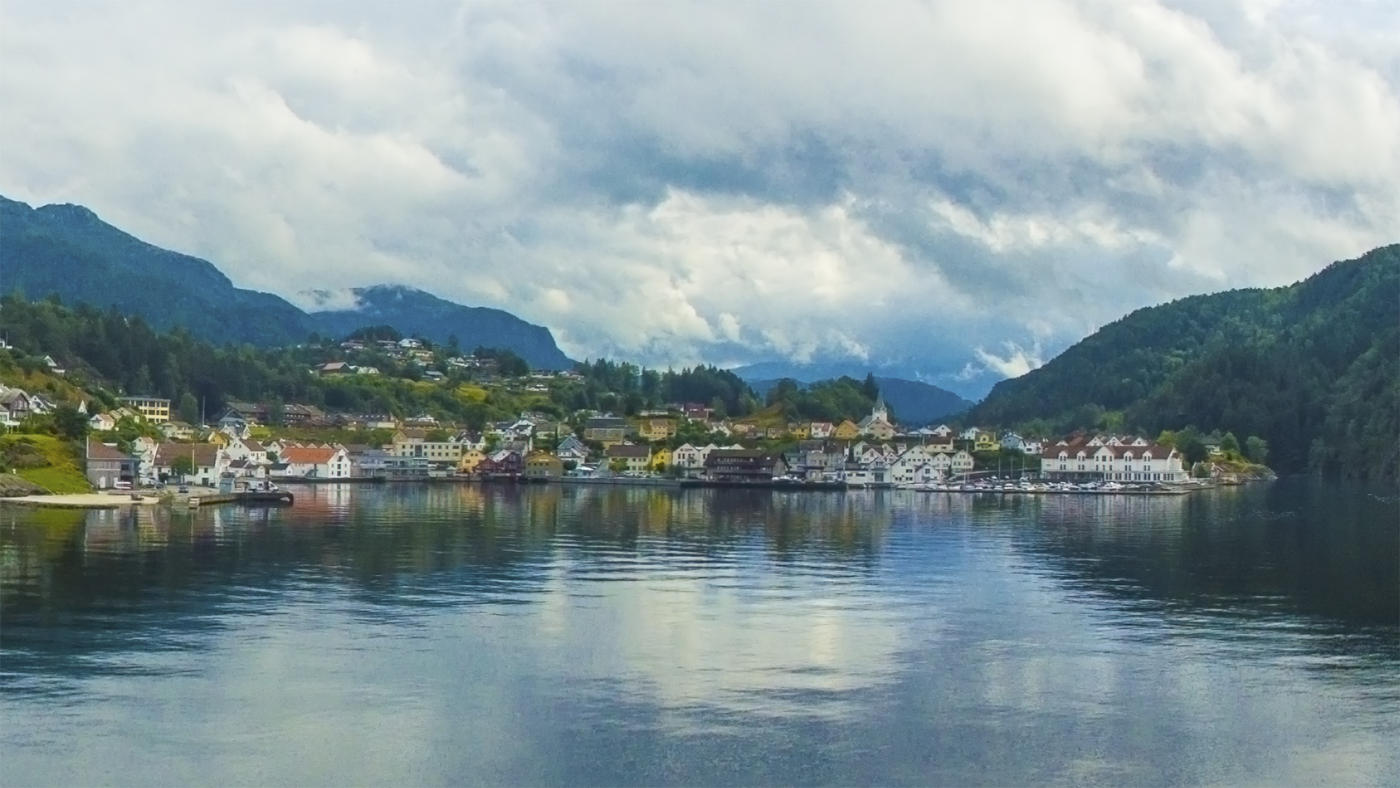
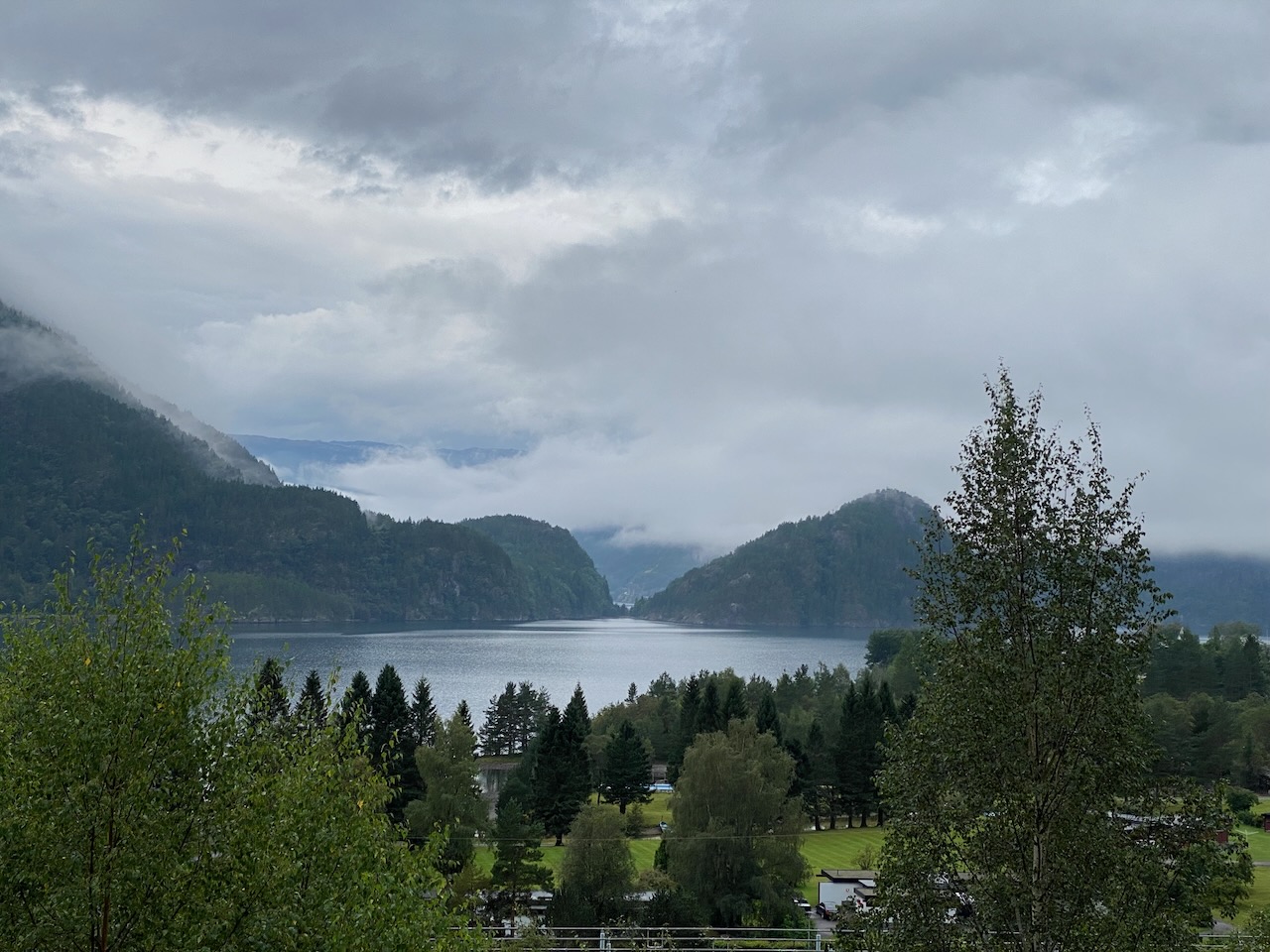
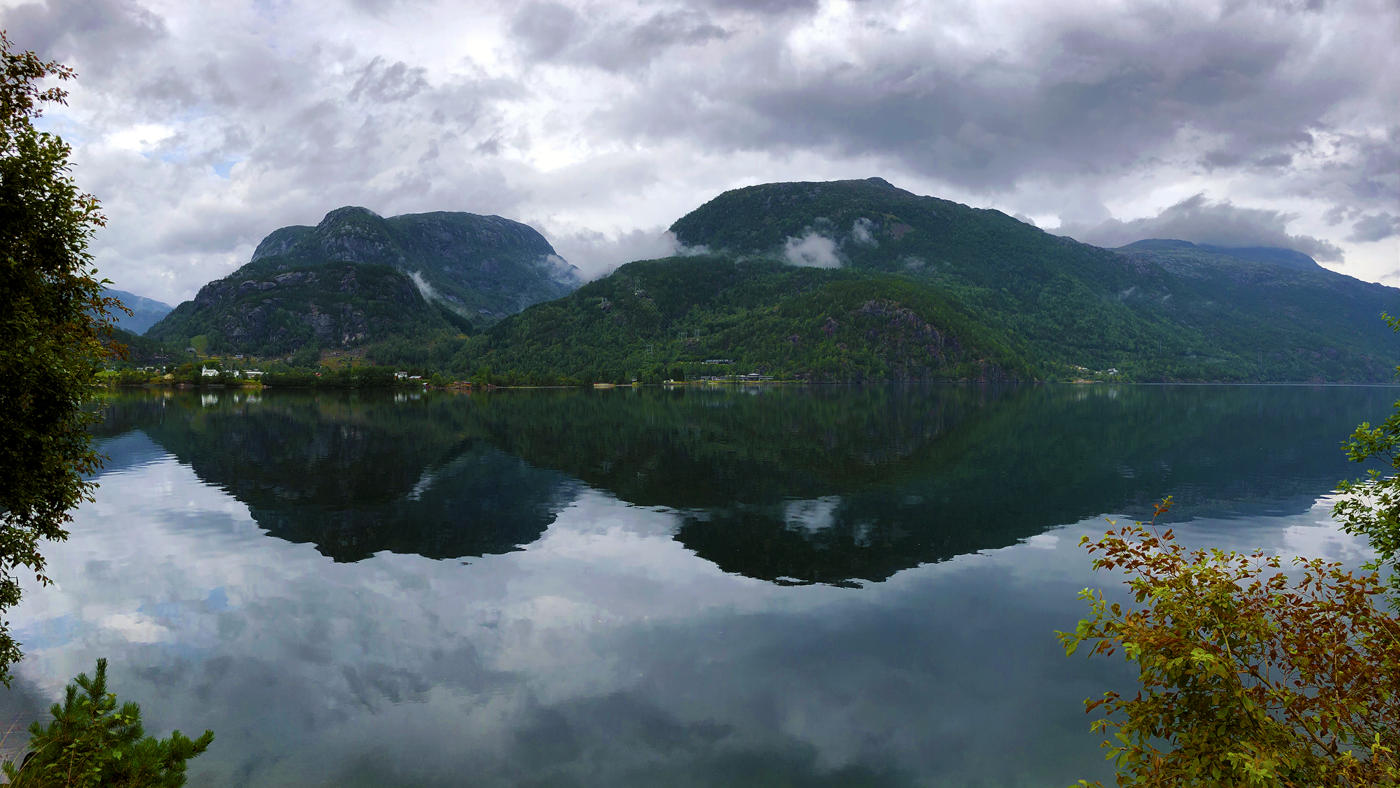
Sauda sits at the end of the Saudafjord, on flat land where the rivers meet the sea. Much of the industrial harbour area is actually built on reclaimed land that was once underwater.
The name probably comes from the Old Norse word for sheep, though it might also relate to a word meaning "to seethe" or "to boil" - possibly referring to a spring. The spelling changed from Søvde to Sauda in 1917.
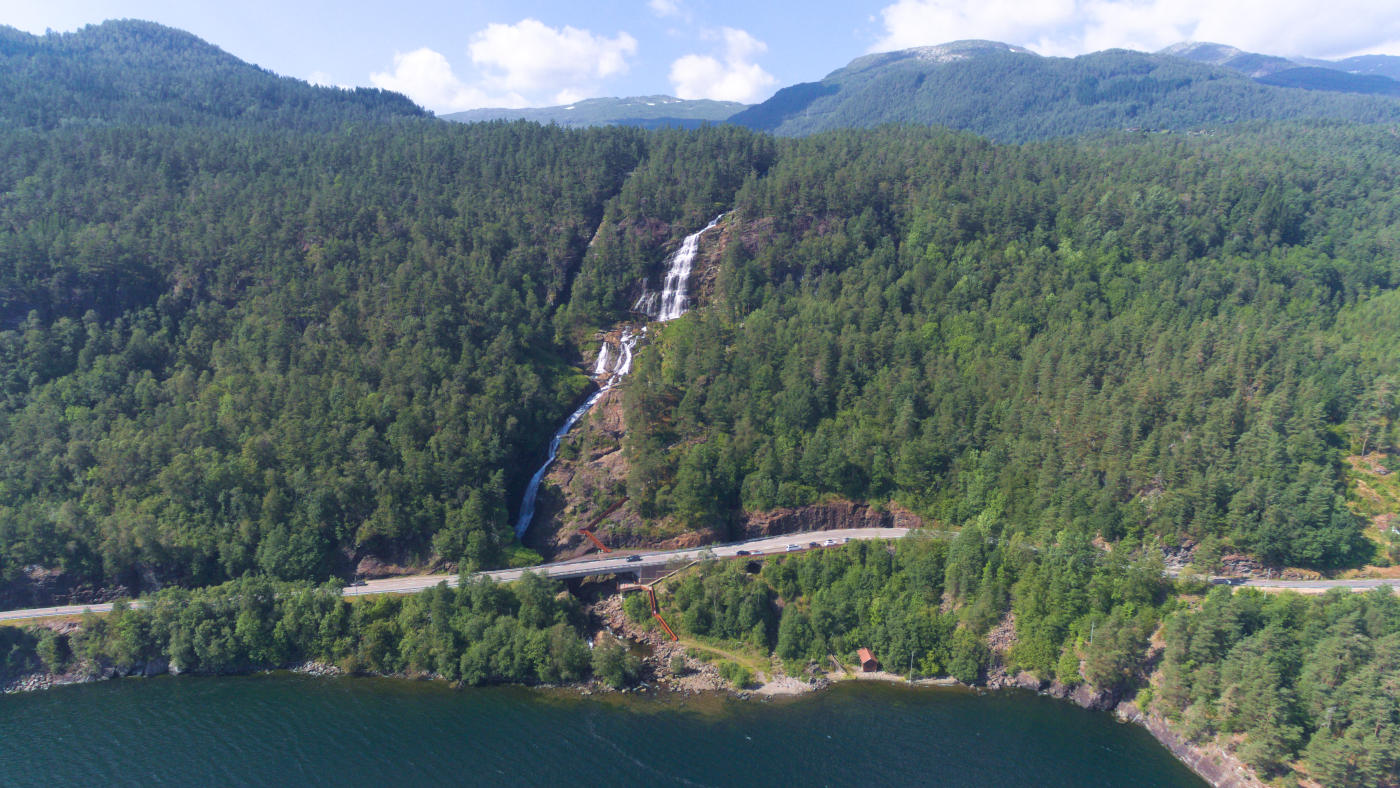
Sauda was a farming and timber village for centuries. The many waterfalls provided power for sawmills, and Dutch traders came to buy lumber. Then in 1910, the American company Electric Furnace Products began building what would become Northern Europe's largest smelting plant. Production started in 1923, and the town was transformed. The population tripled within a few years, peaking at around 6,700 in the 1960s.
The Americans built more than a factory. They created Åbøbyen, a planned workers' housing area with around 120 architect-designed wooden houses. It was called "the garden city" or "the American town." The grandest houses on the heights were for the director and managers. Over time they added a hospital, community hall, and library. Åbøbyen is now one of the best-preserved industrial-era housing developments in Norway.
The smelting plant changed hands several times - Elkem bought it in 1981, then French company Eramet in 1999. It still operates today, producing ferromanganese for the global steel industry. The waste heat from the plant now provides district heating for public buildings and even keeps the town centre streets ice-free in winter.
Sauda received city status in 1998. Around 4,500 people live in the municipality today.