In late May 1930, a homeowner at Skogerveien 8 in Drammen was digging in the garden when a heavy rainstorm washed away the soil and exposed bare rock underneath. Carved into that rock were strange figures that had lain buried and invisible for centuries. The homeowner contacted Drammen Museum, and experts confirmed one of the most remarkable prehistoric finds in eastern Norway.
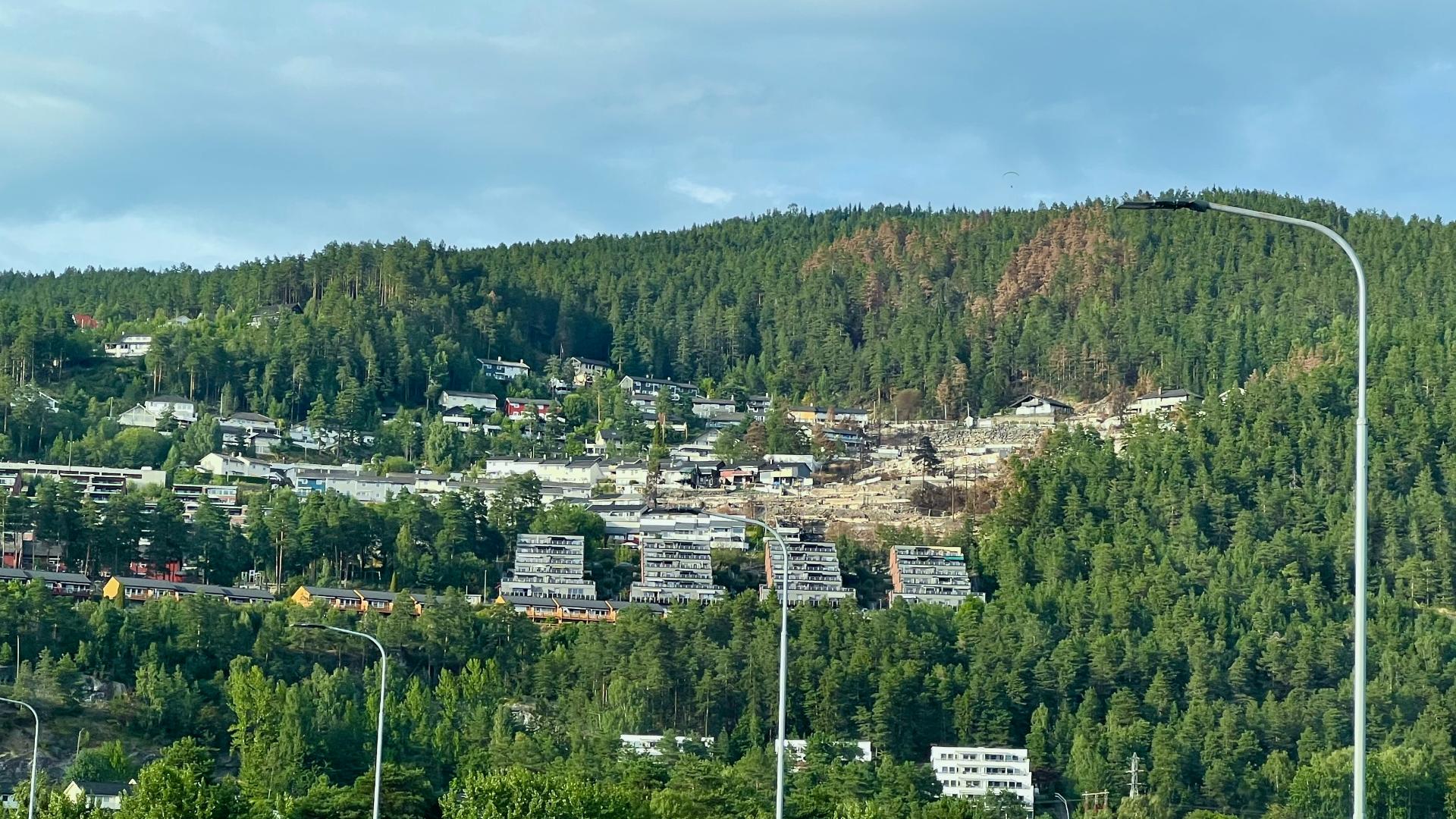
The carvings date to approximately 4000 BCE, making them around 6,000 years old. When they were made, this rock face stood at the water's edge of the Drammensfjord. Due to dramatic post-glacial land uplift since the ice sheets melted, the site now sits 60 metres above sea level in a quiet residential neighbourhood. The 46 figures were carved using a dot-hammering technique and include moose, a remarkable 2.3-metre-long whale, a bird, and what appears to be a beaver. Many are depicted in a stylized x-ray style with internal geometric lines, possibly representing skeletal structures or how animals were butchered after a hunt.
This is the only hunting-carving site in all of eastern Norway where both sea animals and land animals appear together on the same rock face, indicating the carvers lived at the boundary between marine and inland hunting territories. The people who made them were hunter-gatherers living off the land and sea, predating agriculture in the region by over a thousand years. Today, LED illumination makes the barely visible carvings clear for visitors, and the site is wheelchair accessible. A protective metal covering and stone wall shield the ancient rock face from the elements.
The carvings date to approximately 4000 BCE, making them around 6,000 years old. When they were made, this rock face stood at the water's edge of the Drammensfjord. Due to dramatic post-glacial land uplift since the ice sheets melted, the site now sits 60 metres above sea level in a quiet residential neighbourhood. The 46 figures were carved using a dot-hammering technique and include moose, a remarkable 2.3-metre-long whale, a bird, and what appears to be a beaver. Many are depicted in a stylized x-ray style with internal geometric lines, possibly representing skeletal structures or how animals were butchered after a hunt.
This is the only hunting-carving site in all of eastern Norway where both sea animals and land animals appear together on the same rock face, indicating the carvers lived at the boundary between marine and inland hunting territories. The people who made them were hunter-gatherers living off the land and sea, predating agriculture in the region by over a thousand years. Today, LED illumination makes the barely visible carvings clear for visitors, and the site is wheelchair accessible. A protective metal covering and stone wall shield the ancient rock face from the elements.