Lykling on the southwestern coast of Bømlo is the site of Norway's largest gold rush. Gold was first found here in 1862 by a young shepherd. Commercial mining began in 1882 after two telegraphers prospecting for copper cracked open a rock and found gold literally holding the halves together.
Three English-financed companies drove the operation. At its peak, 500 men worked the mines. The village sprouted two hotels, a hotel ship, bakeries, a church, and retail stores, all to support a gold boom in the remote Norwegian islands. Over 25 years, the mines produced 250 kilograms of pure gold, some of it containing up to 25% silver. Operations ended in 1910 when the veins became uneconomical.
The gold sits in quartz veins within a 500-million-year-old ophiolite complex, formed by ocean floor volcanism south of the equator and pushed here during the Caledonian mountain-building. The area is now part of the Sunnhordland UNESCO Global Geopark, and it is illegal to remove stone or gold without permission.
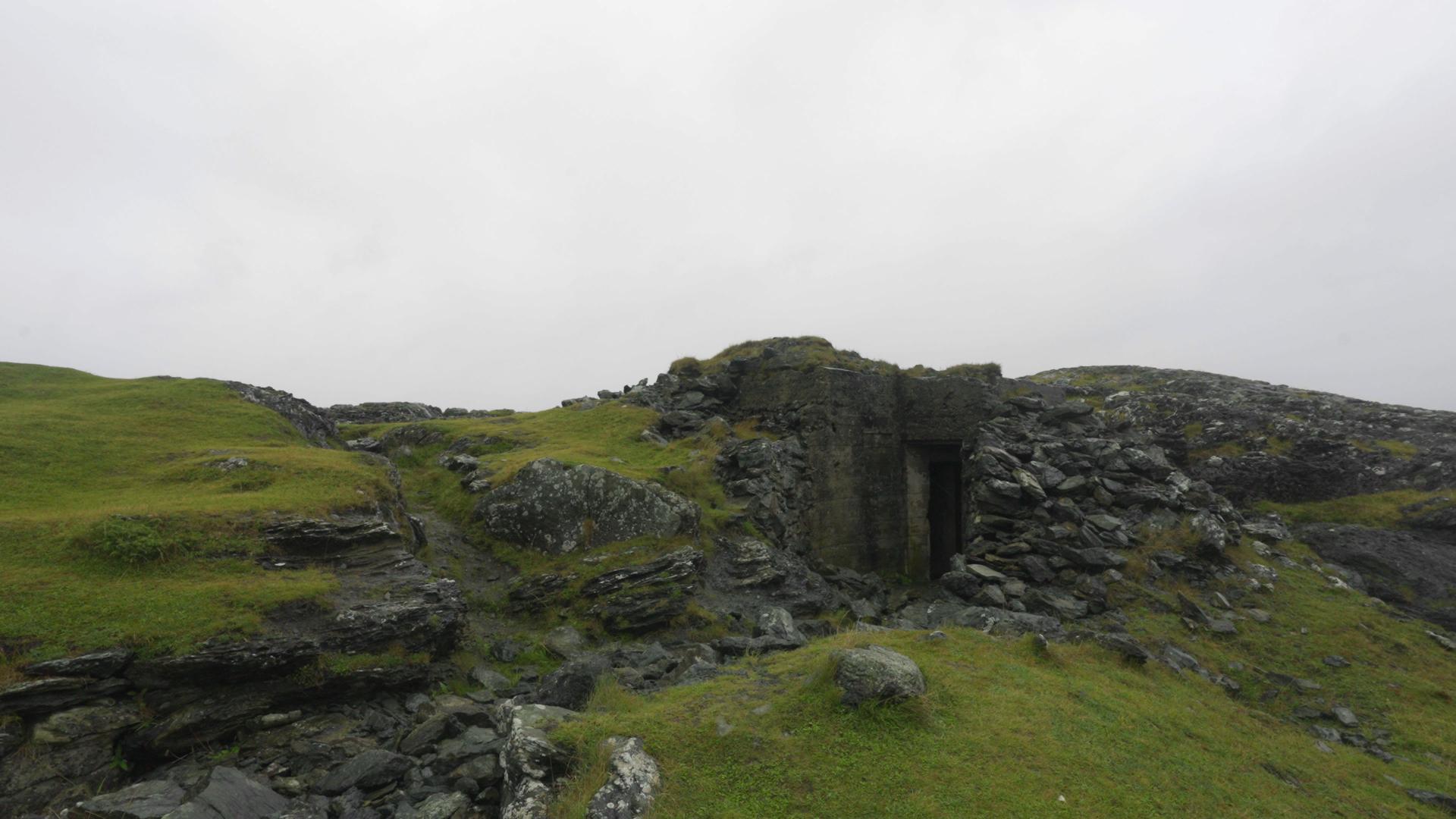
Some of the old mine buildings and tunnels are still visible. A marked trail leads through the mining area.
Three English-financed companies drove the operation. At its peak, 500 men worked the mines. The village sprouted two hotels, a hotel ship, bakeries, a church, and retail stores, all to support a gold boom in the remote Norwegian islands. Over 25 years, the mines produced 250 kilograms of pure gold, some of it containing up to 25% silver. Operations ended in 1910 when the veins became uneconomical.
The gold sits in quartz veins within a 500-million-year-old ophiolite complex, formed by ocean floor volcanism south of the equator and pushed here during the Caledonian mountain-building. The area is now part of the Sunnhordland UNESCO Global Geopark, and it is illegal to remove stone or gold without permission.
Some of the old mine buildings and tunnels are still visible. A marked trail leads through the mining area.