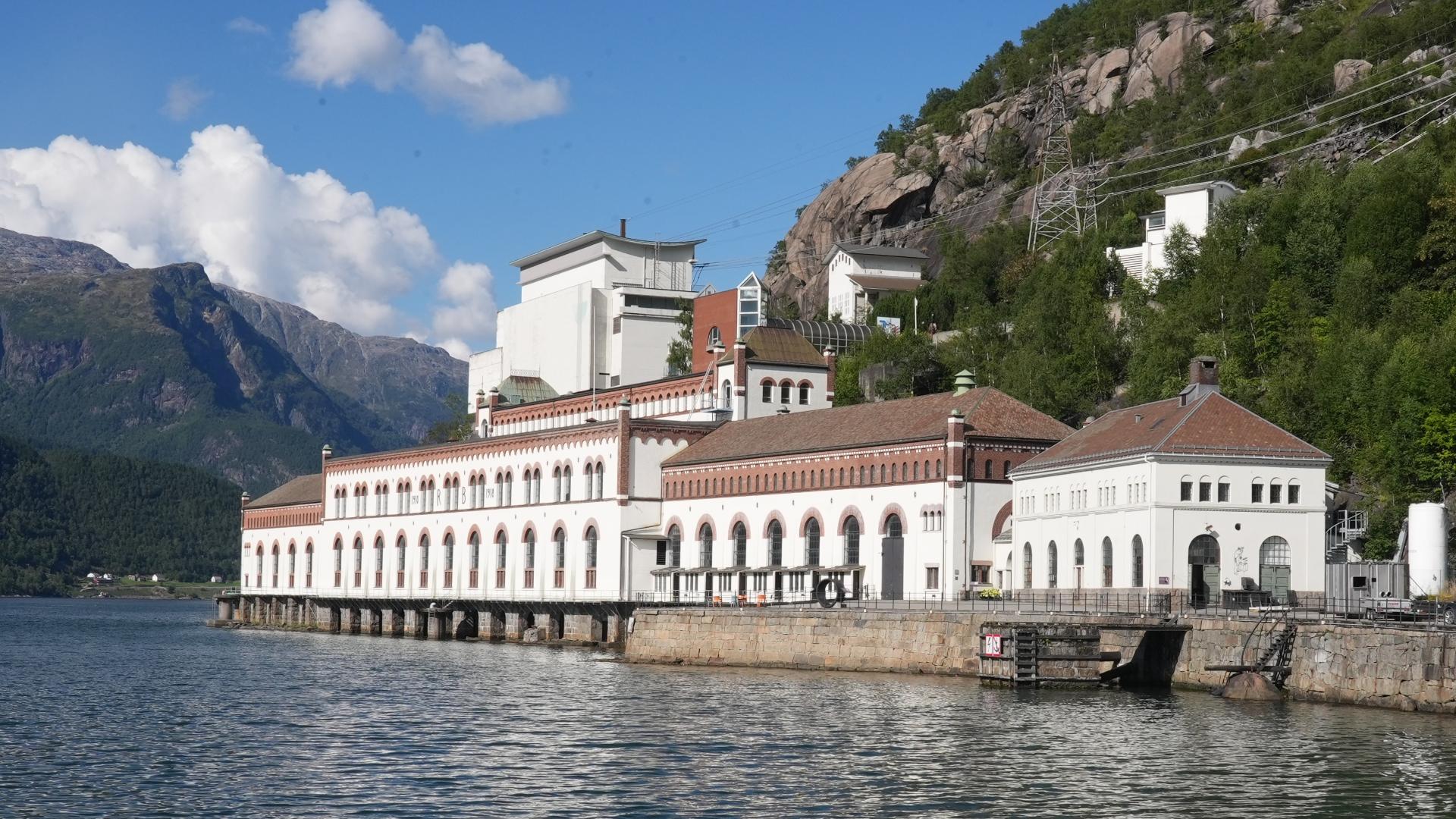
Kraftmuseet, the Norwegian Museum of Hydropower and Industry, is housed in the old Tysso I power station in Tyssedal. The building sits directly on the Sørfjord, a castle-like structure designed by architect Thorvald Astrup and built between 1906 and 1918.
When it opened in 1908, Tysso I was one of the largest high-pressure power stations in the world. The penstock that brought water down from the mountains was 730 metres long with a drop of 410 metres, at an incline of up to 60 degrees. Workers had to bolt themselves to the icy mountainside or dangle from ropes to build it. The station operated until 1989, and the entire plant was protected as a cultural heritage site in 2000.
Inside, the original machinery and control room equipment remain. Marble panels and Bakelite switches line the walls. The turbine hall has solemn bay windows looking out over the fjord.
This is where Norway's industrial transformation began. One moment Odda was a tourist resort with twelve hotels. The next, the waterfalls were harnessed and the factories arrived. The museum tells that story well.