On a low rock outcrop at Prestegardsveien in Egersund, three Bronze Age ship carvings are pecked into the stone surface, dating from roughly 1800 to 500 BC. The ships are of the classic Scandinavian Bronze Age type: long, curved hulls with vertical crew strokes standing along the gunwale. What distinguishes the Husabø figures is the form of the crew members, rendered as Y-shaped figures with their arms raised above their heads.
This raised-arm posture appears at rock carving sites across Scandinavia and is commonly interpreted as a ritual gesture connected to sun worship. In Bronze Age cosmology, the ship was believed to carry the sun across the sky and through the underworld, and the crew figures may represent participants in ceremonies honouring this cycle. The Y-shape could depict people raising their arms in adoration, prayer, or dance. Similar figures appear at major carving sites in Bohuslän in Sweden and at Tanum, a UNESCO World Heritage Site.
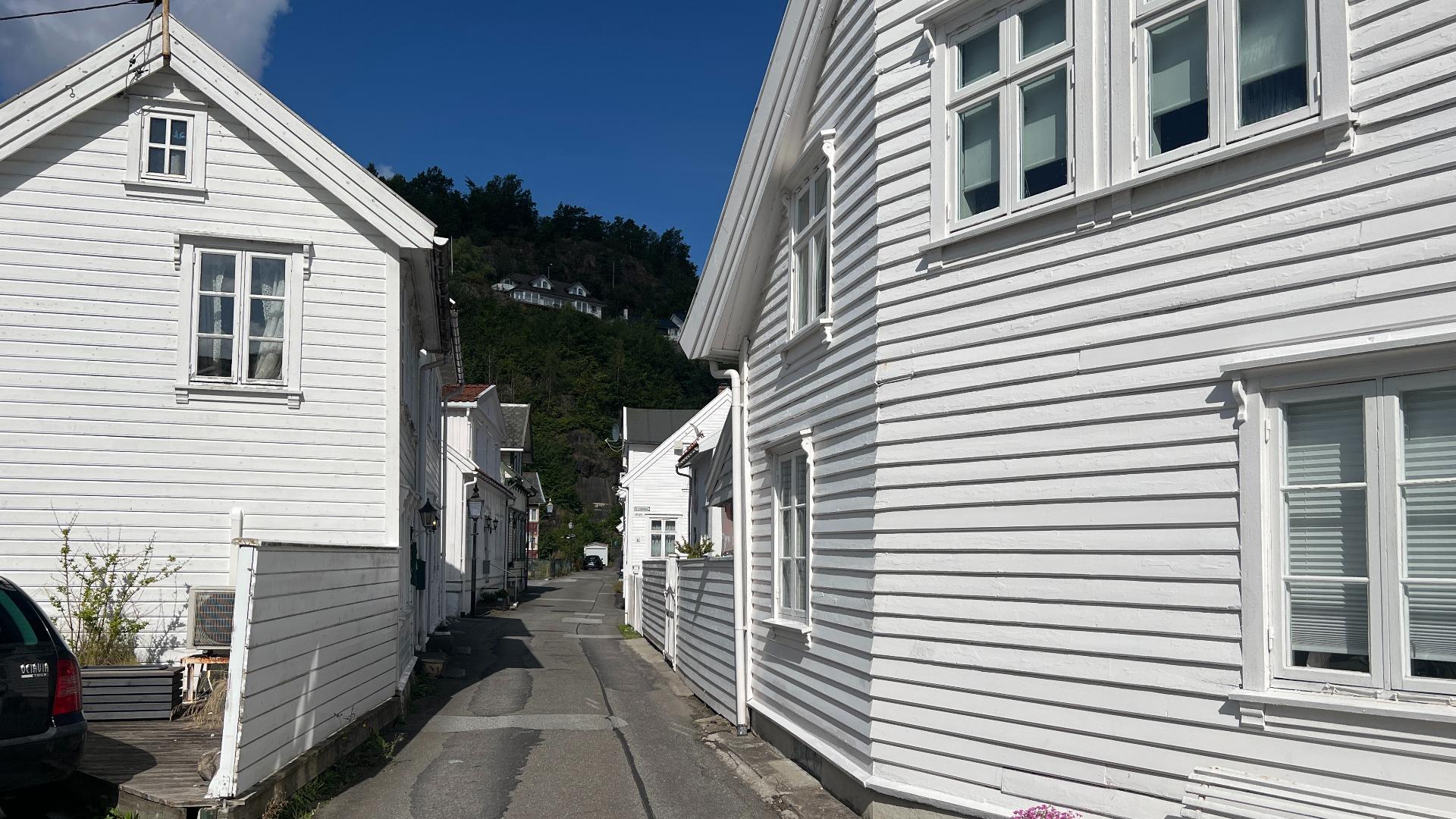
The carvings sit in a residential area and are easy to miss. They are located on exposed bedrock along the street, protected by a low fence. A small information sign explains the figures. The rock surface has been painted with red pigment to make the carvings more visible, following standard Norwegian archaeological practice for displayed rock art. The site is a short walk from Egersund town centre.
This raised-arm posture appears at rock carving sites across Scandinavia and is commonly interpreted as a ritual gesture connected to sun worship. In Bronze Age cosmology, the ship was believed to carry the sun across the sky and through the underworld, and the crew figures may represent participants in ceremonies honouring this cycle. The Y-shape could depict people raising their arms in adoration, prayer, or dance. Similar figures appear at major carving sites in Bohuslän in Sweden and at Tanum, a UNESCO World Heritage Site.
The carvings sit in a residential area and are easy to miss. They are located on exposed bedrock along the street, protected by a low fence. A small information sign explains the figures. The rock surface has been painted with red pigment to make the carvings more visible, following standard Norwegian archaeological practice for displayed rock art. The site is a short walk from Egersund town centre.