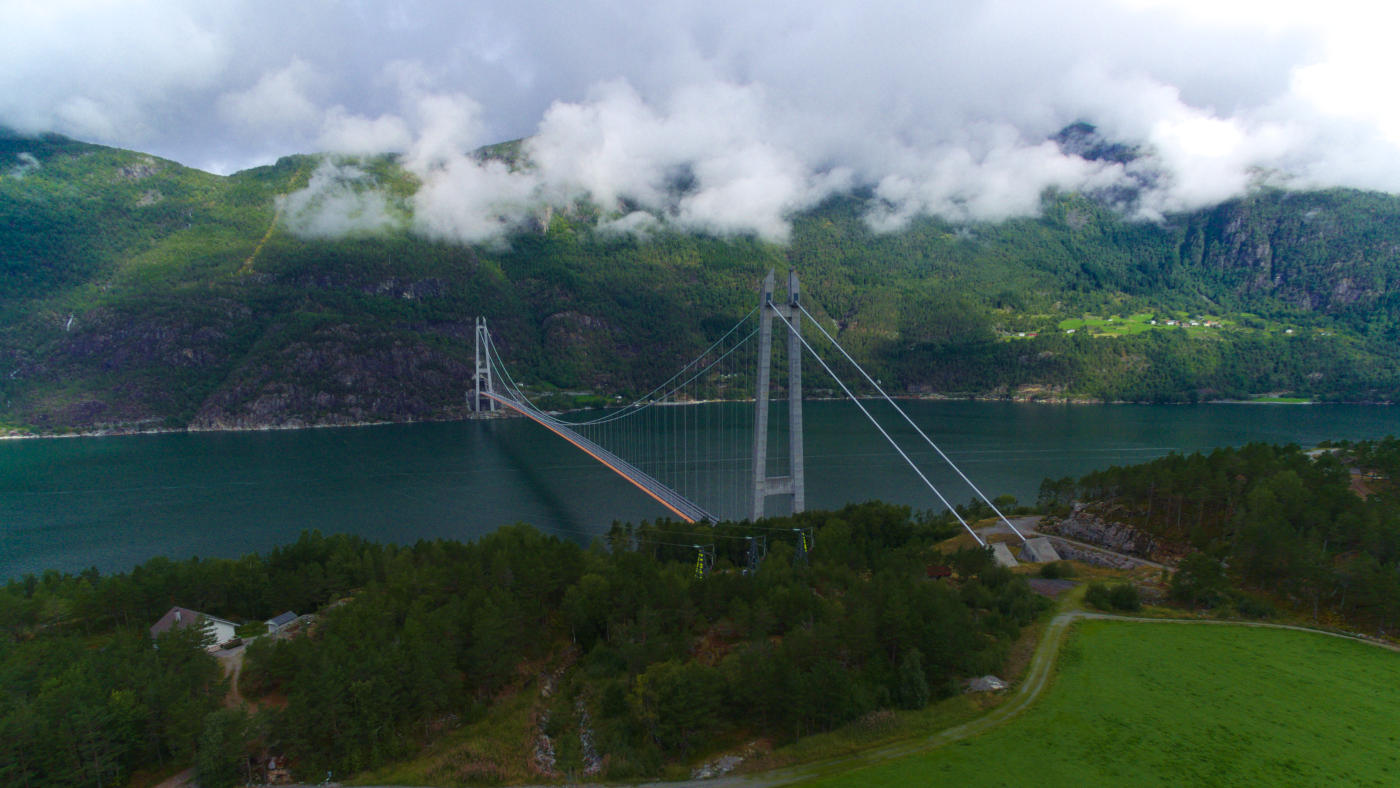
The Hardanger Bridge is Norway's longest suspension bridge - 1,380 metres total, with a main span of 1,310 metres. That's 30 metres longer than the Golden Gate.
A local inventor named Aamund K. Bu first proposed this bridge in 1938, in an article in Bergens Tidende. He imagined a suspension bridge crossing to the village of Bu - his own family's farm. An engineer confirmed it was feasible, but then the idea was forgotten for thirty years.
The towers rise 200 metres above the water. They had to be built on land because the fjord here is up to 500 metres deep - too deep to anchor pylons in the water.
Parliament rejected the bridge in 1996. Environmental groups warned it would damage nature and lead to road upgrades across Hardangervidda that would harm wild reindeer. Ten years later, in 2006, it finally got approval.
Then came the traffic problem. Politicians expected 1,950 vehicles daily. Actual numbers ran about 20% lower. Winter months see only 700-900 cars because Hardangervidda closes. The toll period had to be extended from 15 to nearly 19 years.
It's the world's longest suspension bridge between tunnels. You drive from tunnel directly onto bridge, then into tunnel again. There are roundabouts inside the tunnels on both sides - full-size underground roundabouts. They often surprise people on social media.
There's a toll. Pedestrians and cyclists cross free. Viewpoint and parking at Bu on the south side.
One consequence of the 55-metre clearance: large cruise ships can no longer reach Eidfjord.