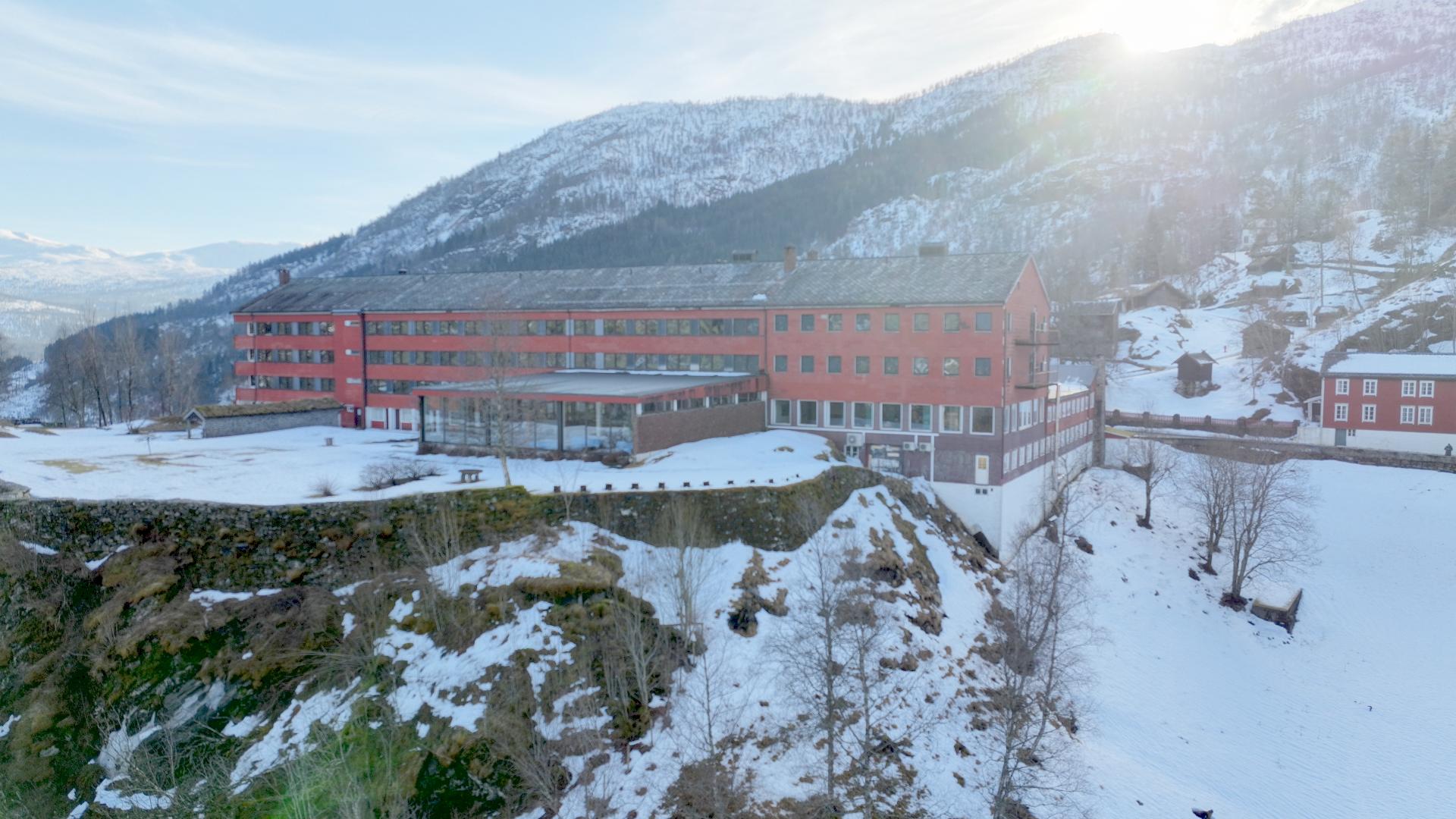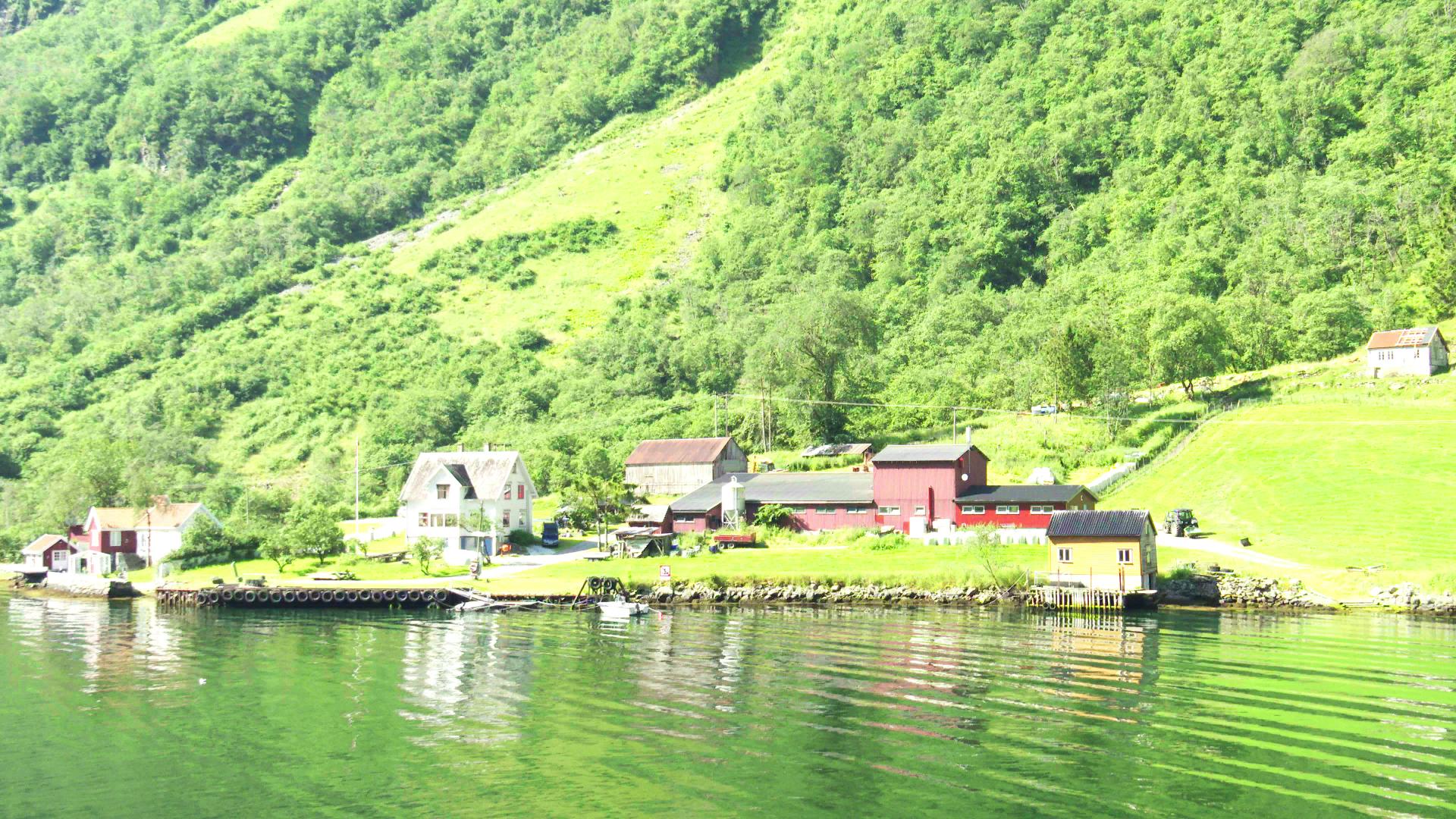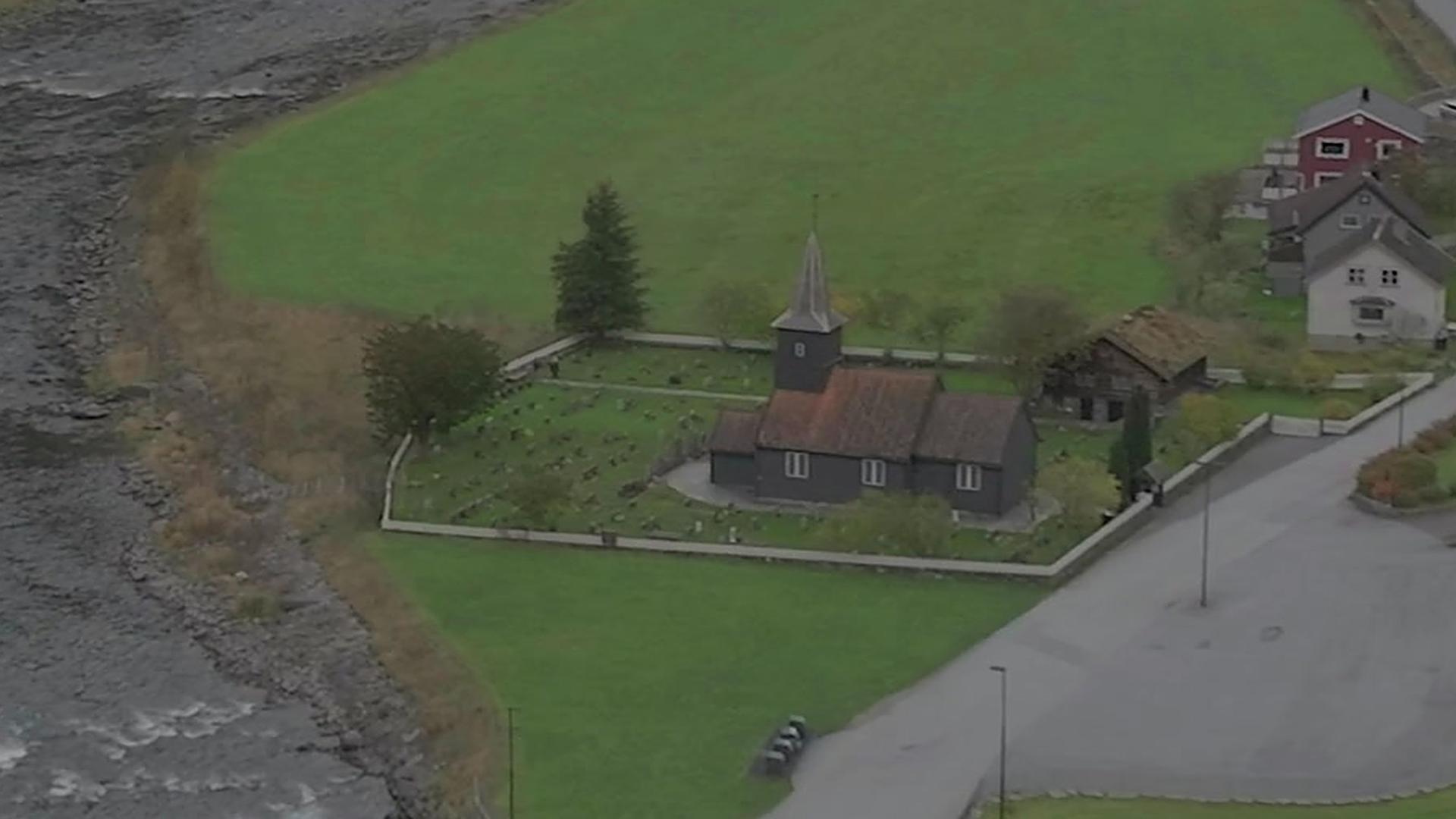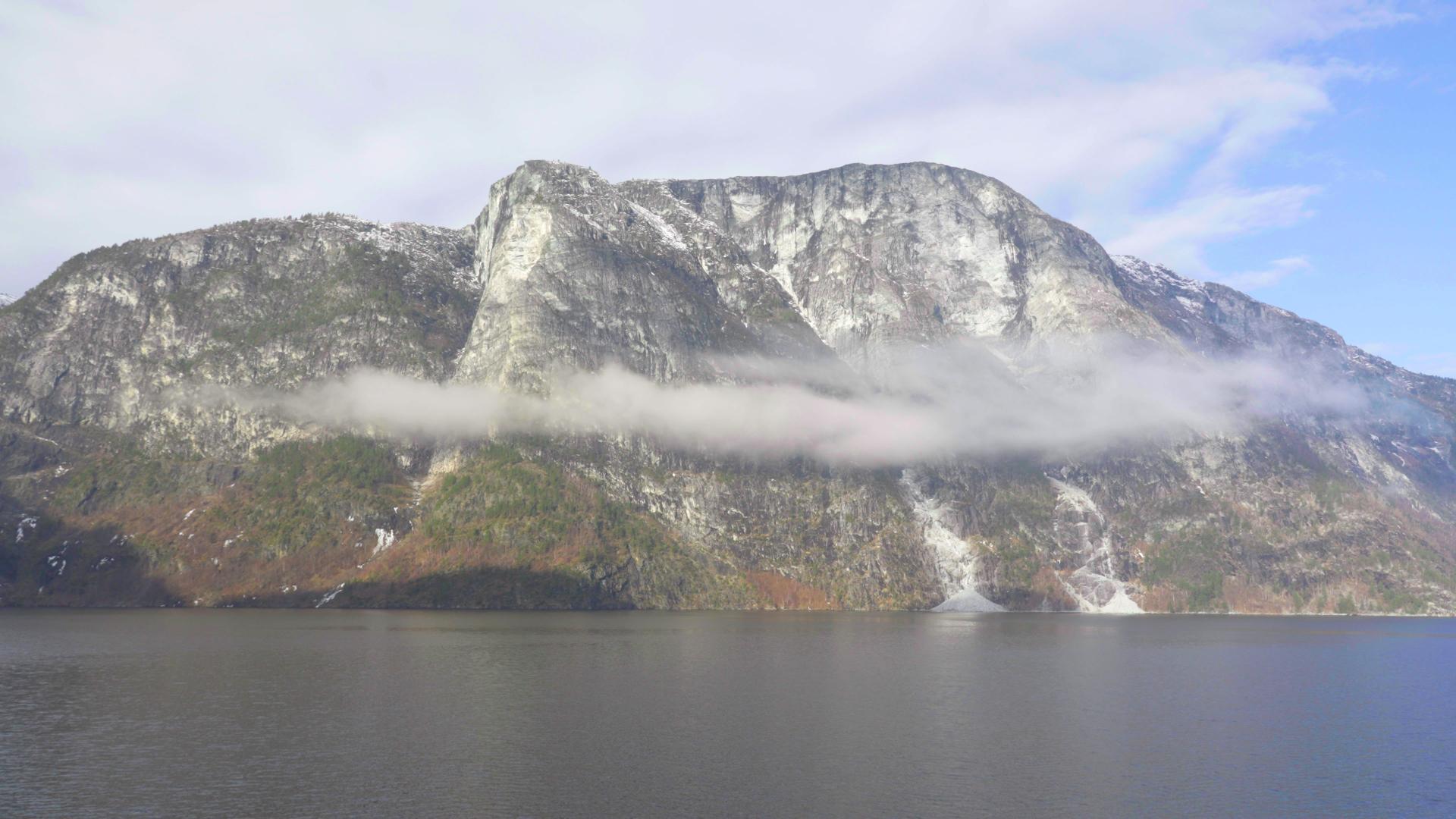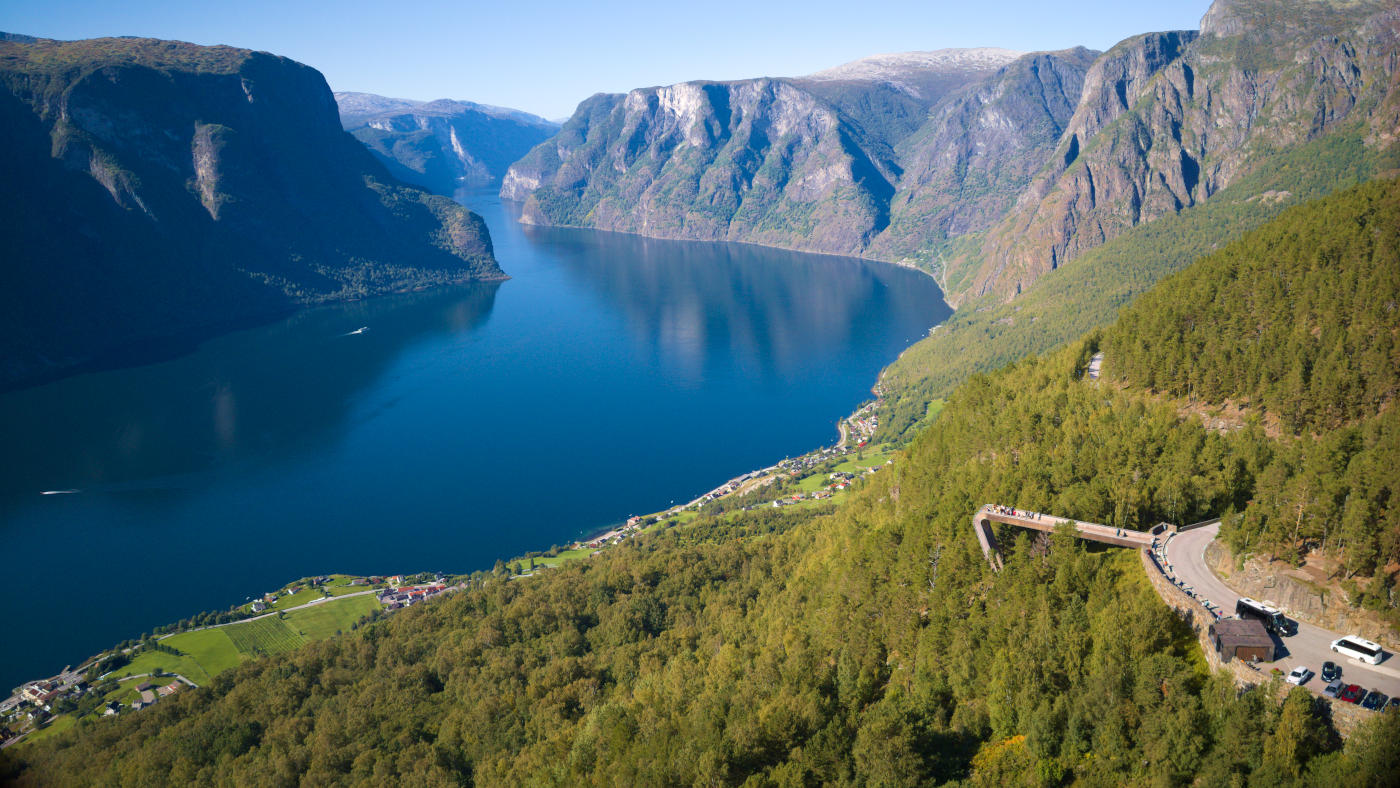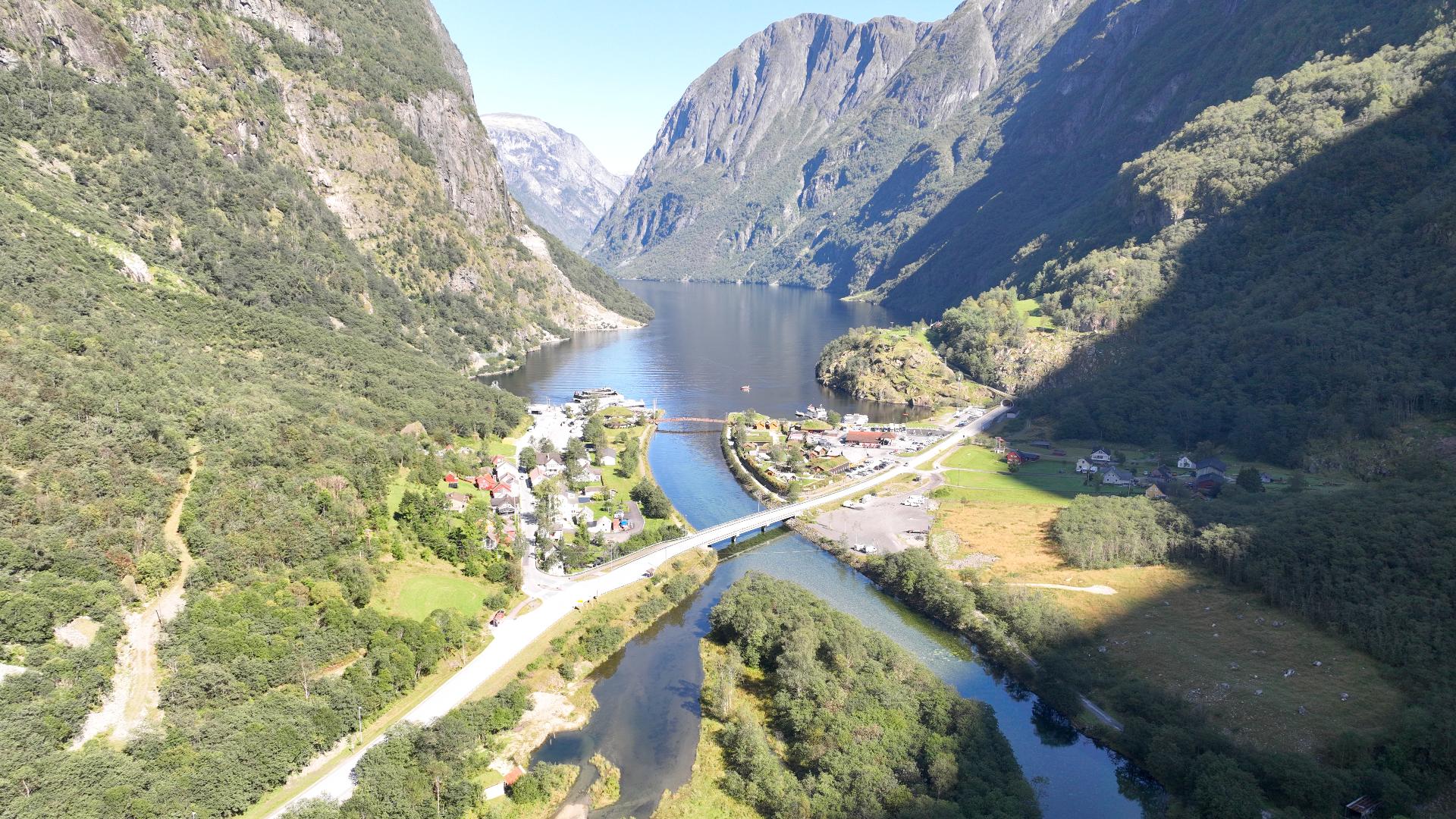
Gudvangen is a small hamlet at the end of the Nærøyfjord. The name comes from Old Norse "Guðvangir" meaning "the meadow of the gods" or "the place of the gods". The Nærøyfjord itself is named after Njord, the Norse god of trading and sailing. During the Viking Age, Gudvangen was an important trading hub linking eastern and western Norway.
In 1647, when the postal route between Oslo and Bergen was established, Gudvangen became a key stop. Farmers were required to row the postmen the 45 km to Lærdal. When the fjord froze in winter, they had to use a combination of boat and sledge to cross the ice - a dangerous journey. In 1734, King Christian VI granted a royal privilege to operate an inn and trading post here. At peak times, up to 200 horses and carts would line up waiting to transport passengers and goods.
Before the tunnels were built, Gudvangen was an important ferry terminal. Today the village consists of about 15 houses, a harbour, a quarry, two hotels, three charging stations, a petrol station and the Viking Village Njardarheim.
If you're arriving by sightseeing boat and need to catch a bus, most buses stop right outside the ferry terminal. The change takes about a minute, or 20 seconds if you run. Some long-distance buses don't stop at the ferry terminal but at the junction with the E16, which is 300 metres away.
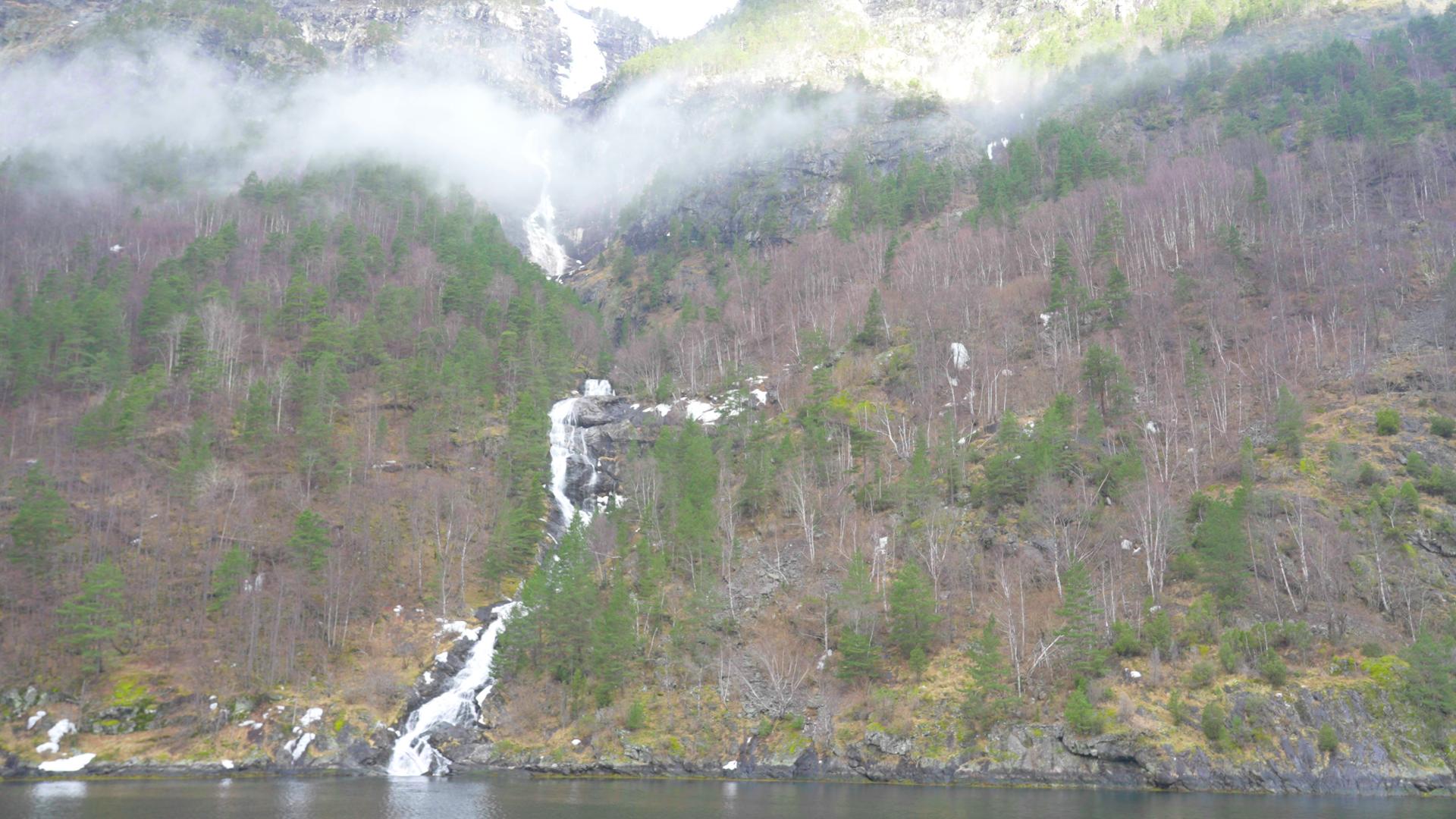
From Gudvangen you can see Kjelfossen, one of Norway's tallest waterfalls at 755 metres total height. The tallest single drop is 149 metres. You can see it from the quay and from the E16.
There is a kayak rental between the bridge and the petrol station. The campsites are a few hundred metres up the valley.
Apart from the Viking Village, there isn't much more to see in Gudvangen itself.