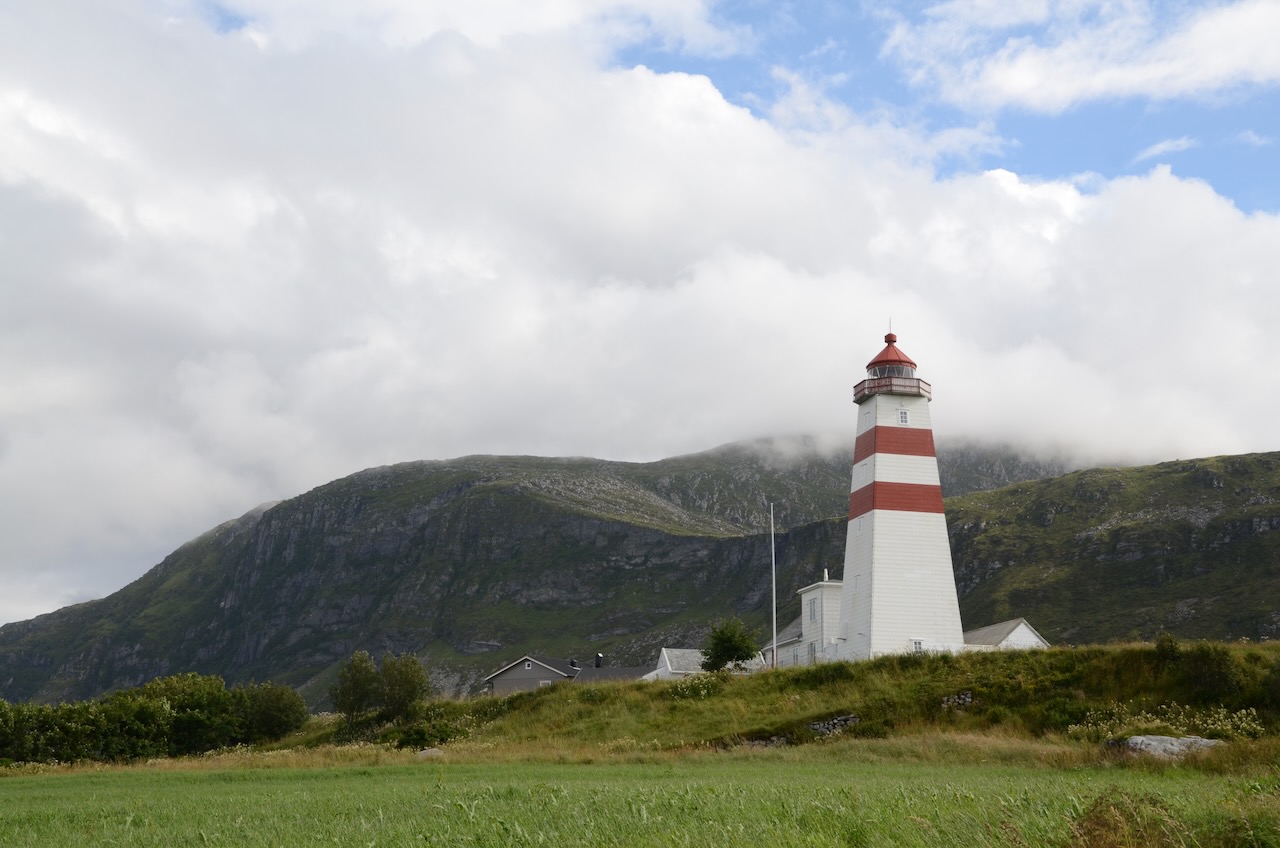
Giske is a small, flat island about 10 kilometres northwest of Ålesund. Today it is connected to the mainland by bridges and tunnels, but for most of its history it was an isolated and surprisingly powerful place. During the Viking Age and the Middle Ages, the islands around Giske were a centre of power. This was the seat of earls, local kings, and chieftains, including the Arnunge family, one of the wealthiest noble families in all of Norway.
According to local tradition, Gange-Rolv, better known as Rollo, was born on the island or on neighbouring Vigra around the year 860. He was the son of Ragnvald Mørejarl, the Earl of Møre. After being banished by King Harald Hårfagre, Rollo sailed to France, conquered the territory at the mouth of the Seine, and became the first Duke of Normandy in 911. His descendant William conquered England in 1066. So if the saga is true, the British royal family traces part of its ancestry back to this tiny island. Whether Rollo was actually Norwegian or Danish is still debated among historians, but locals here have no doubt.
The main thing to see on Giske is the church. Giske church dates from around 1135 and was built as a private chapel for the Arnunge family. What makes it special is the material: it is built entirely of white marble, the only marble church in Norway still in use. The marble was brought here by boat, but nobody knows exactly where it came from. Today the walls are covered in chalk, so the marble is only visible in a few spots on the outside. Inside, there is a family tree tracing local ancestry back to Rollo. The interior was restored in 1756 by a local woodcarver named Jakob Sørensøn Giskegaard.
The island also has settlement traces going back much further. The Mjelthaugen burial ground dates to the Bronze Age, with richly decorated gravestones found on site. Giske is only about 800 people today, but for a place this small, the history runs remarkably deep.
According to local tradition, Gange-Rolv, better known as Rollo, was born on the island or on neighbouring Vigra around the year 860. He was the son of Ragnvald Mørejarl, the Earl of Møre. After being banished by King Harald Hårfagre, Rollo sailed to France, conquered the territory at the mouth of the Seine, and became the first Duke of Normandy in 911. His descendant William conquered England in 1066. So if the saga is true, the British royal family traces part of its ancestry back to this tiny island. Whether Rollo was actually Norwegian or Danish is still debated among historians, but locals here have no doubt.
The main thing to see on Giske is the church. Giske church dates from around 1135 and was built as a private chapel for the Arnunge family. What makes it special is the material: it is built entirely of white marble, the only marble church in Norway still in use. The marble was brought here by boat, but nobody knows exactly where it came from. Today the walls are covered in chalk, so the marble is only visible in a few spots on the outside. Inside, there is a family tree tracing local ancestry back to Rollo. The interior was restored in 1756 by a local woodcarver named Jakob Sørensøn Giskegaard.
The island also has settlement traces going back much further. The Mjelthaugen burial ground dates to the Bronze Age, with richly decorated gravestones found on site. Giske is only about 800 people today, but for a place this small, the history runs remarkably deep.