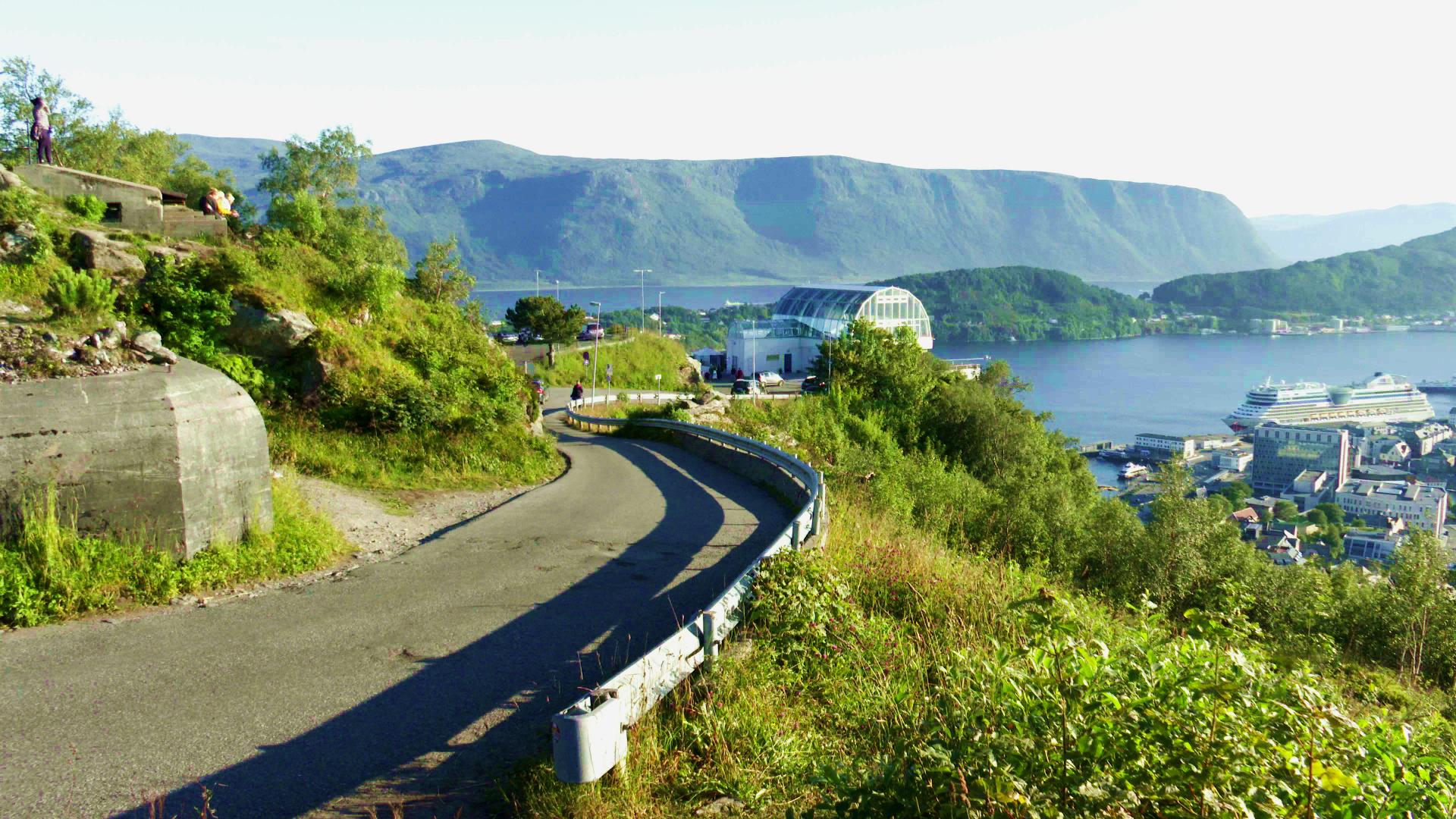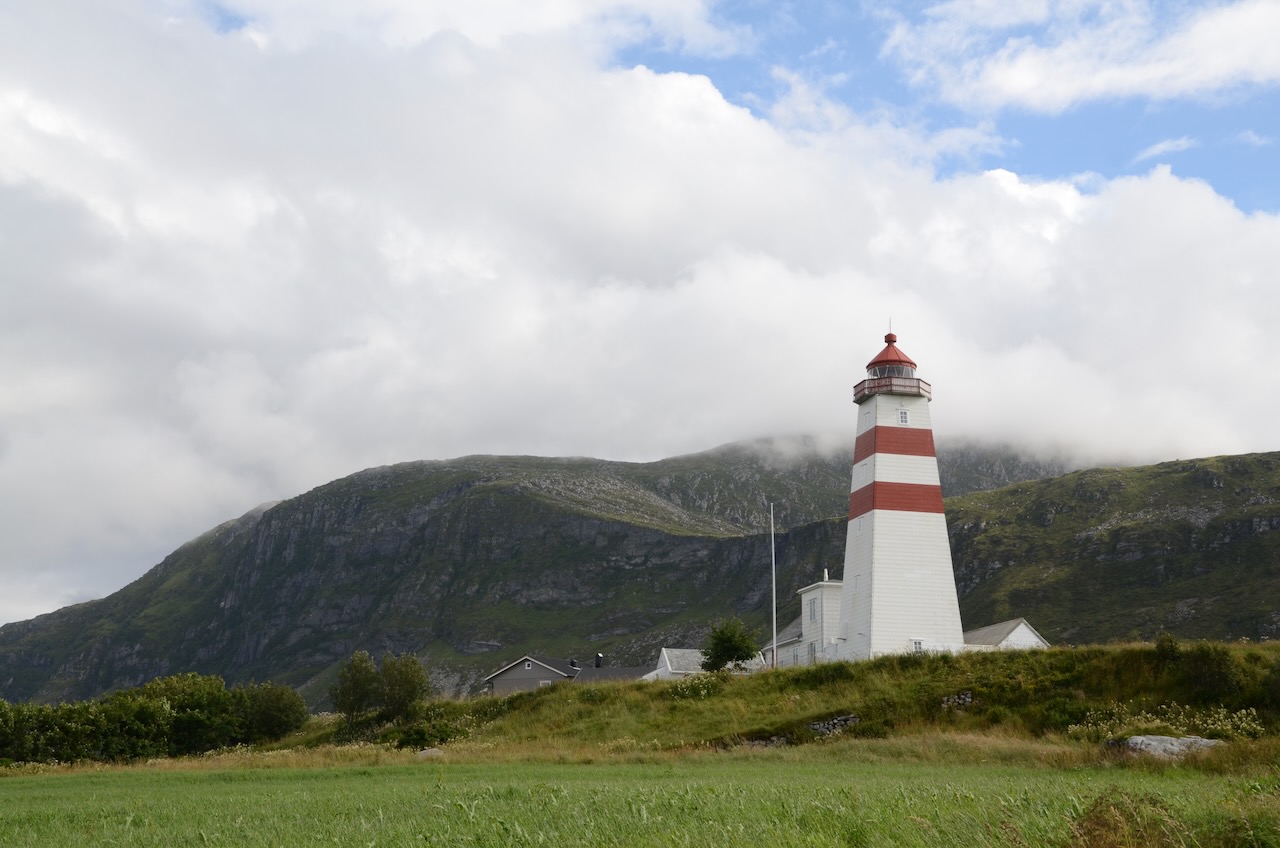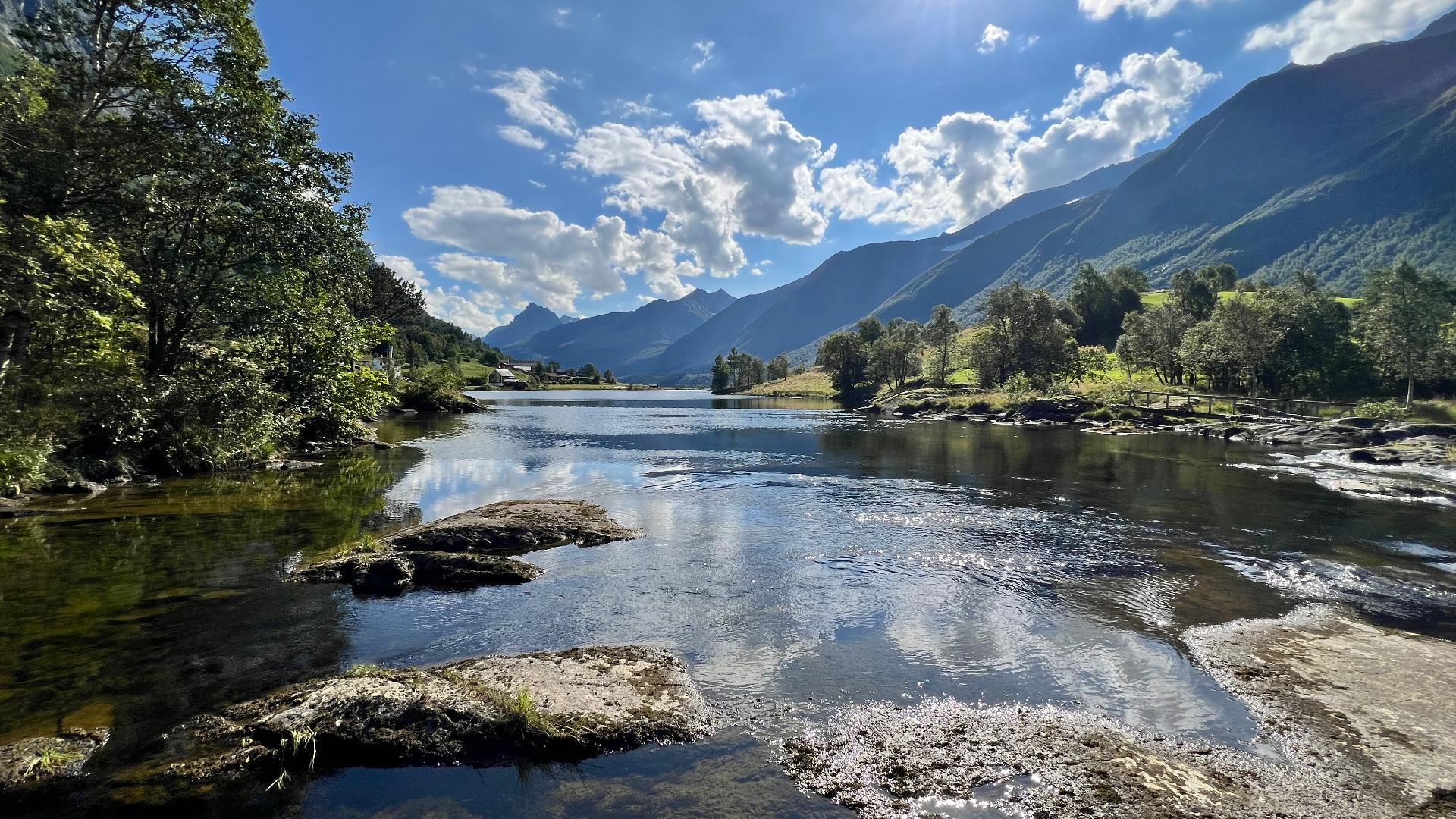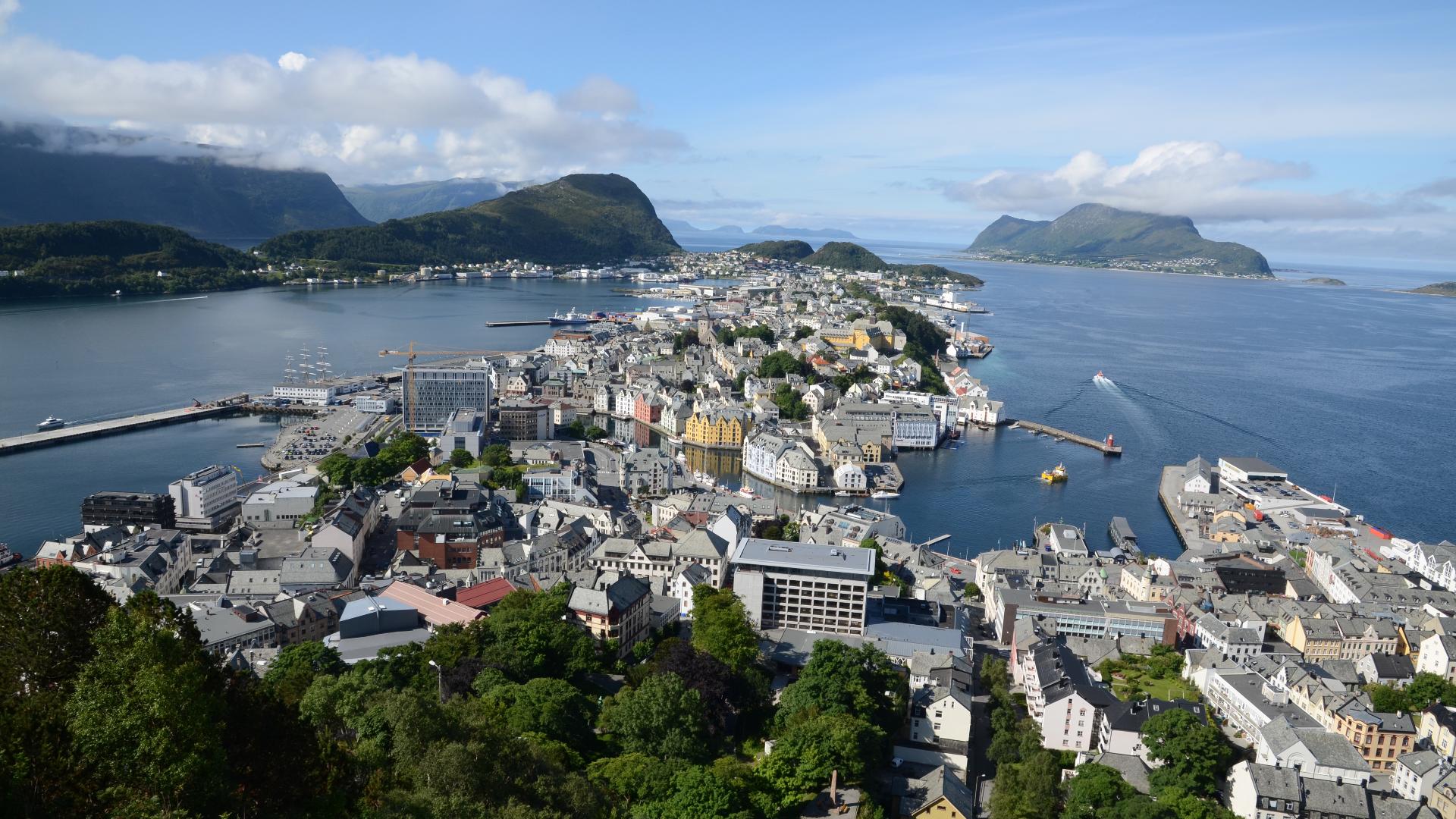
Ålesund is a town of about 50,000 people, spread across several islands on Norway's west coast. It is known for two things: fish and architecture. For centuries this was one of Norway's most important fishing harbours, and it still calls itself the fishing capital of the country. The local speciality is klippfisk, which is cod that has been salted and dried. From the 1820s onwards, ships from Spain and Portugal would sail directly to Ålesund to pick up their cargo. You could sometimes find 20 or 30 Spanish schooners waiting in the harbour. That trade shaped the town's wealth and identity, and klippfisk remains a major export to this day.
But the reason most visitors come now is the architecture. On the night of the 23rd of January 1904, a fire broke out during a winter storm. It spread so fast through the tightly packed wooden buildings that by morning, around 850 houses had burned down. About 10,000 people were left homeless in a single night. Remarkably, only one person died, an elderly woman who went back inside to fetch her belongings.
The rebuilding happened fast. Kaiser Wilhelm II of Germany, who had been a regular visitor to the region, sent four ships loaded with supplies and workers. Around 50 young Norwegian architects, many of them trained in Germany, arrived to design the new town. Since Art Nouveau was the fashionable style in Europe at that time, that is what they built. Between 1904 and 1907, some 350 buildings went up in stone and brick, with decorative facades, turrets, and towers. The entire centre was rebuilt in one style, which makes Ålesund unique. Most Art Nouveau cities have a few streets or a neighbourhood in that style. Here, it is the whole town.
Today Ålesund is also one of the busiest cruise ports in Norway. On summer days with large ships in port, the centre can feel crowded. The Jugendstilsenteret, the Art Nouveau Centre, is worth a visit if you want to understand the architecture in more detail. It is housed in an old pharmacy from 1907 and covers both the fire and the rebuilding.
There is much to see around Ålesund as well. The Aksla viewpoint, Sukkertoppen hike, Atlanterhavsparken aquarium, and Sunnmøre Museum are all covered as separate points of interest in this app.
But the reason most visitors come now is the architecture. On the night of the 23rd of January 1904, a fire broke out during a winter storm. It spread so fast through the tightly packed wooden buildings that by morning, around 850 houses had burned down. About 10,000 people were left homeless in a single night. Remarkably, only one person died, an elderly woman who went back inside to fetch her belongings.
The rebuilding happened fast. Kaiser Wilhelm II of Germany, who had been a regular visitor to the region, sent four ships loaded with supplies and workers. Around 50 young Norwegian architects, many of them trained in Germany, arrived to design the new town. Since Art Nouveau was the fashionable style in Europe at that time, that is what they built. Between 1904 and 1907, some 350 buildings went up in stone and brick, with decorative facades, turrets, and towers. The entire centre was rebuilt in one style, which makes Ålesund unique. Most Art Nouveau cities have a few streets or a neighbourhood in that style. Here, it is the whole town.
Today Ålesund is also one of the busiest cruise ports in Norway. On summer days with large ships in port, the centre can feel crowded. The Jugendstilsenteret, the Art Nouveau Centre, is worth a visit if you want to understand the architecture in more detail. It is housed in an old pharmacy from 1907 and covers both the fire and the rebuilding.
There is much to see around Ålesund as well. The Aksla viewpoint, Sukkertoppen hike, Atlanterhavsparken aquarium, and Sunnmøre Museum are all covered as separate points of interest in this app.