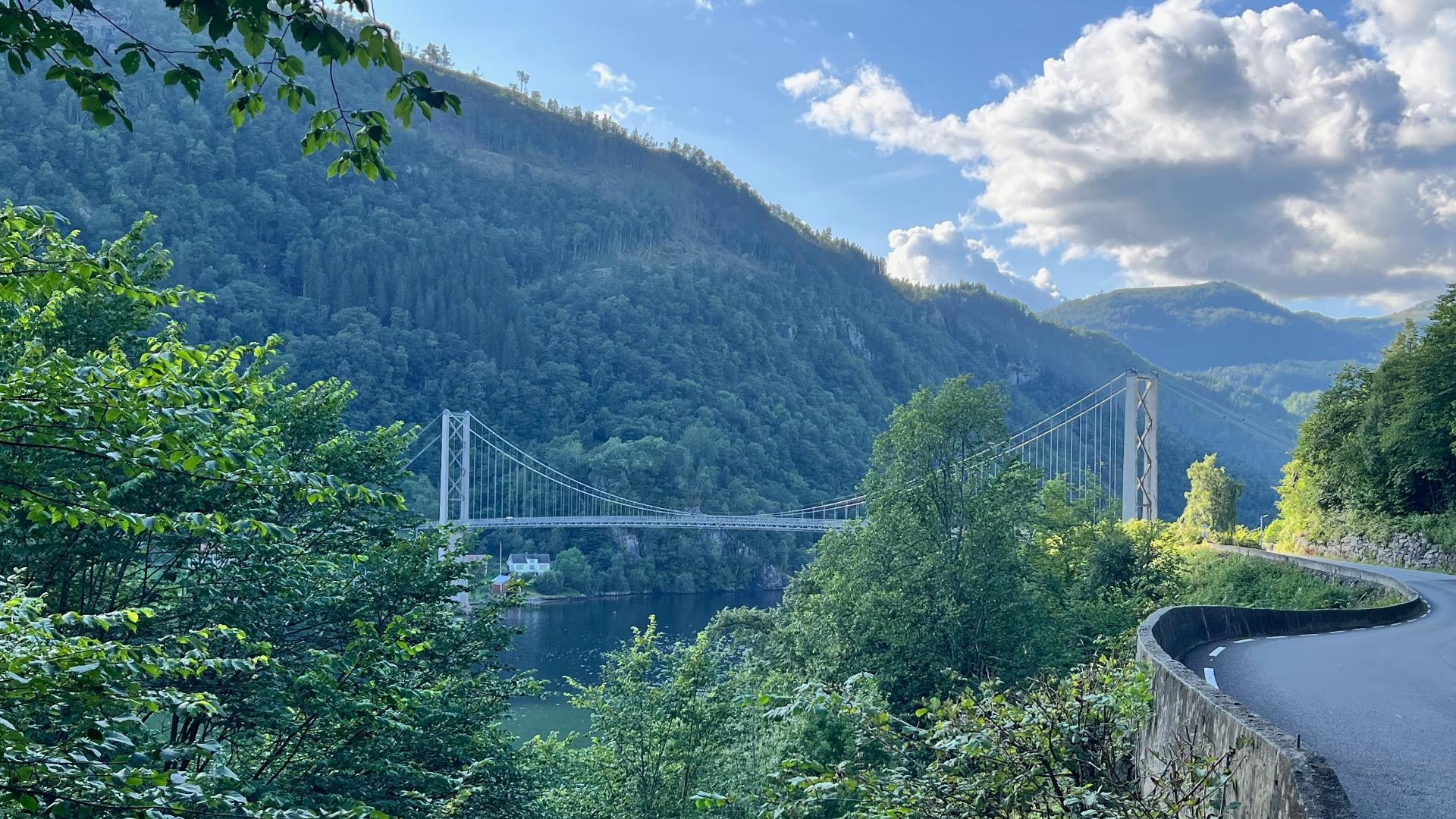
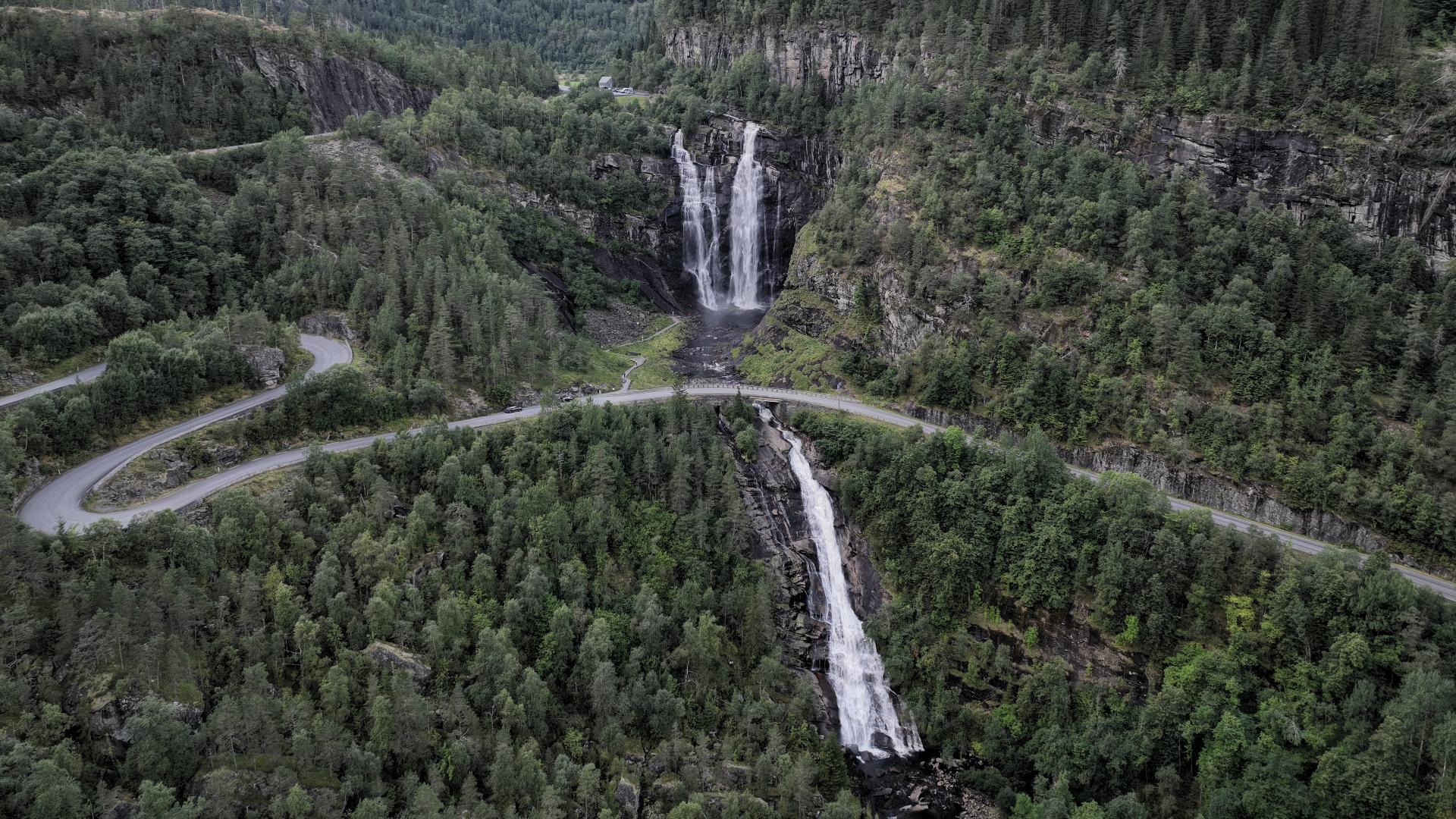
Evanger is a small village where the Vosso river flows into lake Evangervatnet, about 20 kilometres west of Voss centre. The name is old - written forms from medieval times include Æuanghr and Ævanger. Norwegian place name scholars have interpreted it as meaning "grazing rest for horses," though the "-anger" ending is the same element found in fjord names like Hardanger and Stavanger, which originally meant fjord or bay.
When the railway arrived in 1883, Evanger developed into a busy craft community. Shoemakers here produced the "Evanger shoe," a winter boot that was even exported to England. Local tailors made uniforms for railway staff at Bergen station. English lords came for the salmon fishing on the Vosso. The village had its own municipality from 1885 until 1964.
In 1923, the village centre burned to the ground. Only the church survived. But Evanger was rebuilt within two years, and what you see today is a harmonious example of 1920s West Norwegian wooden architecture. The old street and houses are now listed as an area of special historic interest.
The white wooden church dates from 1851, designed by architect Hans Listow. There's been a church here since the Middle Ages - the original was a stave church from the 13th century.
Between the church and the old town hall stands a monument to Knute Nelson. He was born in poverty on a mountain farm above Evanger in 1843. When he was six, his widowed mother borrowed money and emigrated with him to America. He became a lawyer, fought in the Civil War, then rose to become Governor of Minnesota and served 28 years as US Senator - the first Scandinavian to reach such heights in American politics. He never forgot Evanger and visited twice in later life.
Today Evanger is quiet. The E16 bypasses the village centre, and express trains don't stop here - you'd need to take the local Bergen-Voss service. But for anyone interested in emigration history or traditional Norwegian village architecture, it's worth the detour.