Founded in 1910, Dalane Folkemuseum has its main site at Slettebø, a farmstead from the 1850s just north of Egersund. The open-air museum displays traditional buildings from across the Dalane district, including a stabbur storehouse, a smithy, and dwelling houses furnished to show daily life in the 19th century. The Slettebø estate itself was a substantial farm whose main house has period interiors.
The museum administers the Egersund Fayancemuseum in the town centre, housed in the former Egersund Fayancefabrik factory buildings. This factory was Norway's largest producer of faience, tin-glazed earthenware, operating from 1847 to 1979. At its peak it employed several hundred workers and its products, distinctive blue-and-white decorated tableware and tiles, were found in households across Norway. The museum displays the full production history from the first pieces through the factory's heyday in the early 1900s to its eventual closure, with thousands of objects in the collection.
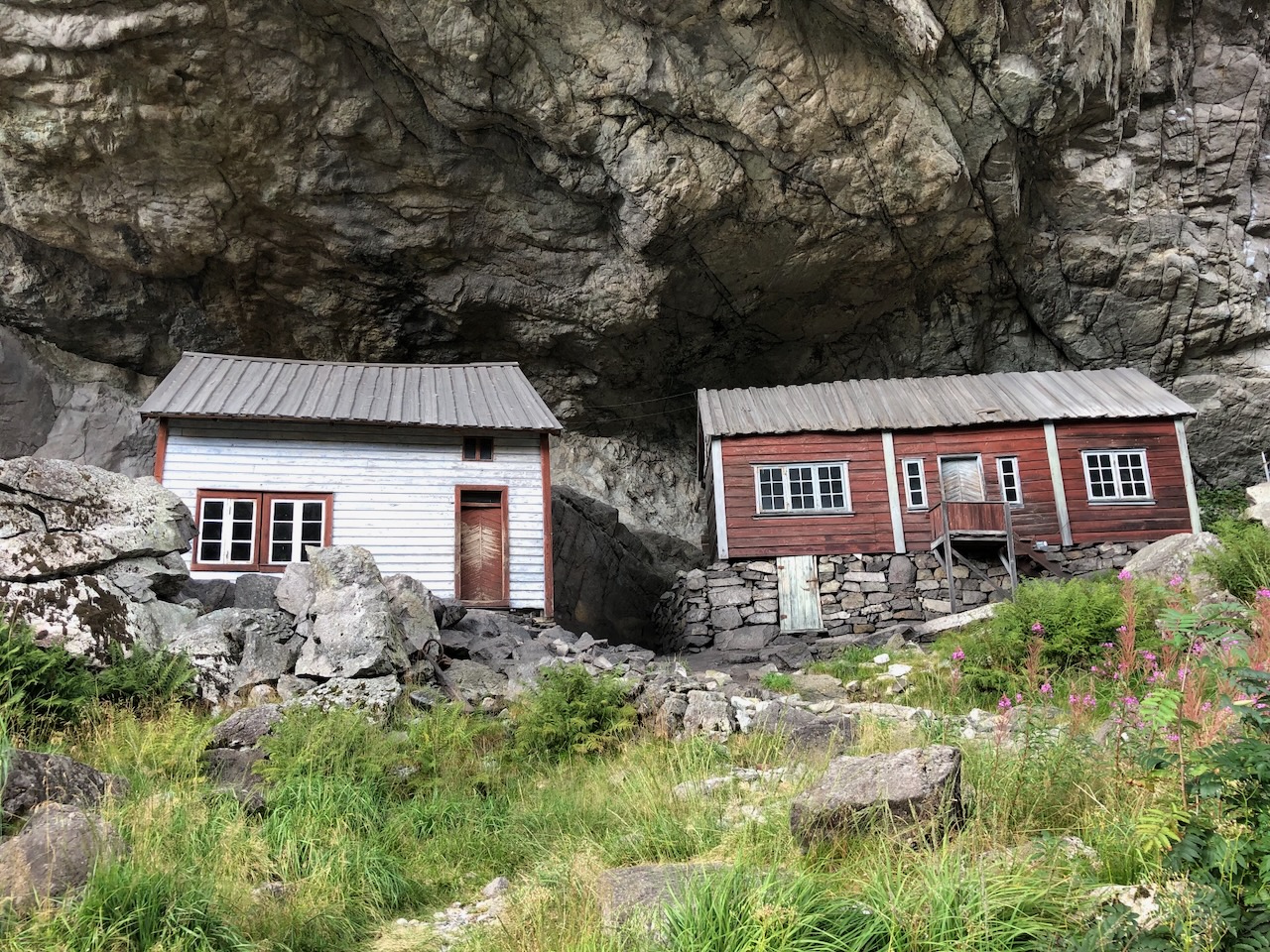
The museum also manages Helleren in Jossingfjord, two preserved wooden houses built under a massive rock overhang. These houses, originally used by fishermen and smallholders, are among the most photographed cultural heritage sites in Rogaland. The combination of the open-air farm, the faience factory collection, and the rock-shelter houses gives the museum an unusually wide scope across rural, industrial, and coastal life.
The museum administers the Egersund Fayancemuseum in the town centre, housed in the former Egersund Fayancefabrik factory buildings. This factory was Norway's largest producer of faience, tin-glazed earthenware, operating from 1847 to 1979. At its peak it employed several hundred workers and its products, distinctive blue-and-white decorated tableware and tiles, were found in households across Norway. The museum displays the full production history from the first pieces through the factory's heyday in the early 1900s to its eventual closure, with thousands of objects in the collection.
The museum also manages Helleren in Jossingfjord, two preserved wooden houses built under a massive rock overhang. These houses, originally used by fishermen and smallholders, are among the most photographed cultural heritage sites in Rogaland. The combination of the open-air farm, the faience factory collection, and the rock-shelter houses gives the museum an unusually wide scope across rural, industrial, and coastal life.