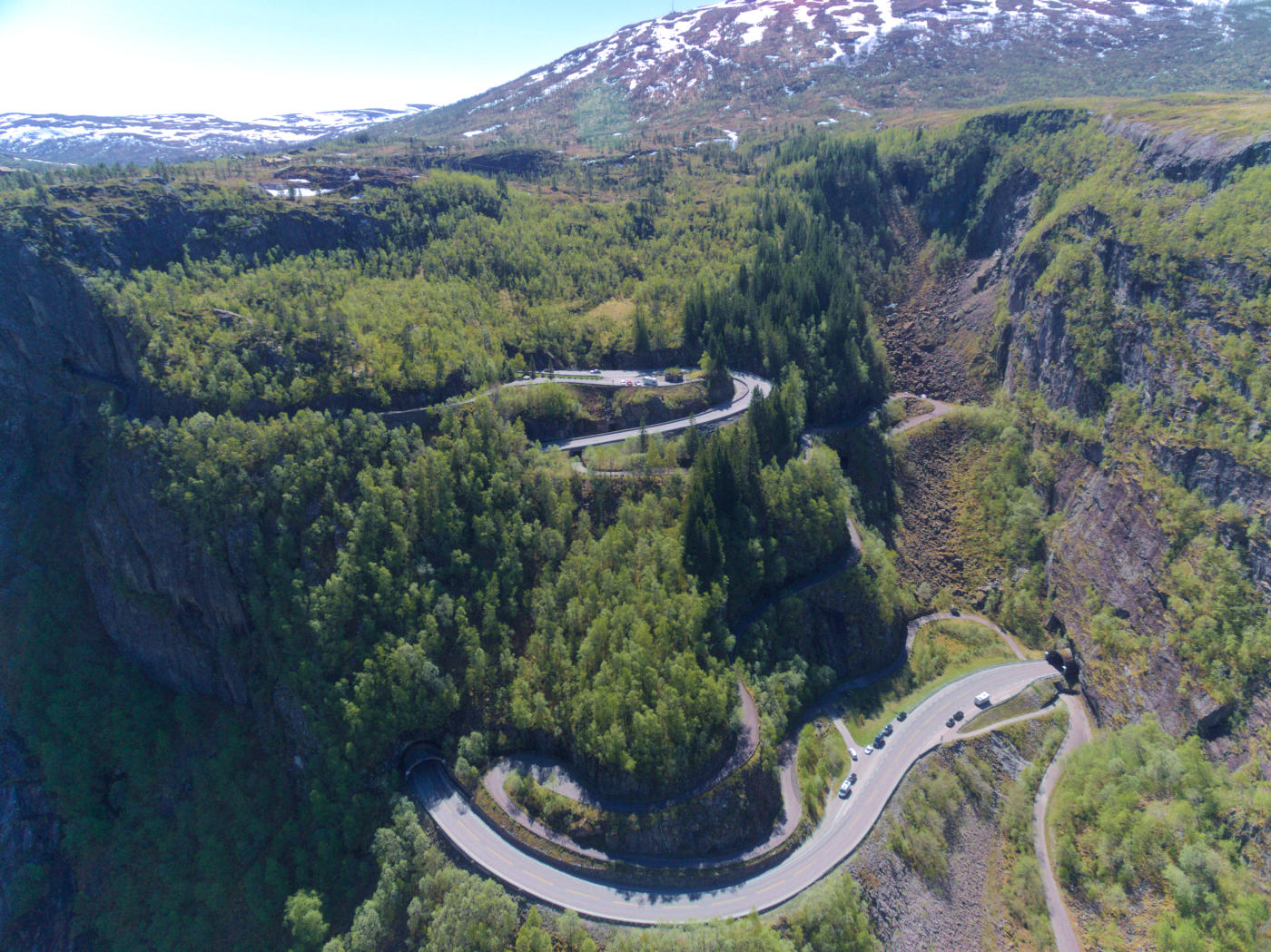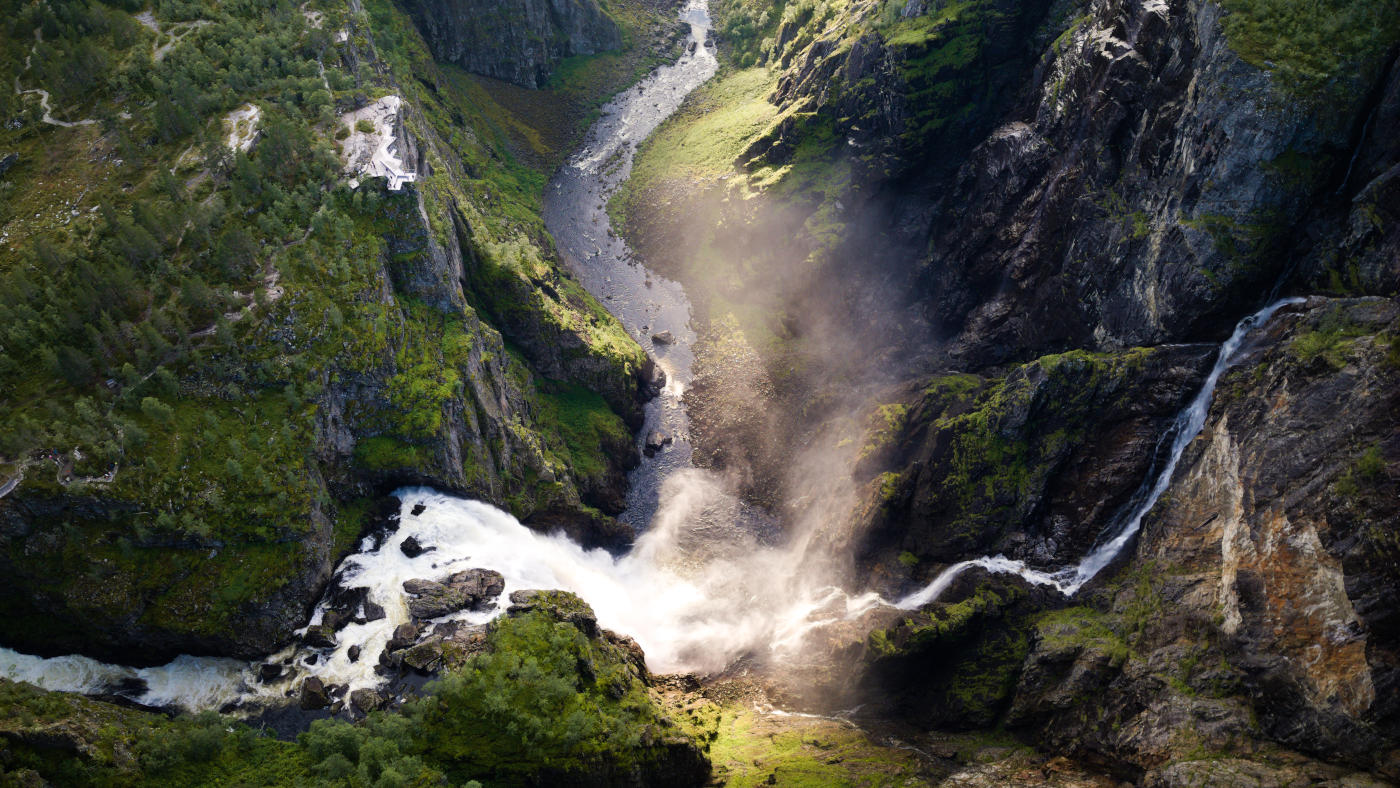
Vøringsfossen is probably Norway's most famous waterfall. Not the highest - it ranks 83rd - but the setting makes it iconic. The river Bjoreio drops 182 metres from the Hardangervidda plateau into the Måbødalen valley. The main single drop is 163 metres.
Until 1821 only locals knew about it. Then astronomer Christopher Hansteen crossed the plateau for scientific observations. His guides told him about a waterfall "at least half a fjerding high" - around 300 metres. He didn't believe them, but was overwhelmed when he saw it. He dropped stones from the top, timed them with his pocket watch, and estimated 280 metres. His account made Vøringsfossen a national attraction. English tourists started arriving in the 1870s, climbing 1,500 steps up Måbøfjellet by horse.
Fossli Hotel opened in the 1880s, built before any road existed - all materials carried up by horseback. Composer Edvard Grieg stayed here in 1896 and wrote his Opus 66. His Zimmermann piano is still in the hotel. The Garen family has run it for four generations.
The waterfall is less powerful than in the old days. Sysendammen upstream diverts most water for hydropower. But from 1st June to 15th September, the minimum flow is increased to 12 cubic metres per second - roughly the natural amount.
Since 2015 the area has been transformed with viewpoints and walkways. In 2020 a dramatic step bridge opened - 99 steps, 47 metres across, right over the river just before it plunges down. The final stage at Fossatromma completed in September 2024 with parking, toilets, and EV charging.
You can view from above at Fossli, cross the step bridge, or hike to the bottom from Fossatromma - 3.7 kilometres through rough terrain to stand beneath the falls. Best time is late June when snowmelt swells the river.