 Easy
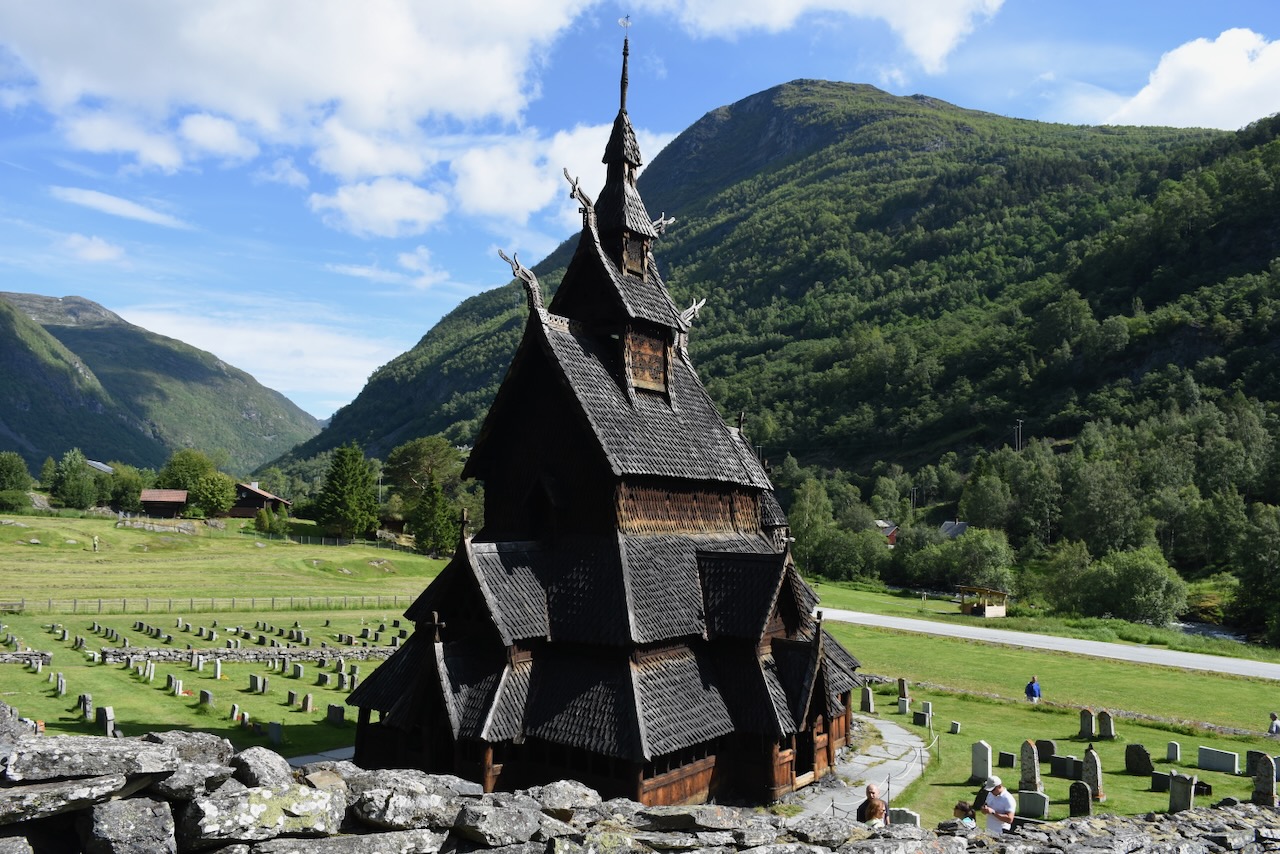
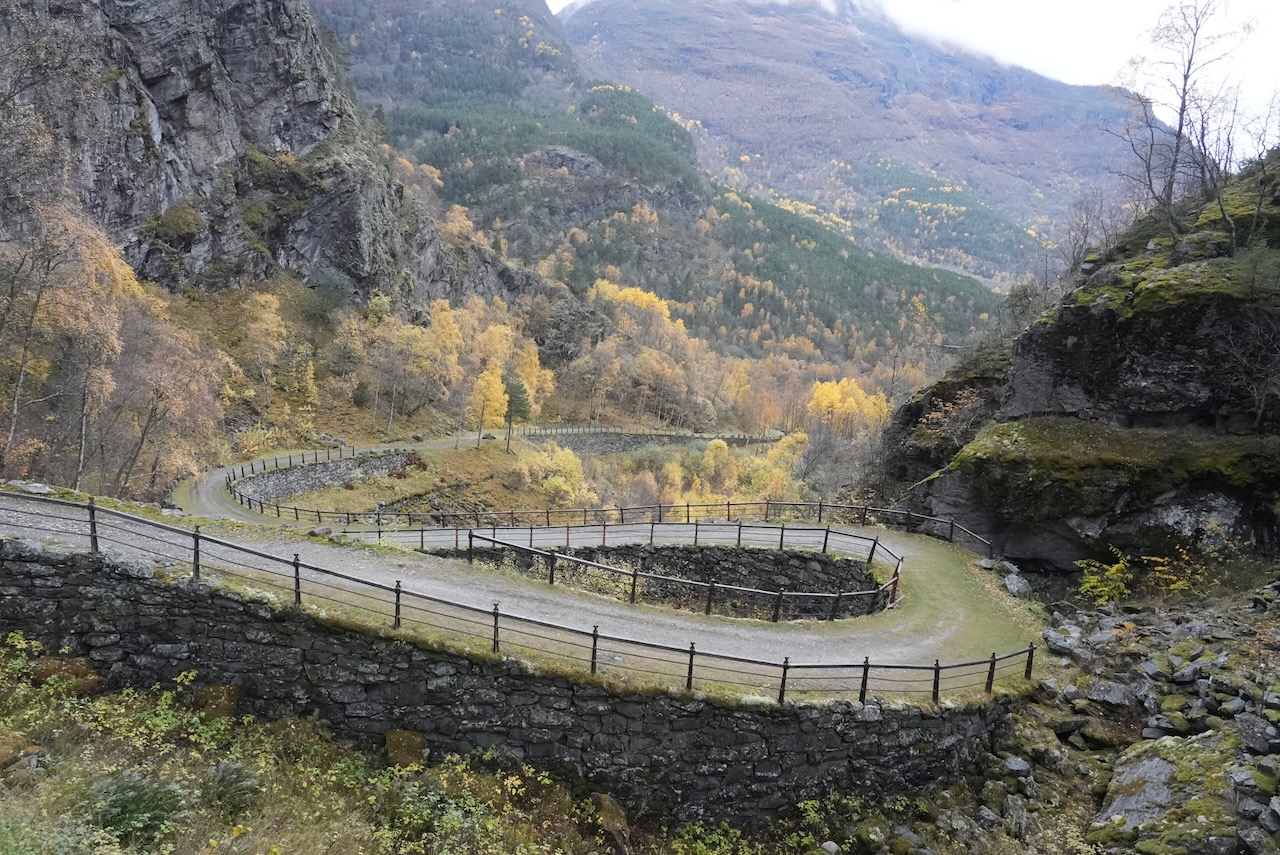
Easy Just behind Borgund Stave Church you'll find one of Norway's most remarkable pieces of road engineering. Vindhellavegen is a 2.7 kilometre stretch of the old King's Road, built with steep hairpin bends and high stone foundation walls that seem to defy the mountainside.
The narrow Vindhella pass has always been used by travellers between east and west Norway. For centuries it was a dangerous bridle path across steep mountain ledges. When Kongevegen was built in the 1790s, they created a proper road - but with a gradient of 1:4, it was brutal for horses pulling carts, especially in winter.
In the 1840s, engineers tried to fix the problem. They built a new road with four 180-degree bends on high stone walls, using construction techniques that hadn't been properly tested in Norway. The result was impressive to look at, but the gradient only improved to 1:5 - still far too steep. The road was given a 30-year service life. Sure enough, in 1872 dynamite became available and they blasted a new route along the river instead. That riverside road served as the main route - later E16 - until the Borgund tunnel opened in 2004.
So Vindhellavegen was technically a failed project. But those steep, narrow bends on their high stone walls have made it famous. Today it's a popular walk. You can start from Borgund Stave Church - go behind the red church and follow the signs. Just before the top, they kept a section of the original 1790s road with its 1:4 gradient. That's 25 percent - brutal even on foot.
The walk takes about 45 minutes one way. If you want a round trip, come back via Sverrestigen, the path King Sverre supposedly used in 1177 to ambush farmers who were waiting to attack his soldiers. The whole loop takes around 1.5 to 2 hours.
Bring shoes with grip - the stones can be slick after rain.