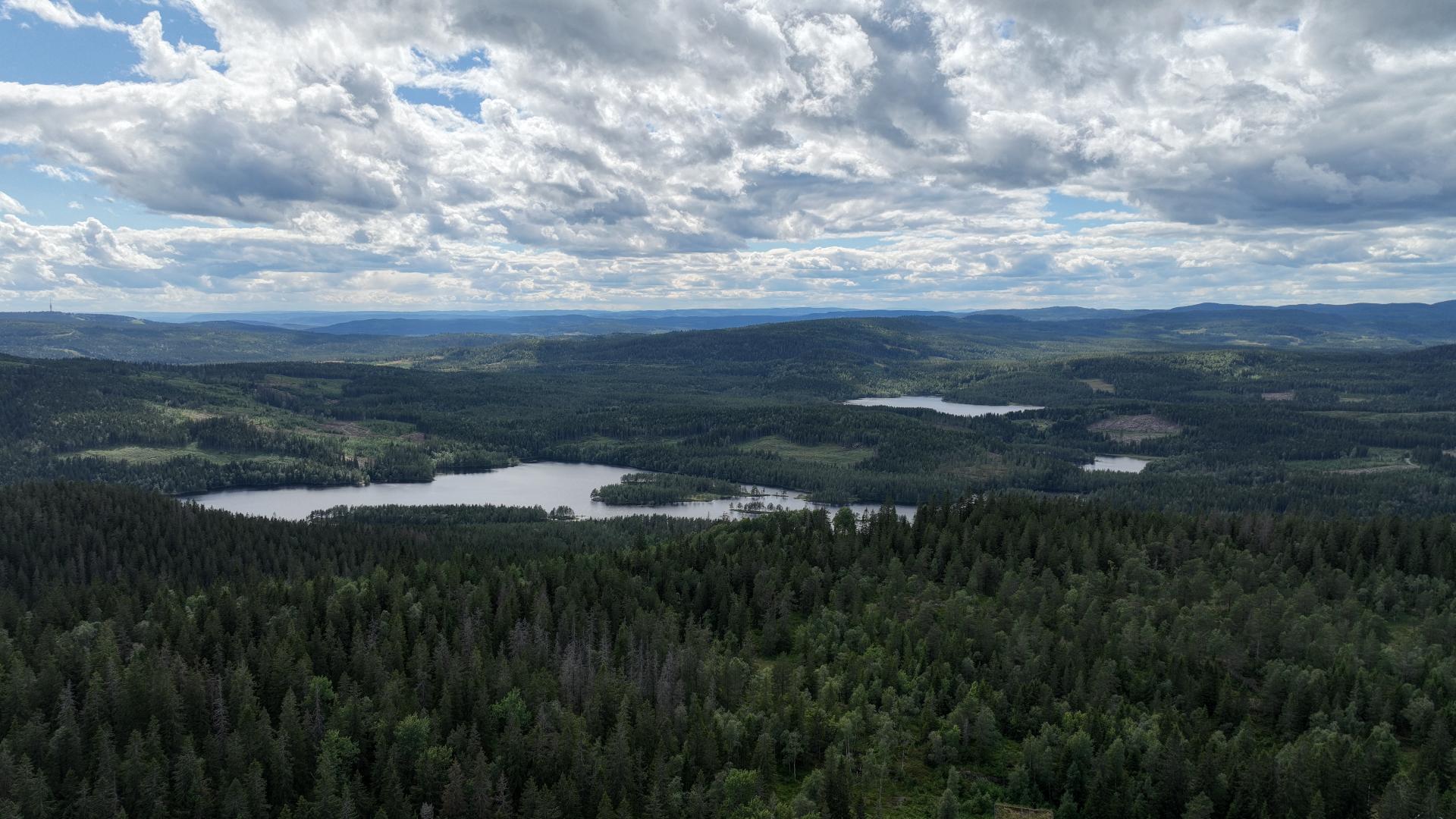
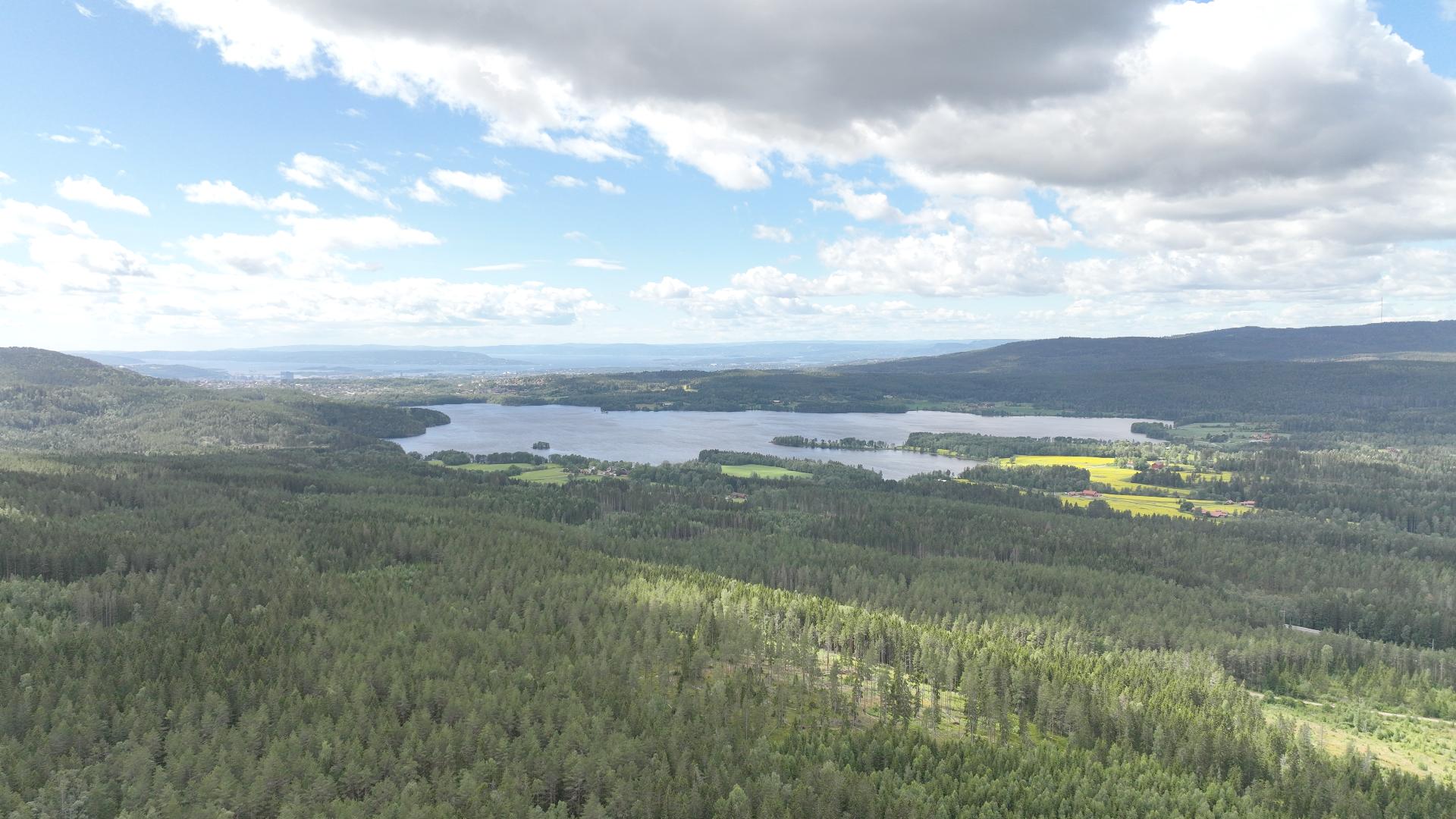
During the Second World War, Trandumskogen became Norway's largest execution site. Between 1942 and 1944, German occupiers shot 194 people in this forest: 173 Norwegians, 15 Soviet prisoners of war, and 6 British soldiers. Most Norwegian victims had been sentenced by German military courts for resistance work or attempting to flee the country. Thirty-seven were killed without any trial. Among the British victims were men involved in the sabotage of the heavy water plant at Vemork and an attack on the battleship Tirpitz.
Next to the execution site, the Germans built a tank shooting range with eight massive concrete walls, each up to ten metres high, spaced along a 300-metre course. The walls served double duty as artillery practice and sound dampening to mask the gunshots. The first mass graves were discovered on 17 May 1945, Norway's National Day, just days after liberation.
A granite memorial by sculptor Per Palle Storm was unveiled by Crown Prince Olav in 1954. It lists every name in Norwegian, English, and Russian. The concrete walls of the tank range still stand and the forest is freely accessible for walking.
Next to the execution site, the Germans built a tank shooting range with eight massive concrete walls, each up to ten metres high, spaced along a 300-metre course. The walls served double duty as artillery practice and sound dampening to mask the gunshots. The first mass graves were discovered on 17 May 1945, Norway's National Day, just days after liberation.
A granite memorial by sculptor Per Palle Storm was unveiled by Crown Prince Olav in 1954. It lists every name in Norwegian, English, and Russian. The concrete walls of the tank range still stand and the forest is freely accessible for walking.