 Easy
Easy
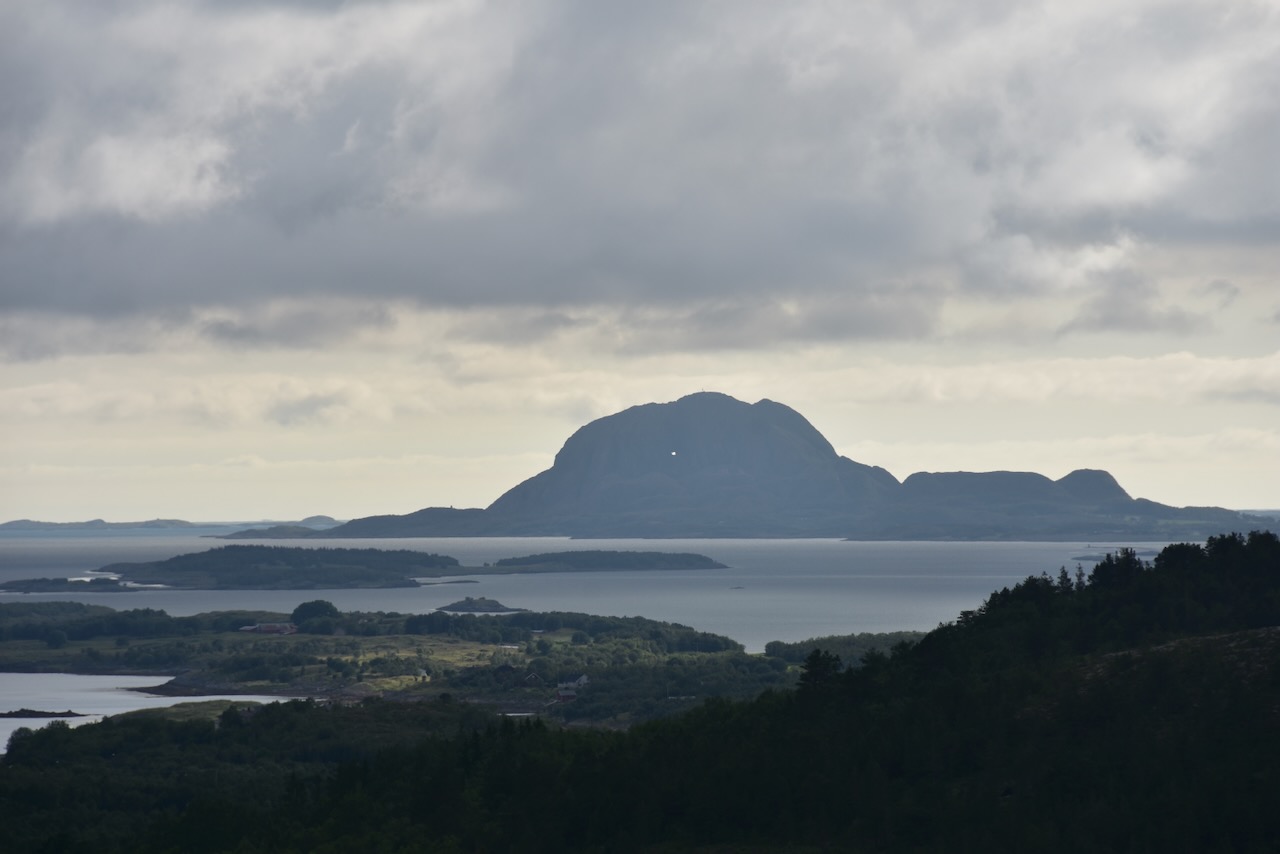
Torghatten is Helgeland's most iconic landmark: a 258-metre mountain with a hole straight through it. The tunnel is about 160 metres long, 35 metres high, and 20 metres wide, sitting roughly 115 metres above sea level. You can walk right through it.
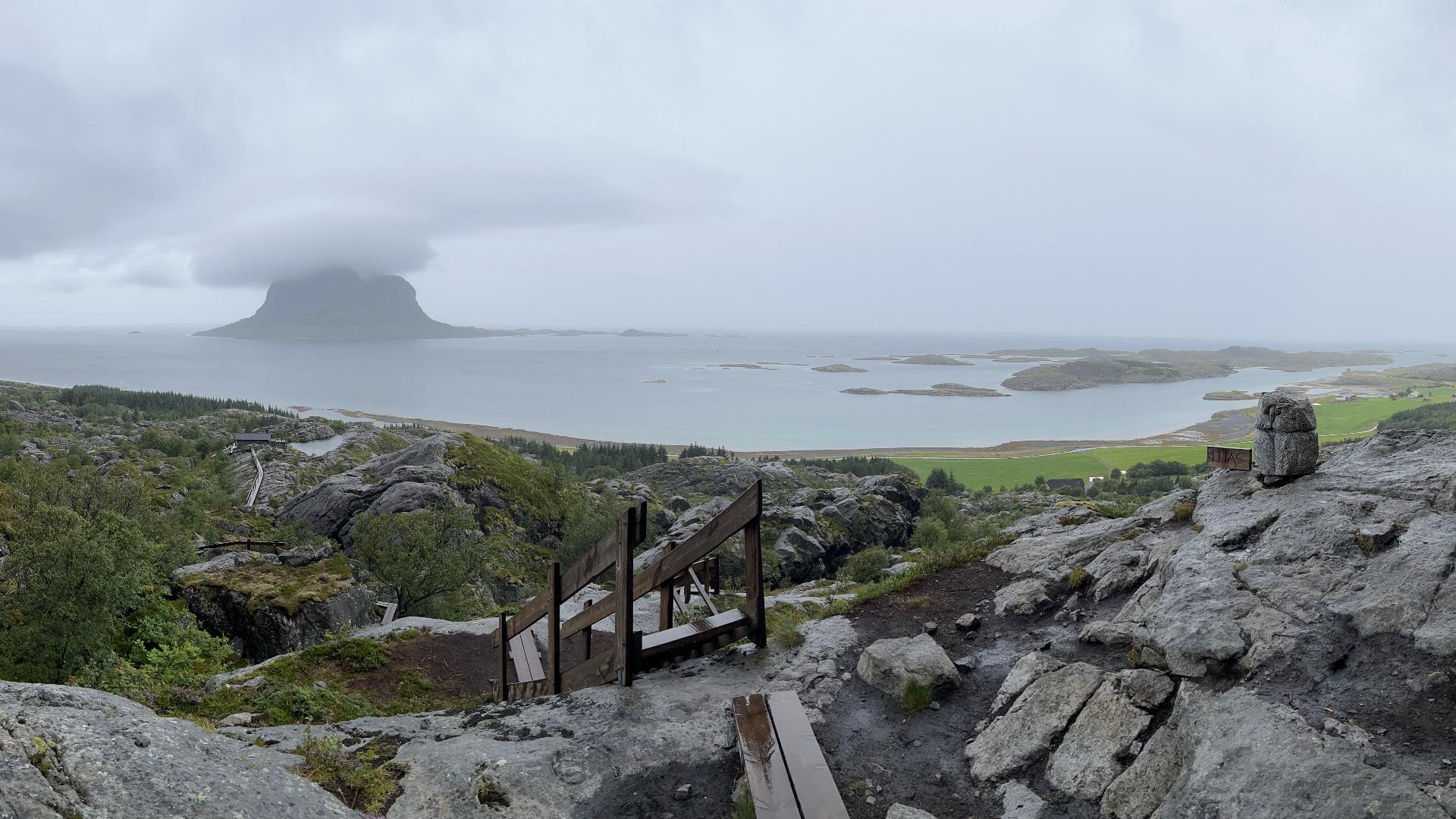
According to the legend, the troll Hestmannen was chasing a beautiful maiden called Lekamøya across the sea. When he realised he could not catch her, he threw his hat at her in rage. The troll king Sømna shot an arrow to stop him, but the arrow pierced the hat instead, and when the sun rose, everything turned to stone. Torghatten is the hat with the hole. If you look north along the coast, you can spot the other characters: Hestmannen, Lekamøya, and the De syv søstre (the Seven Sisters) are all real mountains shaped like figures from the same saga.
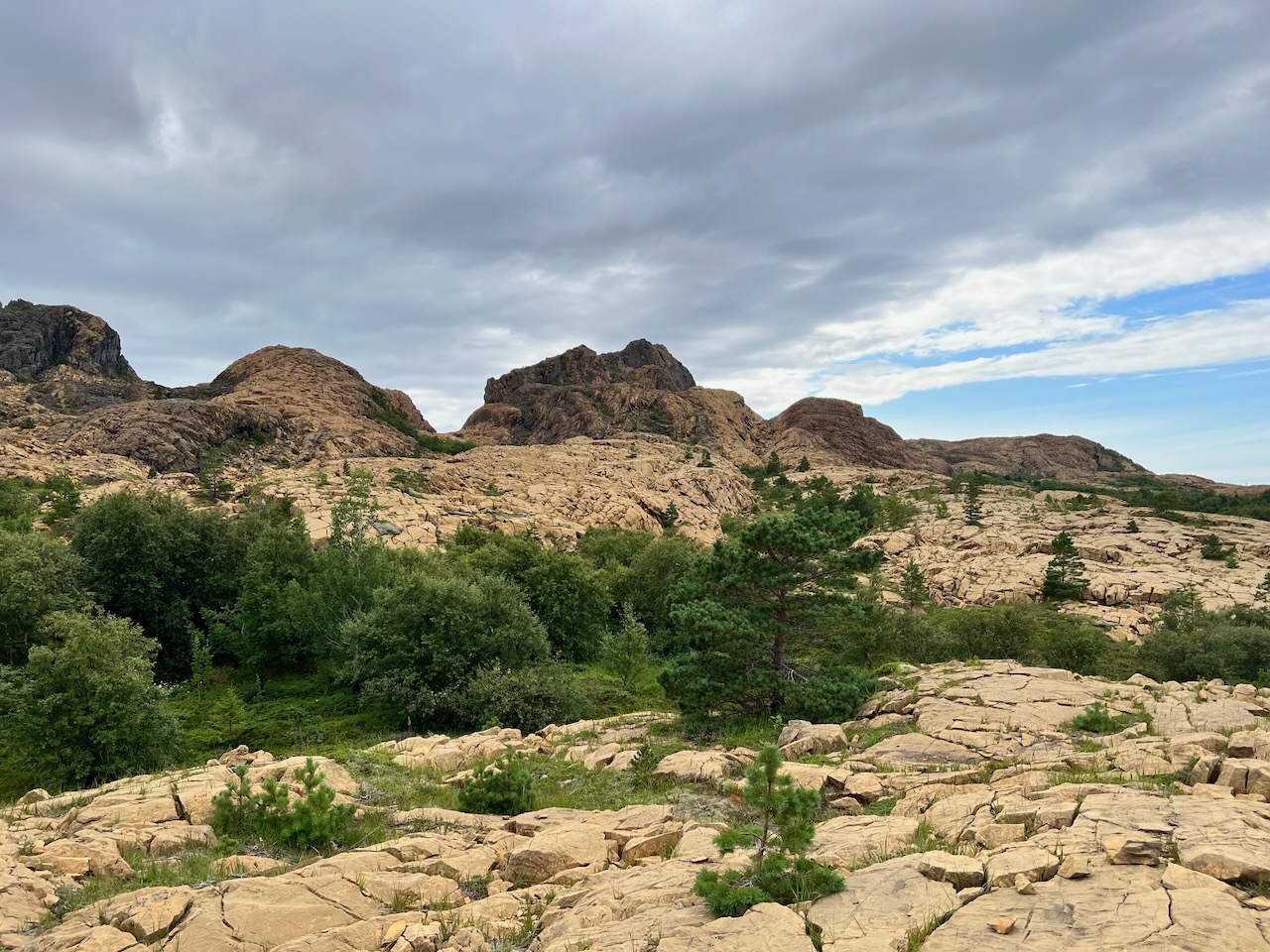
The geology is less romantic but equally impressive. The mountain is made of foliated granite, over a billion years old, with the rock layers oriented almost vertically. For a long time, scientists assumed the hole was carved purely by wave erosion when the sea level was much higher than today. But more recent research has complicated the picture. Geologists Jakob Johan Møller and Per Tore Fredriksen found evidence of glacial sculpting and subglacial meltwater drainage inside the tunnel: polished rock surfaces, ice-carved channels, and a surprising lack of the rounded cobbles you would expect from wave action alone. The current understanding is that the hole formed through multiple processes over millions of years: glacial ice, meltwater under pressure, and waves during periods when the sea reached this height. During the last ice age, around 20,000 years ago, the area was buried under roughly 1,000 metres of ice.
The hike to the hole takes about 30 to 45 minutes on a well-marked trail. Inside the tunnel, the acoustics are striking, and the light filtering through from both ends creates an almost theatrical effect. On a clear day, the views from the openings stretch across the Norwegian Sea and the surrounding islands.
Torghatten also carries a darker piece of history. On the evening of 6 May 1988, Widerøe Flight 710, a Dash 7 aircraft with 36 people on board, flew straight into the fog-covered mountain during its approach to Brønnøysund Airport. Everyone on board was killed. The investigation found that the pilots had begun their descent too early, dropping to 170 metres when they were still 15 kilometres from the runway instead of the required 7. A passenger had been allowed to sit in the cockpit jump seat, and his conversation with the captain drew attention away from the instruments at a critical moment. It remains the deadliest aviation accident in Northern Norway and the worst crash involving a Dash 7 anywhere in the world. A memorial stands near the mountain.
According to the legend, the troll Hestmannen was chasing a beautiful maiden called Lekamøya across the sea. When he realised he could not catch her, he threw his hat at her in rage. The troll king Sømna shot an arrow to stop him, but the arrow pierced the hat instead, and when the sun rose, everything turned to stone. Torghatten is the hat with the hole. If you look north along the coast, you can spot the other characters: Hestmannen, Lekamøya, and the De syv søstre (the Seven Sisters) are all real mountains shaped like figures from the same saga.
The geology is less romantic but equally impressive. The mountain is made of foliated granite, over a billion years old, with the rock layers oriented almost vertically. For a long time, scientists assumed the hole was carved purely by wave erosion when the sea level was much higher than today. But more recent research has complicated the picture. Geologists Jakob Johan Møller and Per Tore Fredriksen found evidence of glacial sculpting and subglacial meltwater drainage inside the tunnel: polished rock surfaces, ice-carved channels, and a surprising lack of the rounded cobbles you would expect from wave action alone. The current understanding is that the hole formed through multiple processes over millions of years: glacial ice, meltwater under pressure, and waves during periods when the sea reached this height. During the last ice age, around 20,000 years ago, the area was buried under roughly 1,000 metres of ice.
The hike to the hole takes about 30 to 45 minutes on a well-marked trail. Inside the tunnel, the acoustics are striking, and the light filtering through from both ends creates an almost theatrical effect. On a clear day, the views from the openings stretch across the Norwegian Sea and the surrounding islands.
Torghatten also carries a darker piece of history. On the evening of 6 May 1988, Widerøe Flight 710, a Dash 7 aircraft with 36 people on board, flew straight into the fog-covered mountain during its approach to Brønnøysund Airport. Everyone on board was killed. The investigation found that the pilots had begun their descent too early, dropping to 170 metres when they were still 15 kilometres from the runway instead of the required 7. A passenger had been allowed to sit in the cockpit jump seat, and his conversation with the captain drew attention away from the instruments at a critical moment. It remains the deadliest aviation accident in Northern Norway and the worst crash involving a Dash 7 anywhere in the world. A memorial stands near the mountain.