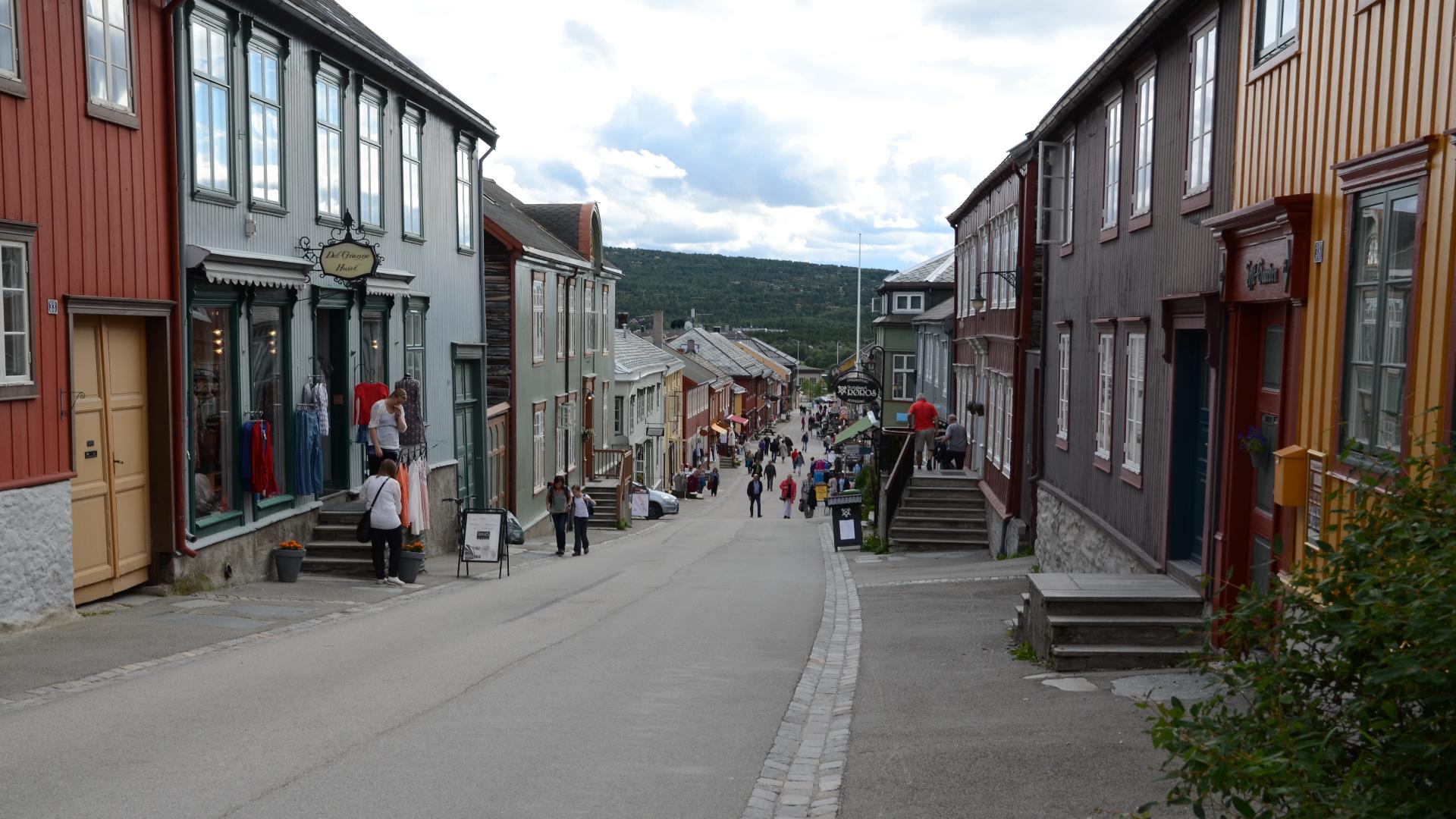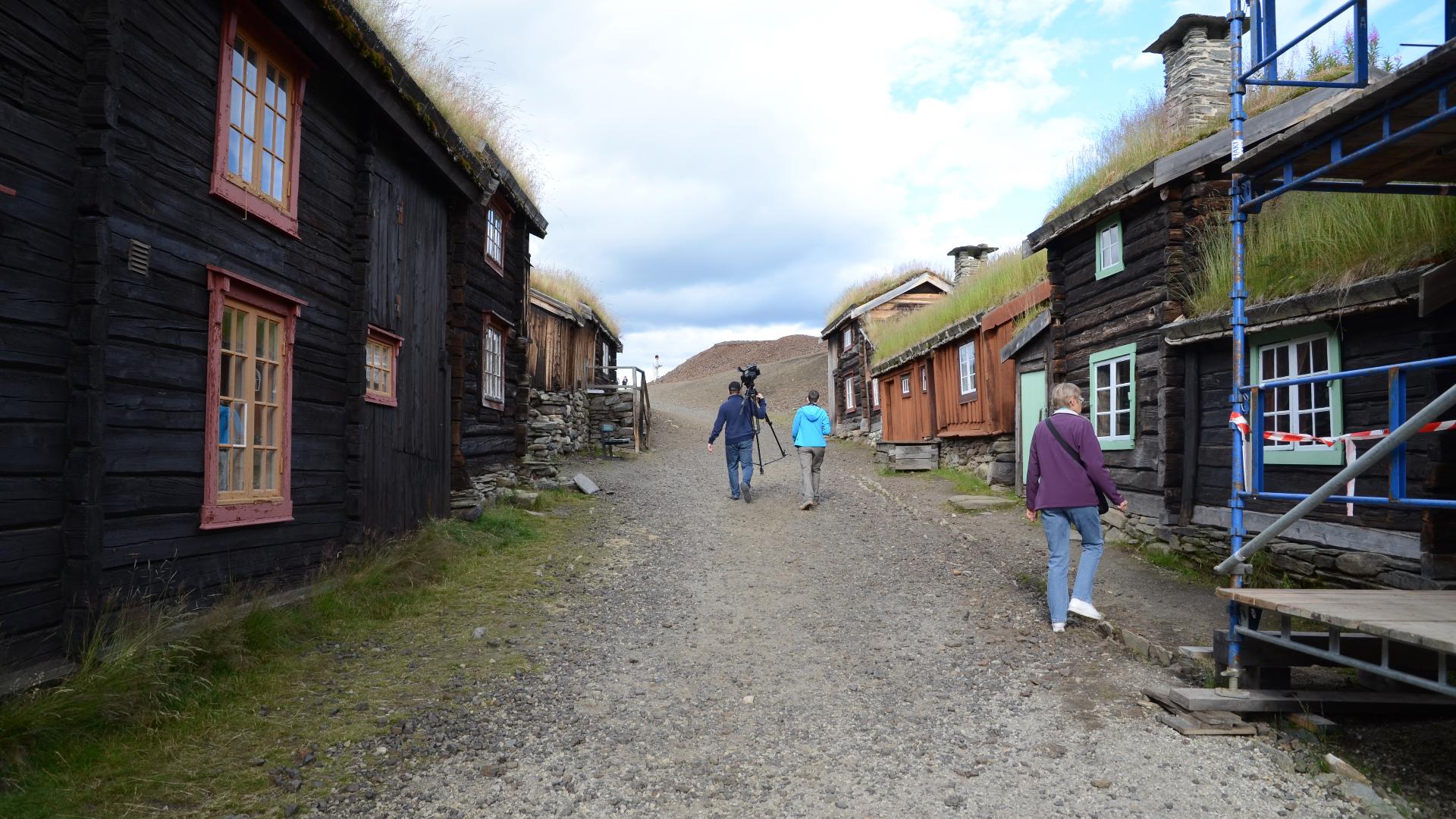
Sleggveien means slag road, and it runs uphill toward the old slag heaps that still tower over the town. The five houses at the top of the road were home to day labourers, craftsmen, Romani people, and others who had no permanent work at the copper works and no land to farm. Built around 1840-1850, partly from older materials, they are among the most atmospheric buildings in Røros: small, dark, with green grass roofs where wildflowers and even small trees grow.
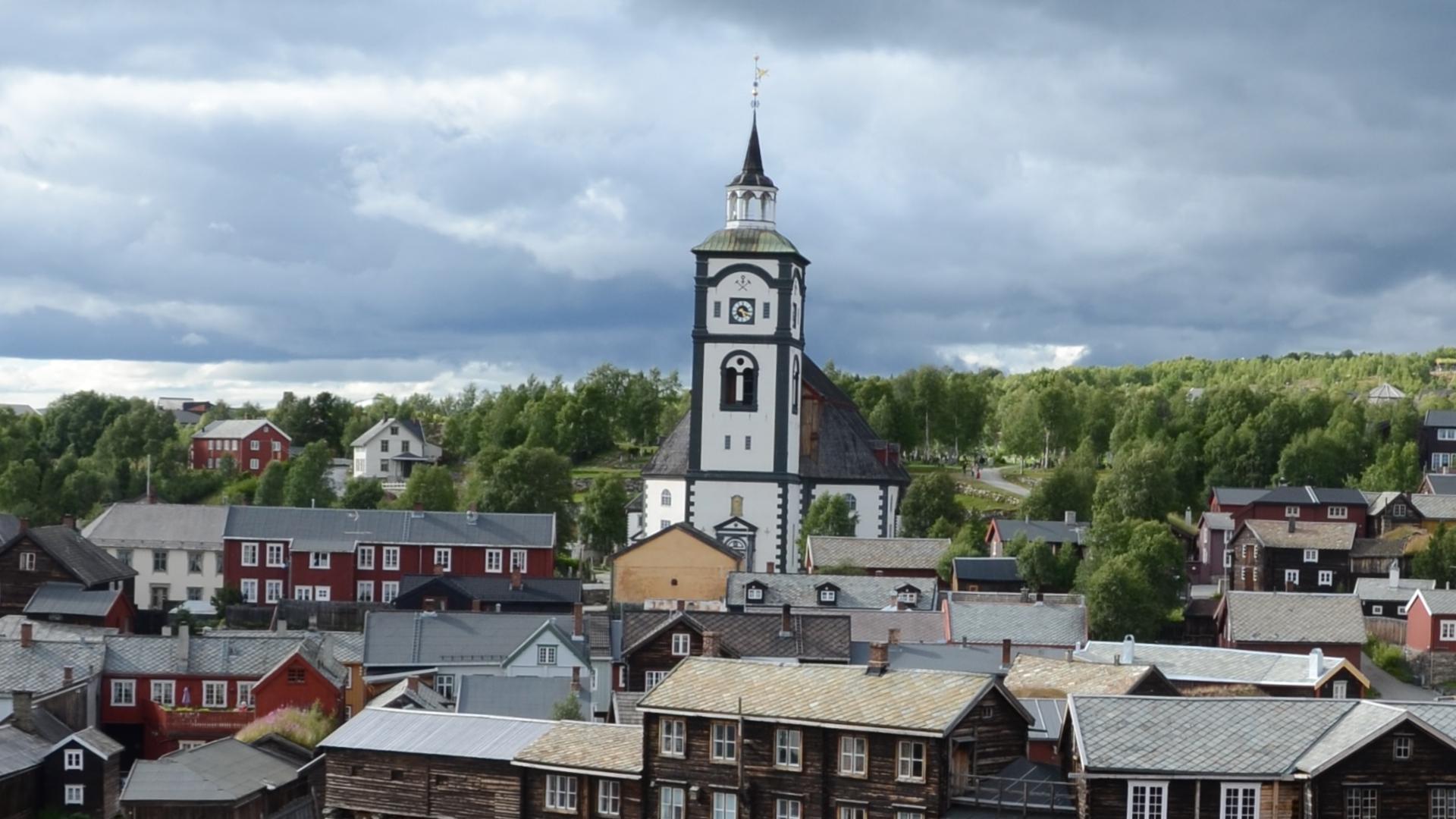
During summer, some of the houses are opened to the public by volunteers from the Røros Museum and Historical Society, who explain the history of each building. At the top, the slag heaps of Slegghaugen rise like small hills, dwarfing the little houses. You can walk to the summit for a panoramic view across the whole town. The contrast between these tiny workers' homes and the grand directors' residences around the church square tells the story of Røros better than any museum text.
During summer, some of the houses are opened to the public by volunteers from the Røros Museum and Historical Society, who explain the history of each building. At the top, the slag heaps of Slegghaugen rise like small hills, dwarfing the little houses. You can walk to the summit for a panoramic view across the whole town. The contrast between these tiny workers' homes and the grand directors' residences around the church square tells the story of Røros better than any museum text.