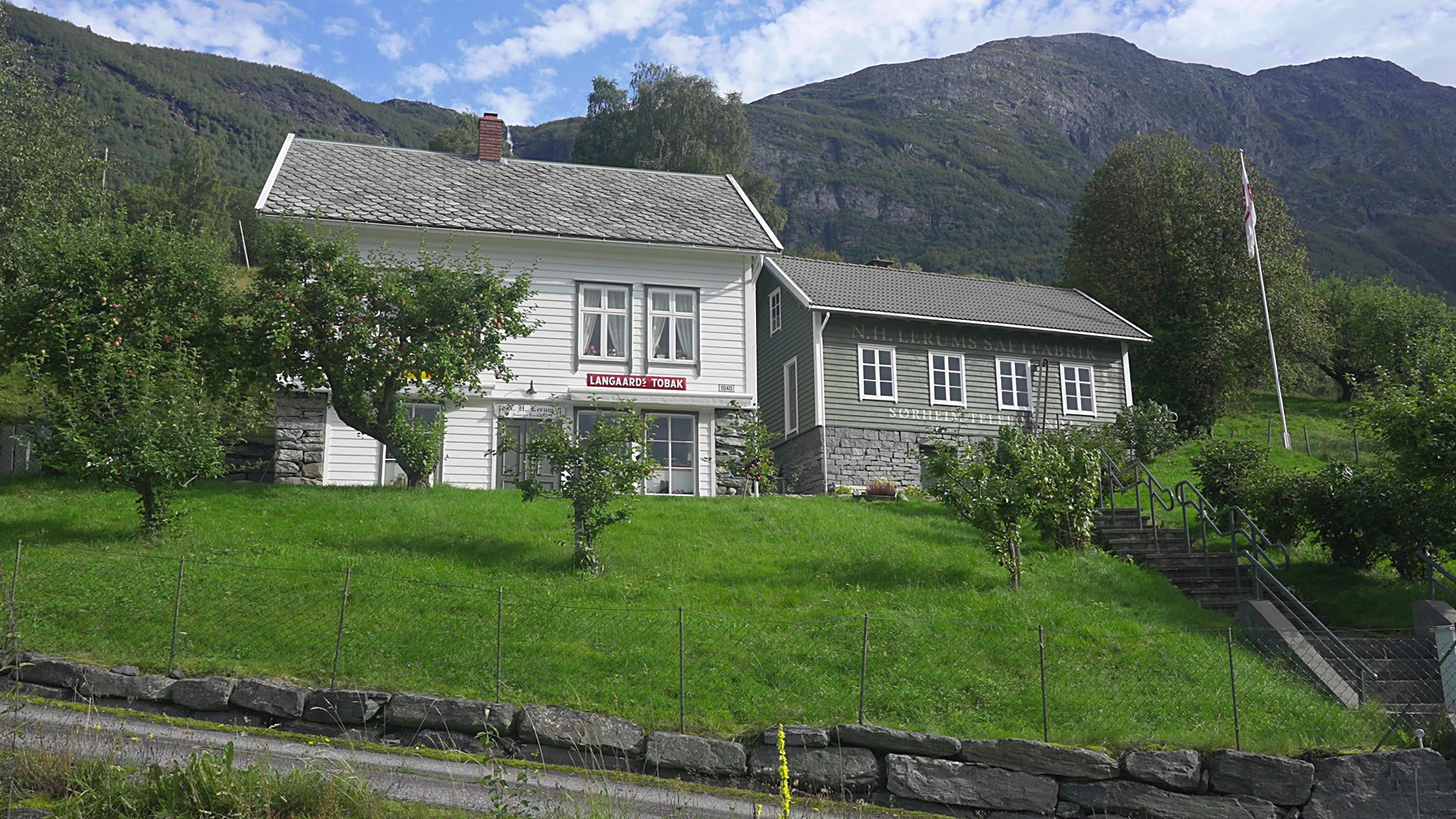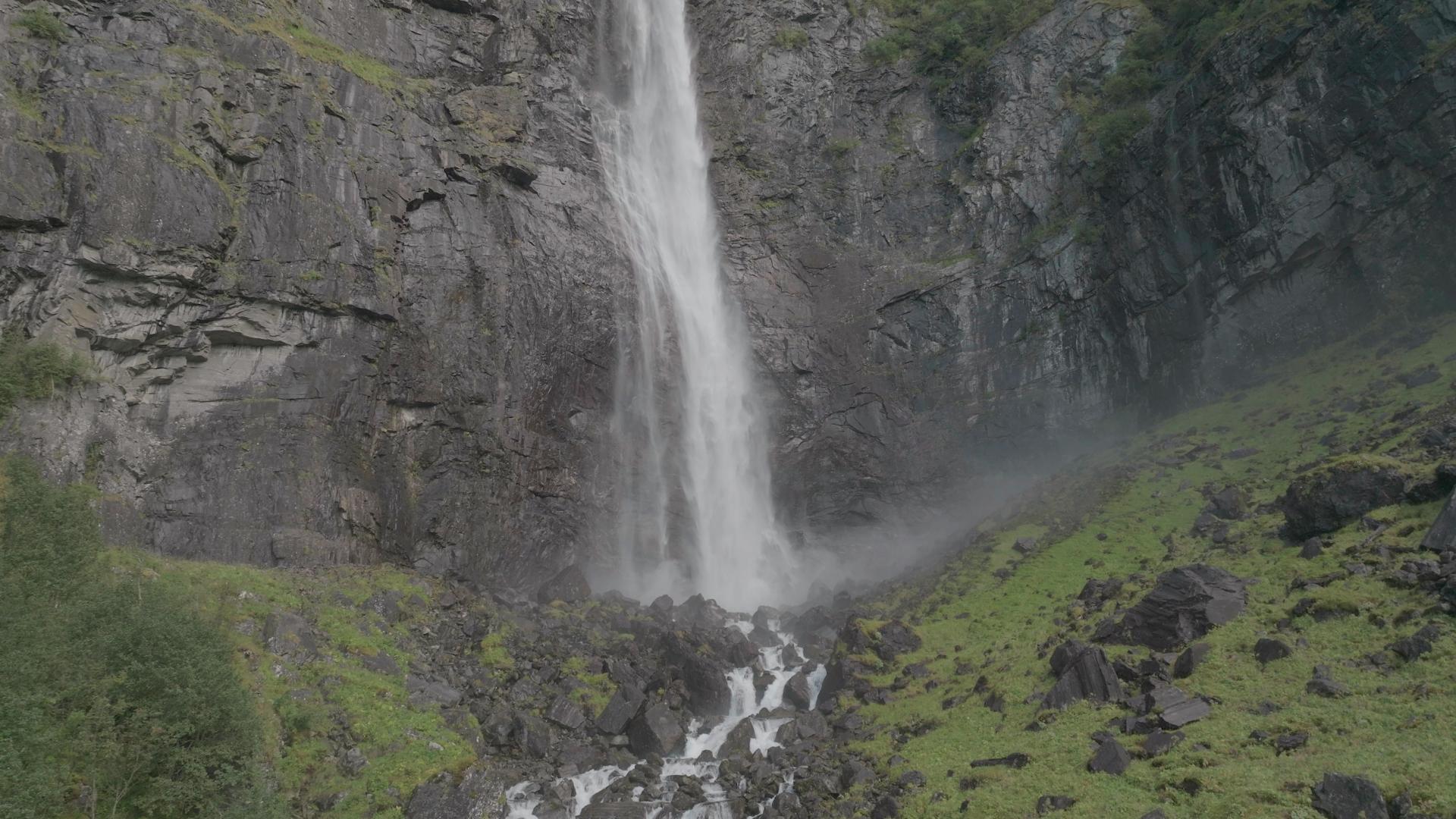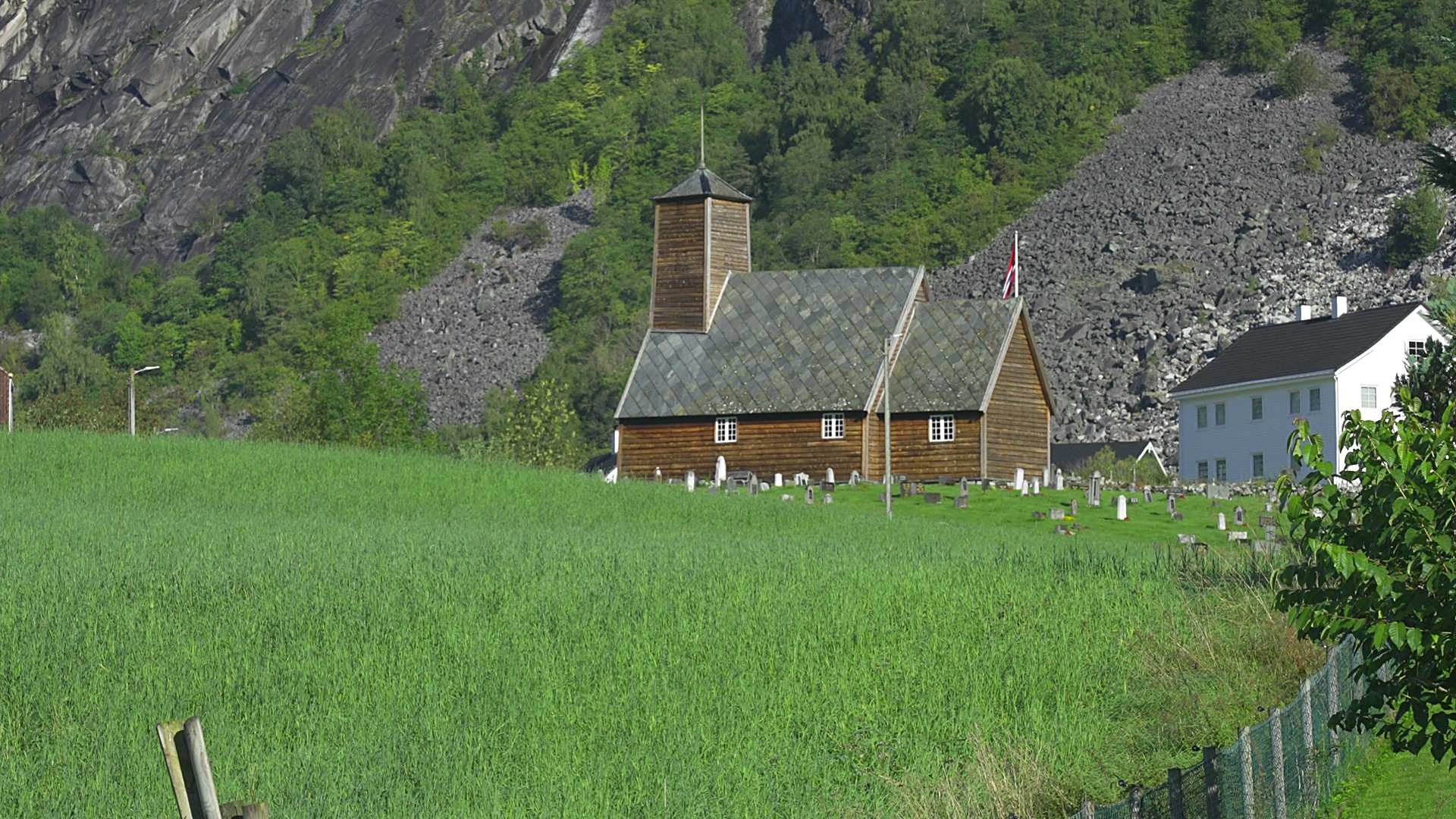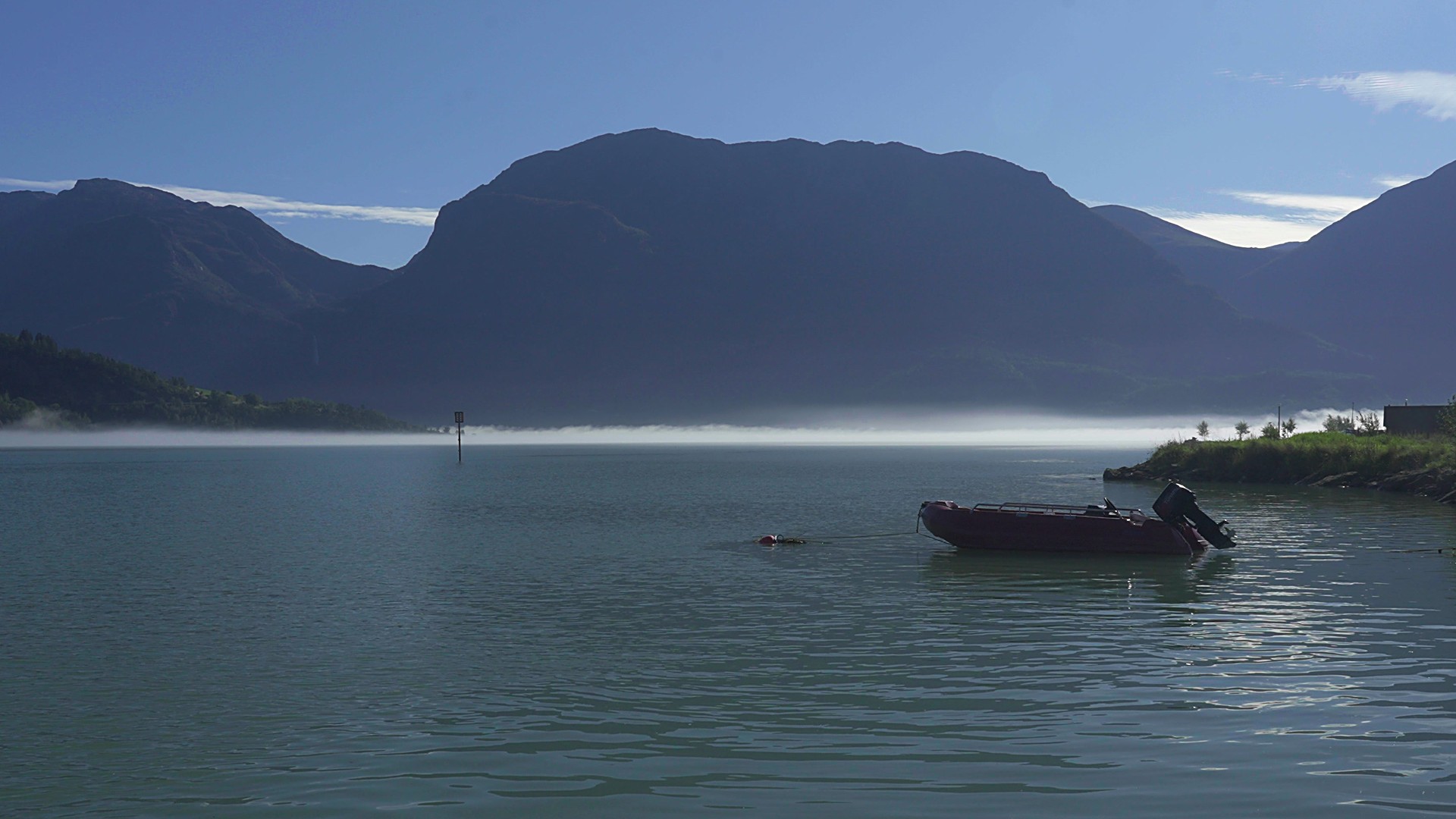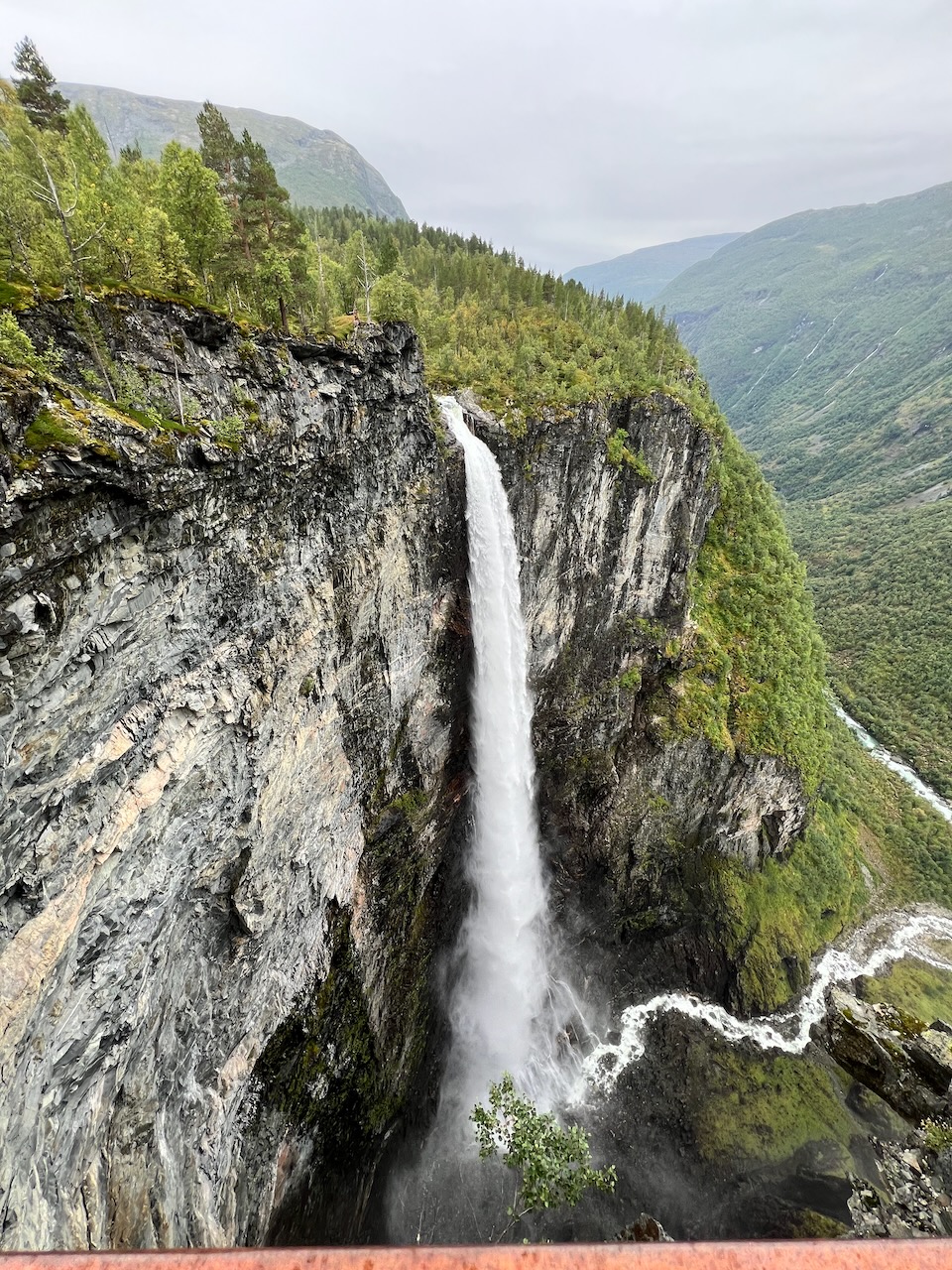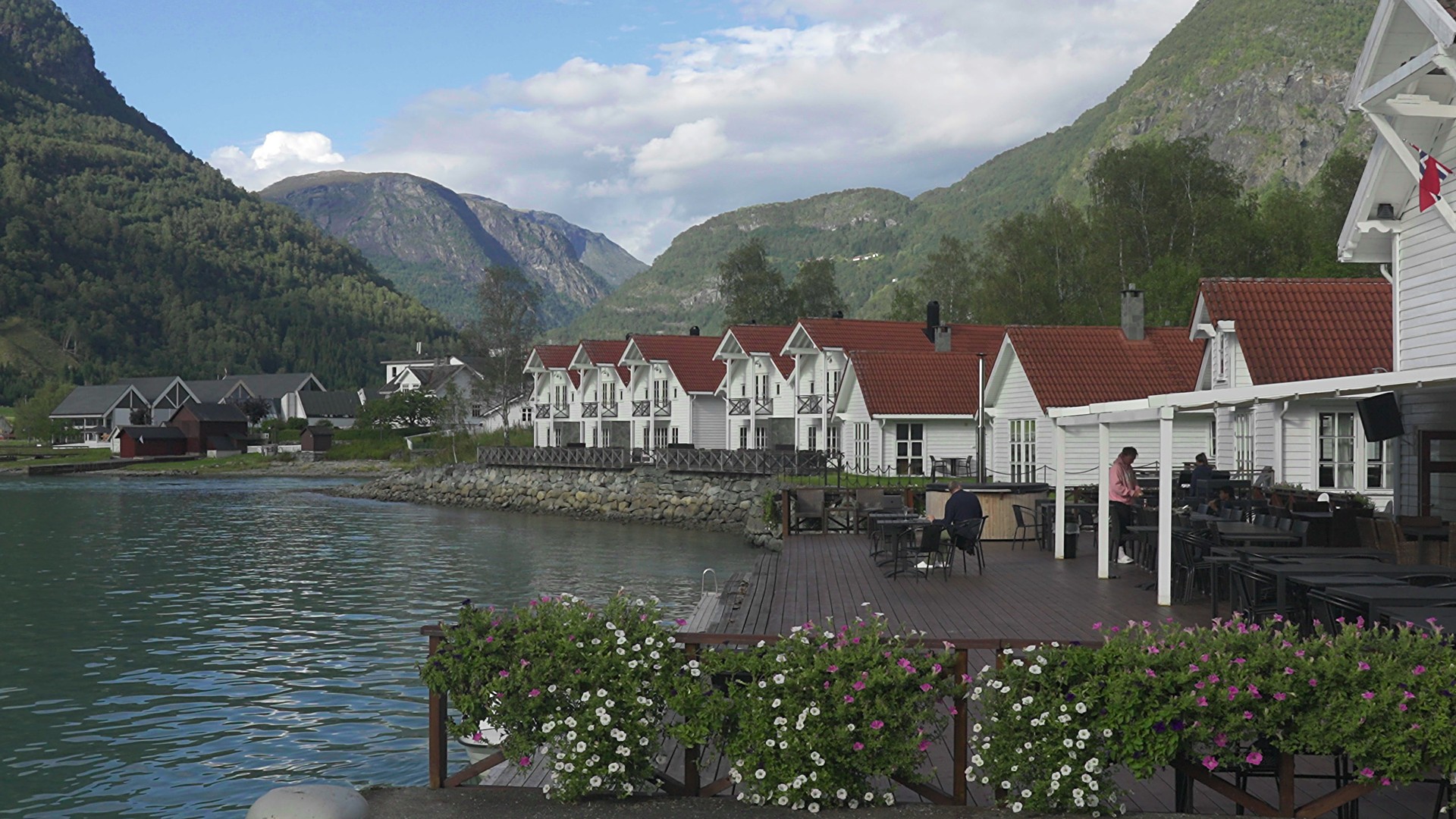
Skjolden sits at the absolute innermost point of the Sognefjorden. It is over 200 kilometres from the open sea. Cruise ships come here, navigating four hours up the fjord, making this Norway's innermost cruise port. The village has 238 people.
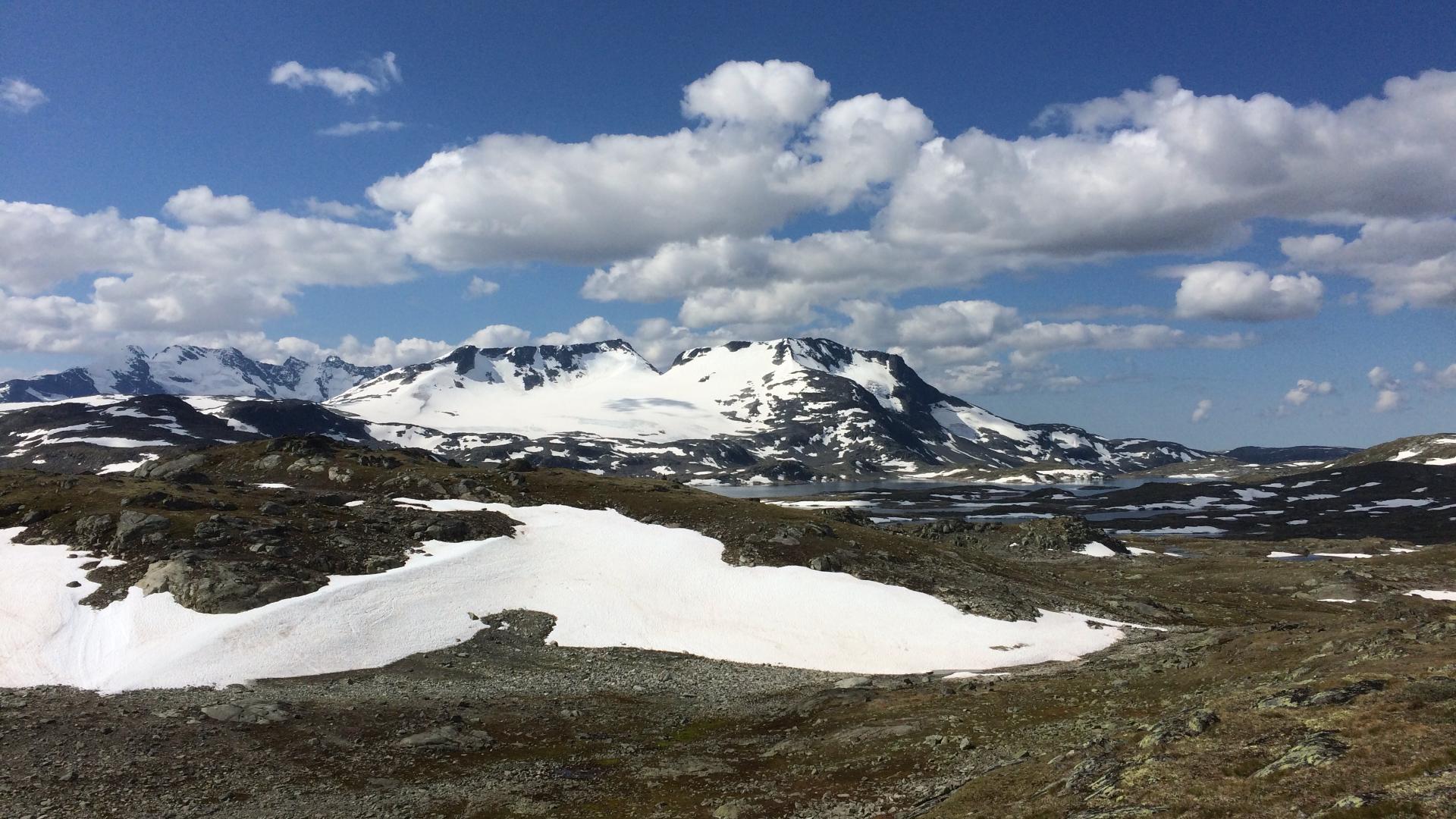
From here, road 55 climbs over Sognefjellet, Norway's highest mountain pass at 1,434 metres, and drops down to Lom in Gudbrandsdalen. The pass is open from roughly June to October, depending on snow. To the north lies Breheimen National Park, to the east Jotunheimen.
The best story here is one you cannot see anymore. In 1894, a Bergen company called Sogns Iskompagni started harvesting ice from Eidsvatnet, the small lake just above the village. They built what was probably the largest wooden building in the entire county: an ice house roughly 100 metres long, 30 metres wide, and 20 metres tall, roofed with over 400 corrugated iron sheets imported from England. A steam-powered conveyor system moved the ice blocks. They even had electric lighting, one of the first in Sogn. The timber for this enormous building came from Frønningen, further down the fjord. The ice went to Bergen, Britain, Denmark and Germany. Each block was cut to a standard 62 by 62 by 31 centimetres and had to be so clear you could read text through it. The business was only profitable one single year, 1901. In 1910, German prices spiked then crashed within weeks as speculators dumped ice at half price. The company went bankrupt in 1915. The enormous ice house was demolished, and local kids used the foundation as a football pitch.
Around the same time the ice company was failing, philosopher Ludwig Wittgenstein arrived and built a small cabin on a rock above Eidsvatnet in 1913. The locals called it Østerrike, Austria. He returned over several years, his longest stay being 13 months, and wrote important parts of his work here. The cabin was moved twice and finally returned to its original spot in 2019, where it now stands again.
From here, road 55 climbs over Sognefjellet, Norway's highest mountain pass at 1,434 metres, and drops down to Lom in Gudbrandsdalen. The pass is open from roughly June to October, depending on snow. To the north lies Breheimen National Park, to the east Jotunheimen.
The best story here is one you cannot see anymore. In 1894, a Bergen company called Sogns Iskompagni started harvesting ice from Eidsvatnet, the small lake just above the village. They built what was probably the largest wooden building in the entire county: an ice house roughly 100 metres long, 30 metres wide, and 20 metres tall, roofed with over 400 corrugated iron sheets imported from England. A steam-powered conveyor system moved the ice blocks. They even had electric lighting, one of the first in Sogn. The timber for this enormous building came from Frønningen, further down the fjord. The ice went to Bergen, Britain, Denmark and Germany. Each block was cut to a standard 62 by 62 by 31 centimetres and had to be so clear you could read text through it. The business was only profitable one single year, 1901. In 1910, German prices spiked then crashed within weeks as speculators dumped ice at half price. The company went bankrupt in 1915. The enormous ice house was demolished, and local kids used the foundation as a football pitch.
Around the same time the ice company was failing, philosopher Ludwig Wittgenstein arrived and built a small cabin on a rock above Eidsvatnet in 1913. The locals called it Østerrike, Austria. He returned over several years, his longest stay being 13 months, and wrote important parts of his work here. The cabin was moved twice and finally returned to its original spot in 2019, where it now stands again.