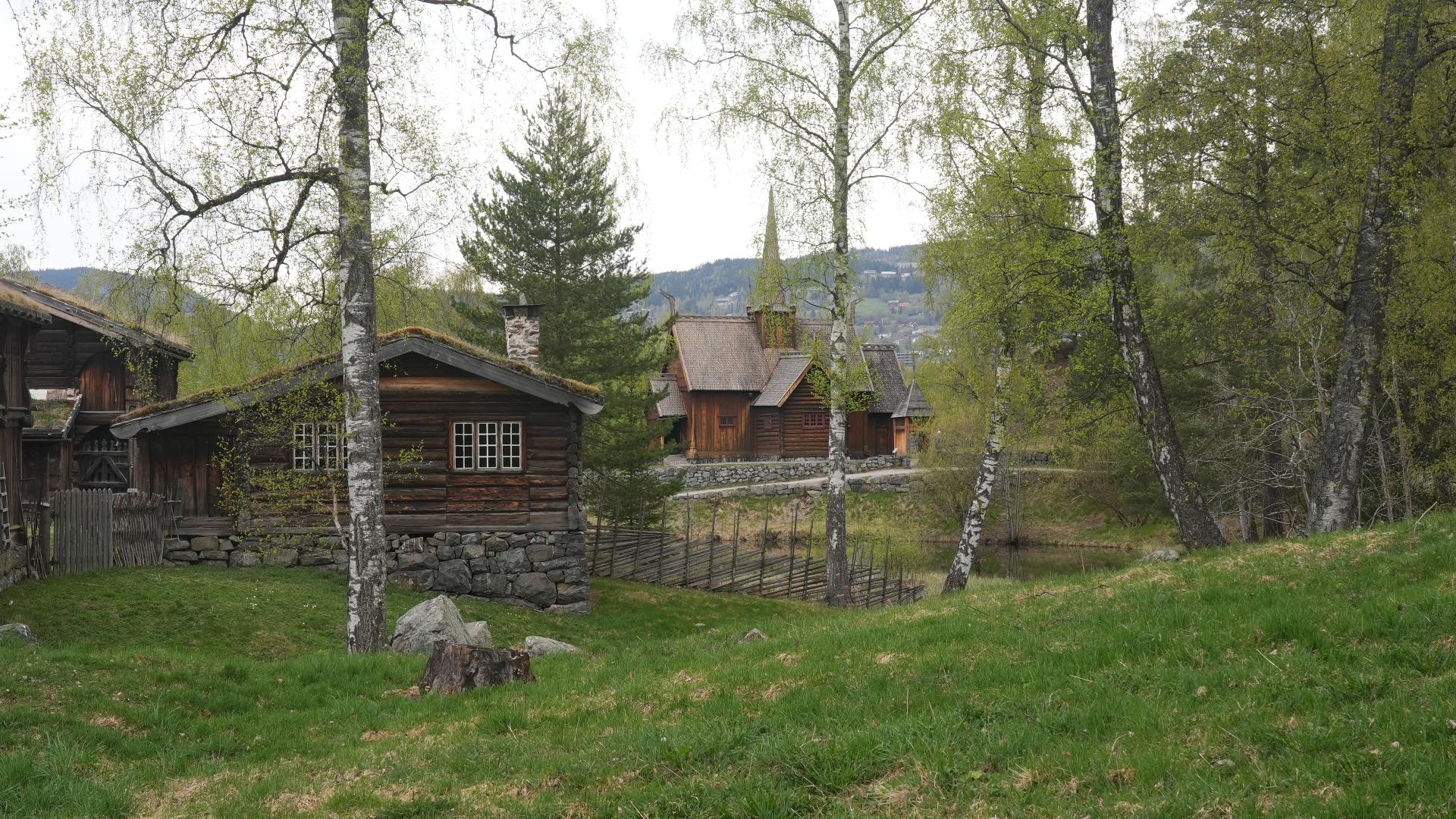
Ringebu Stave church is the only one in Gudbrandsdalen. The church you see today isn't quite what medieval pilgrims would have known. The original was built around 1220, but in 1630 master builder Werner Olsen transformed it into a cruciform church. He added the distinctive red tower in 1631, built new transepts, and lowered the ceiling. What remains from the original structure is the nave with its 18 free-standing wooden staves. The west portal still has medieval carvings with animal ornamentation.
Archaeological digs in the 1980s revealed the church's deeper history. Beneath the floor, excavators found around 900 coins, mostly medieval, including some minted in England under King Canute in the 1020s. They also found post holes from an even older church that stood here in the 11th century. The site was a gathering place long before Christianity arrived.
Inside, the décor is mainly from the late 17th and early 18th century. The altarpiece dates from the 1680s and features some of the earliest carved acanthus leaf decoration in the valley. The soapstone baptismal font is older still, carried over from the previous church. Medieval crucifixes and a statue of St Laurence from around 1250 have survived the centuries.
The church sits on the pilgrim route from Oslo to Nidaros Cathedral in Trondheim. In medieval times, thousands walked this path to visit St Olav's shrine. Today's pilgrims still stop here, just as their predecessors did 800 years ago.
The church is open to visitors during summer but remains an active parish church, so check it's not closed for services or weddings. Next door, the old rectory from 1743 houses a small museum with some of the excavated coins.