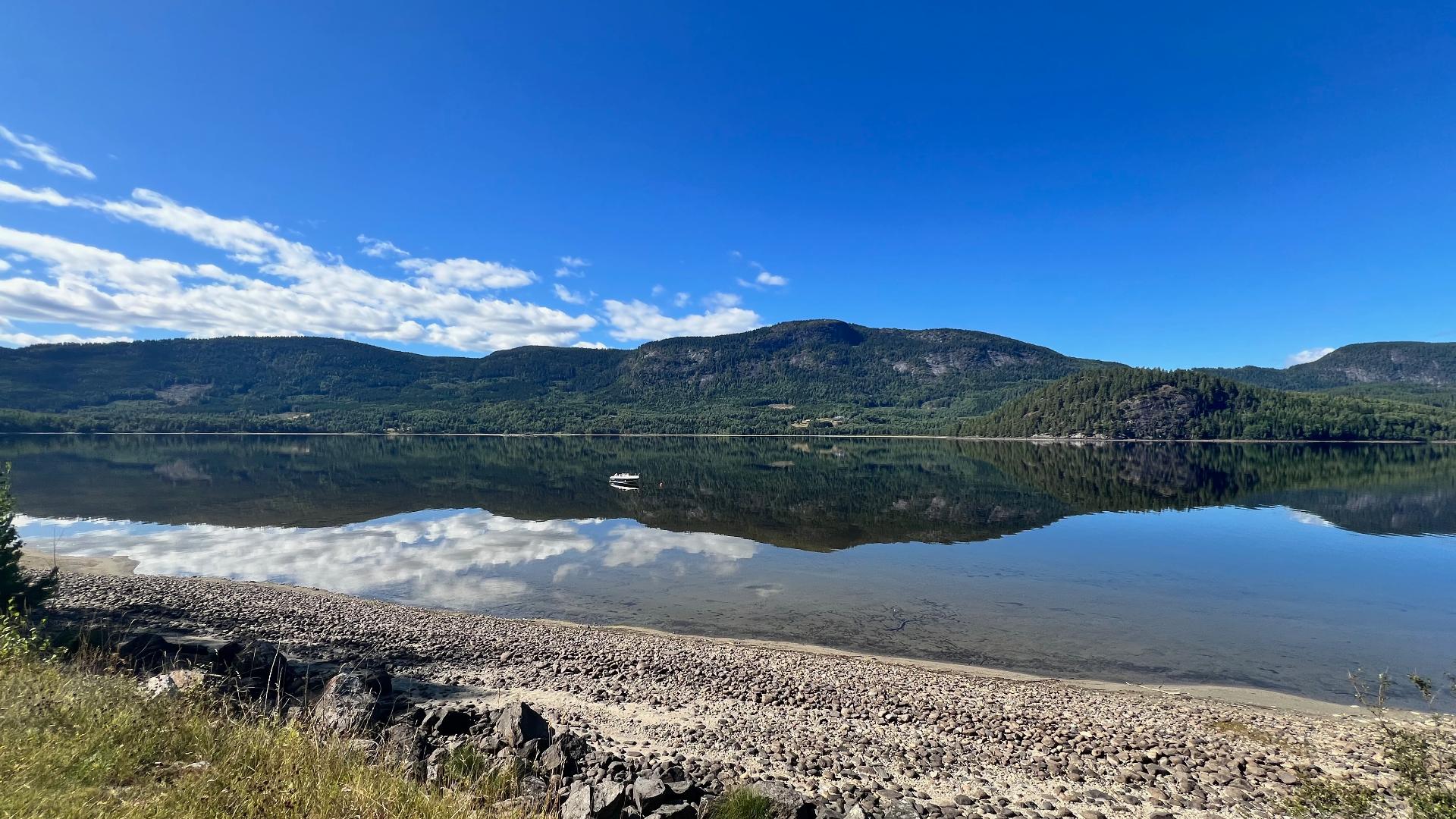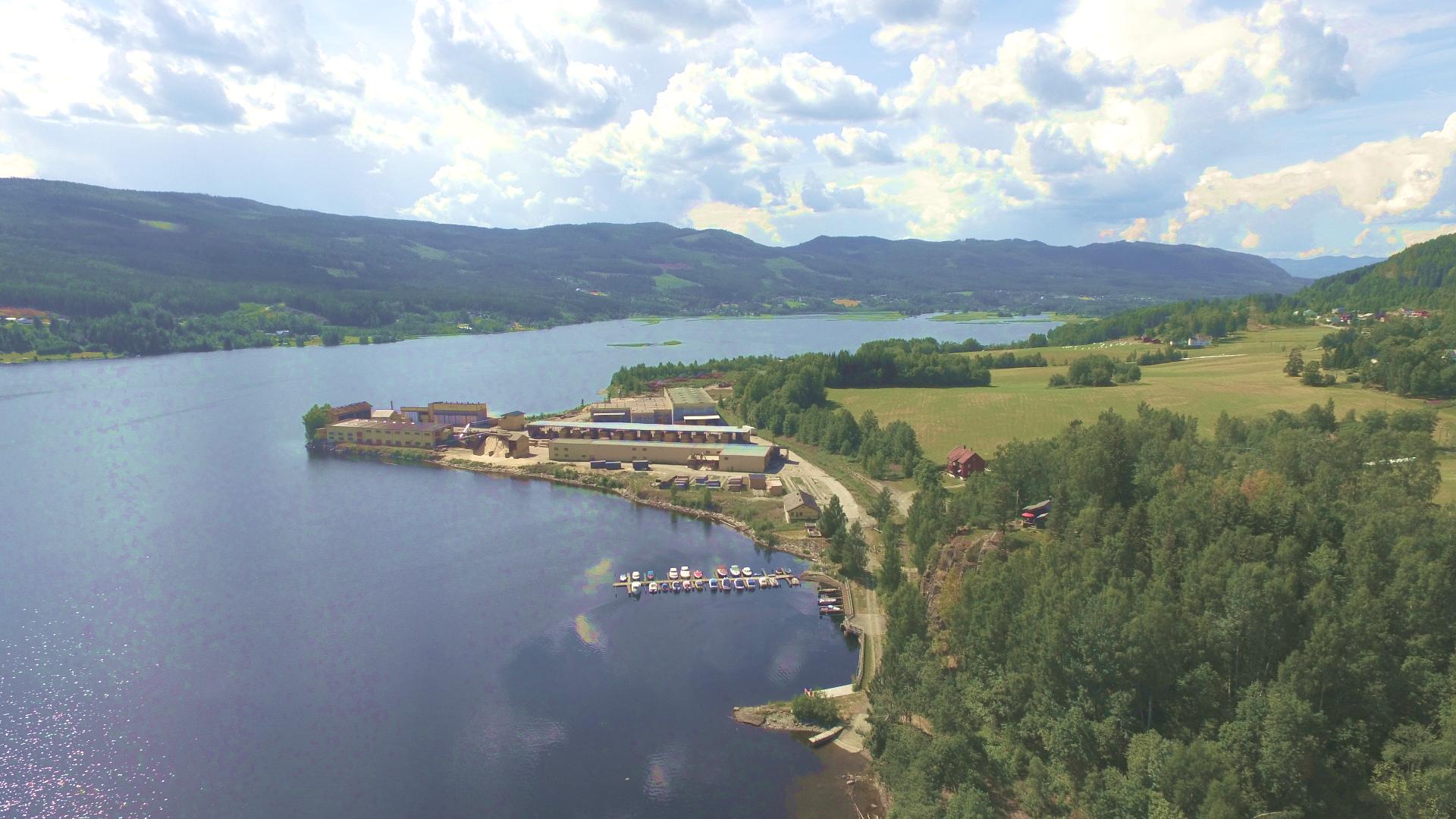
Randsfjorden is Norway's fourth largest lake, stretching 75 kilometres through the Hadeland and Land districts north of Oslo. The lake was carved by glaciers during the last ice age and sits at 134 metres above sea level, surrounded by farms, forests and low hills.
The lake has shaped local history for centuries. It was the main transport route before roads were built, and its fish stocks fed the farms along its shores. More dramatically, it was here that King Halfdan Svarte drowned around 860 AD when his horse-drawn sled broke through the spring ice on a return journey from a feast in Hadeland. His death set the stage for his son Harald Hårfagre to unite Norway into a single kingdom.
Today Randsfjorden is popular for fishing, canoeing and swimming in summer. The towns of Jevnaker, Jaren and Dokka all sit on its shores. The western shore follows the Rv4 for long stretches, giving drivers repeated views of the wide water.
The lake has shaped local history for centuries. It was the main transport route before roads were built, and its fish stocks fed the farms along its shores. More dramatically, it was here that King Halfdan Svarte drowned around 860 AD when his horse-drawn sled broke through the spring ice on a return journey from a feast in Hadeland. His death set the stage for his son Harald Hårfagre to unite Norway into a single kingdom.
Today Randsfjorden is popular for fishing, canoeing and swimming in summer. The towns of Jevnaker, Jaren and Dokka all sit on its shores. The western shore follows the Rv4 for long stretches, giving drivers repeated views of the wide water.