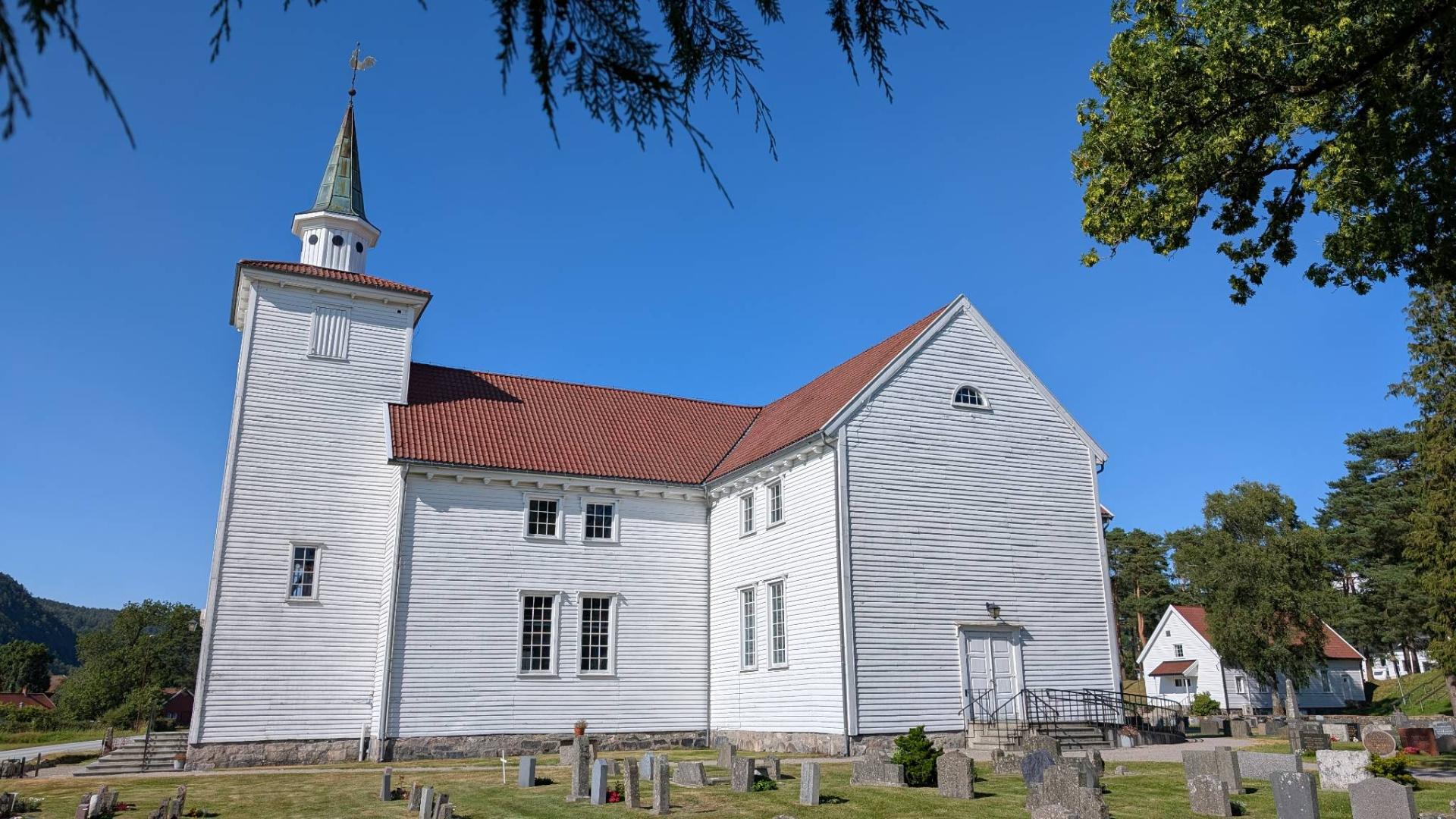
Lyngdal kirke is Norway's second-largest wooden church, built in 1848. It seats around 1,100 people, which was ambitious for a rural parish but reflects the religious revival movement that swept through Agder in the 19th century.
Behind the church lie seven large burial mounds from the Early Iron Age, roughly 500 BCE to 550 CE. They are among the largest in Agder and show that this valley has been an important settlement area for over 2,000 years. The mounds are visible from the churchyard and accessible on foot.
The church is on the main road through Lyngdal, easy to spot. If you stop, the combination of the large wooden church and the ancient mounds behind it is worth a few minutes.
Behind the church lie seven large burial mounds from the Early Iron Age, roughly 500 BCE to 550 CE. They are among the largest in Agder and show that this valley has been an important settlement area for over 2,000 years. The mounds are visible from the churchyard and accessible on foot.
The church is on the main road through Lyngdal, easy to spot. If you stop, the combination of the large wooden church and the ancient mounds behind it is worth a few minutes.