Lindesnes Fyr marks the very bottom of mainland Norway: latitude 57°58'43" North. Stand here and you are as far south as you can get on the Norwegian mainland, with nothing but open sea between you and Denmark, 140 kilometres away. The strait where the North Sea meets the Skagerrak creates notoriously rough waters, which is exactly why a lighthouse has stood here since 1656, making it Norway's first ever lighthouse station.
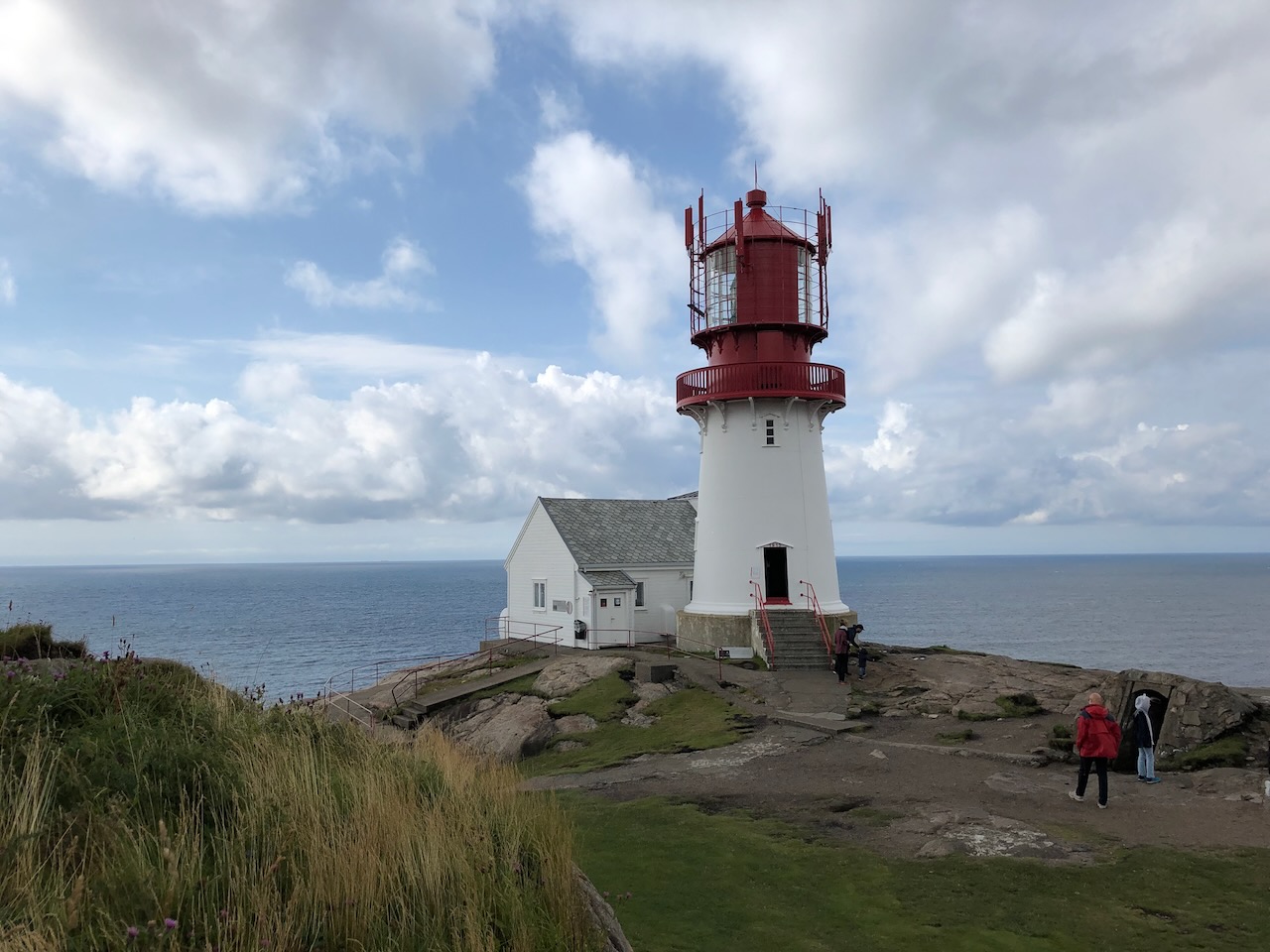
The current cast-iron tower dates from 1915 and rises 16 metres above its granite base. Its first-order Fresnel lens still throws a beam visible for nearly 18 nautical miles. The lighthouse remained manned until 2003 and is still active, operated by the Norwegian Coastal Administration. Below the tower, a museum inside the old keeper's quarters traces the full history of the station, from the coal-fired beacon of the 1600s through oil lamps and eventually electricity.
What makes Lindesnes worth visiting beyond the novelty of the southernmost point is the landscape itself. The headland is bare, wind-blasted rock jutting into the sea, shaped by thousands of years of storms. On calm days, the views stretch endlessly. On stormy days, the waves crashing against the rocks below are spectacular. An underground exhibition space, blasted into the rock beneath the lighthouse, hosts rotating exhibits and a cinema showing films about coastal culture and the sea.
The site also has a restaurant and a small shop. For hikers, the coastal path along the headland is short but dramatic. The symbolism of standing at Norway's southernmost tip, 2,518 kilometres from Nordkapp in the north, is not lost on visitors: many Norwegians consider the drive from Lindesnes to Nordkapp the ultimate Norwegian road trip.
The lighthouse is open to visitors most of the year but with limited hours in winter. Summer brings extended hours and the full programme of exhibits. The approach road is narrow but manageable; parking is available at the site.
The current cast-iron tower dates from 1915 and rises 16 metres above its granite base. Its first-order Fresnel lens still throws a beam visible for nearly 18 nautical miles. The lighthouse remained manned until 2003 and is still active, operated by the Norwegian Coastal Administration. Below the tower, a museum inside the old keeper's quarters traces the full history of the station, from the coal-fired beacon of the 1600s through oil lamps and eventually electricity.
What makes Lindesnes worth visiting beyond the novelty of the southernmost point is the landscape itself. The headland is bare, wind-blasted rock jutting into the sea, shaped by thousands of years of storms. On calm days, the views stretch endlessly. On stormy days, the waves crashing against the rocks below are spectacular. An underground exhibition space, blasted into the rock beneath the lighthouse, hosts rotating exhibits and a cinema showing films about coastal culture and the sea.
The site also has a restaurant and a small shop. For hikers, the coastal path along the headland is short but dramatic. The symbolism of standing at Norway's southernmost tip, 2,518 kilometres from Nordkapp in the north, is not lost on visitors: many Norwegians consider the drive from Lindesnes to Nordkapp the ultimate Norwegian road trip.
The lighthouse is open to visitors most of the year but with limited hours in winter. Summer brings extended hours and the full programme of exhibits. The approach road is narrow but manageable; parking is available at the site.