Larvik's most famous son is Thor Heyerdahl, the adventurer who sailed the balsa raft Kon-Tiki across the Pacific in 1947 to prove that ancient peoples could have made the same journey. The Kon-Tiki Museum is in Oslo, but Heyerdahl grew up here, and the town takes quiet pride in its connection to one of Norway's most daring explorers.
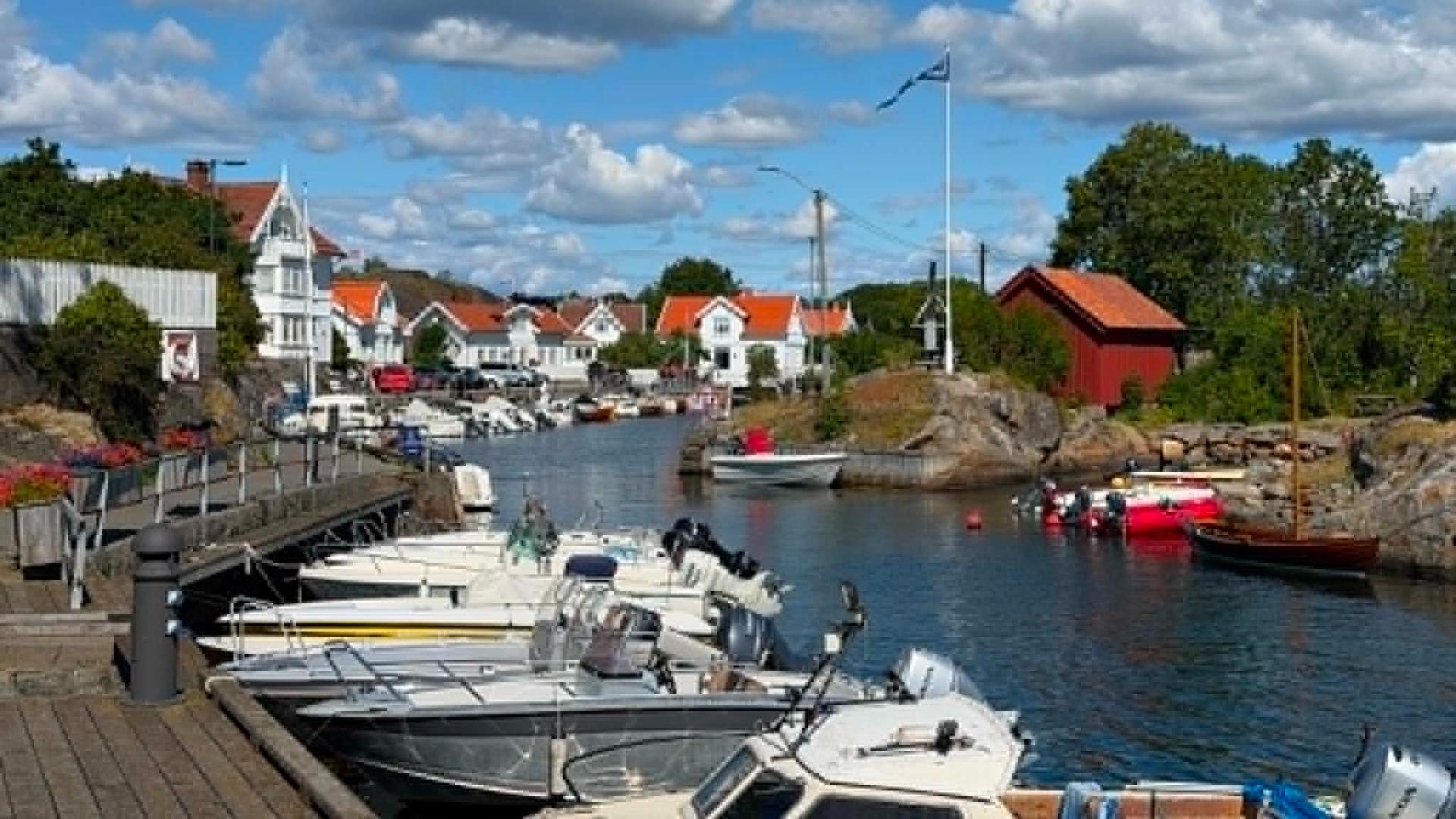
The town sits at the end of the Larviksfjorden and has a long maritime history. In the 1600s and 1700s it was a major timber-exporting port, and the old harbour area still reflects that era. Bøkeskogen, one of the northernmost beech forests in the world, lies right at the edge of town: a surprisingly lush woodland that feels more like central Europe than Scandinavia. It is a popular spot for walks year-round.
Larvik is also the source of Farris, Norway's best-known mineral water, drawn from a spring near the lake of the same name. The town serves as a gateway to the wider Vestfold coast and to Gea Norvegica, one of UNESCO's Global Geoparks, where the geological history of Scandinavia is on display in exposed rock formations and old quarries.
The town sits at the end of the Larviksfjorden and has a long maritime history. In the 1600s and 1700s it was a major timber-exporting port, and the old harbour area still reflects that era. Bøkeskogen, one of the northernmost beech forests in the world, lies right at the edge of town: a surprisingly lush woodland that feels more like central Europe than Scandinavia. It is a popular spot for walks year-round.
Larvik is also the source of Farris, Norway's best-known mineral water, drawn from a spring near the lake of the same name. The town serves as a gateway to the wider Vestfold coast and to Gea Norvegica, one of UNESCO's Global Geoparks, where the geological history of Scandinavia is on display in exposed rock formations and old quarries.