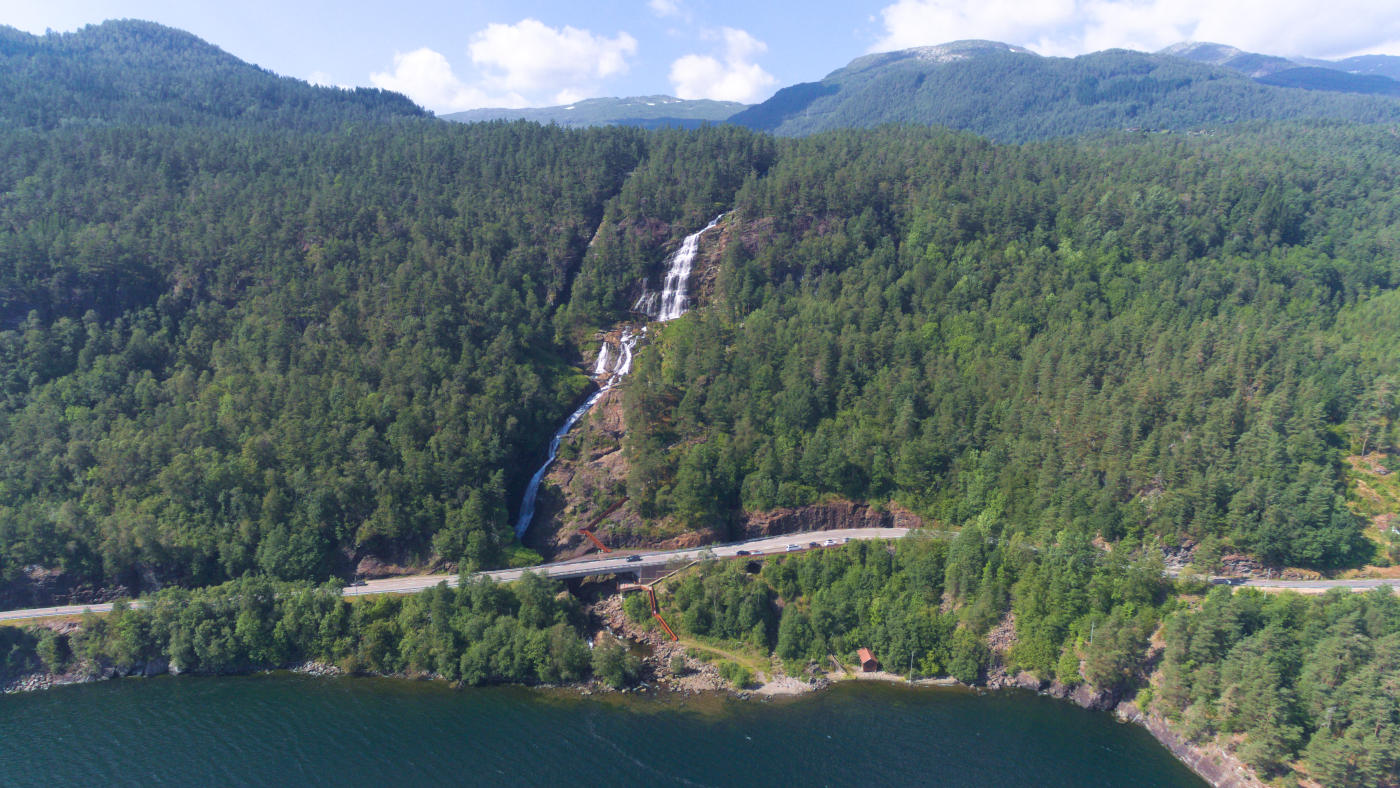
On the Storelva river in Sauda, Høllandsfossen drops roughly 25 metres, with a free-falling section of about 15 metres, squeezed through a narrow rock gorge. What makes this waterfall distinctive is the stone bridge that spans directly across the top of the falls. Built in 1860 by master mason Lars Henrik Quambe, the single-arch bridge crosses the river at the exact point where it tips over the edge, so the waterfall thunders directly beneath anyone standing on the bridge.
Quambe was a local builder known for his stonework in the Ryfylke region. The bridge is a dry-stone arch, constructed without mortar in the traditional Scandinavian technique, using carefully shaped stones that lock together under their own weight. Despite more than 160 years of exposure to spray, frost, and spring floods, the bridge remains structurally sound and is still in use as a footbridge. It was protected as a cultural heritage structure.
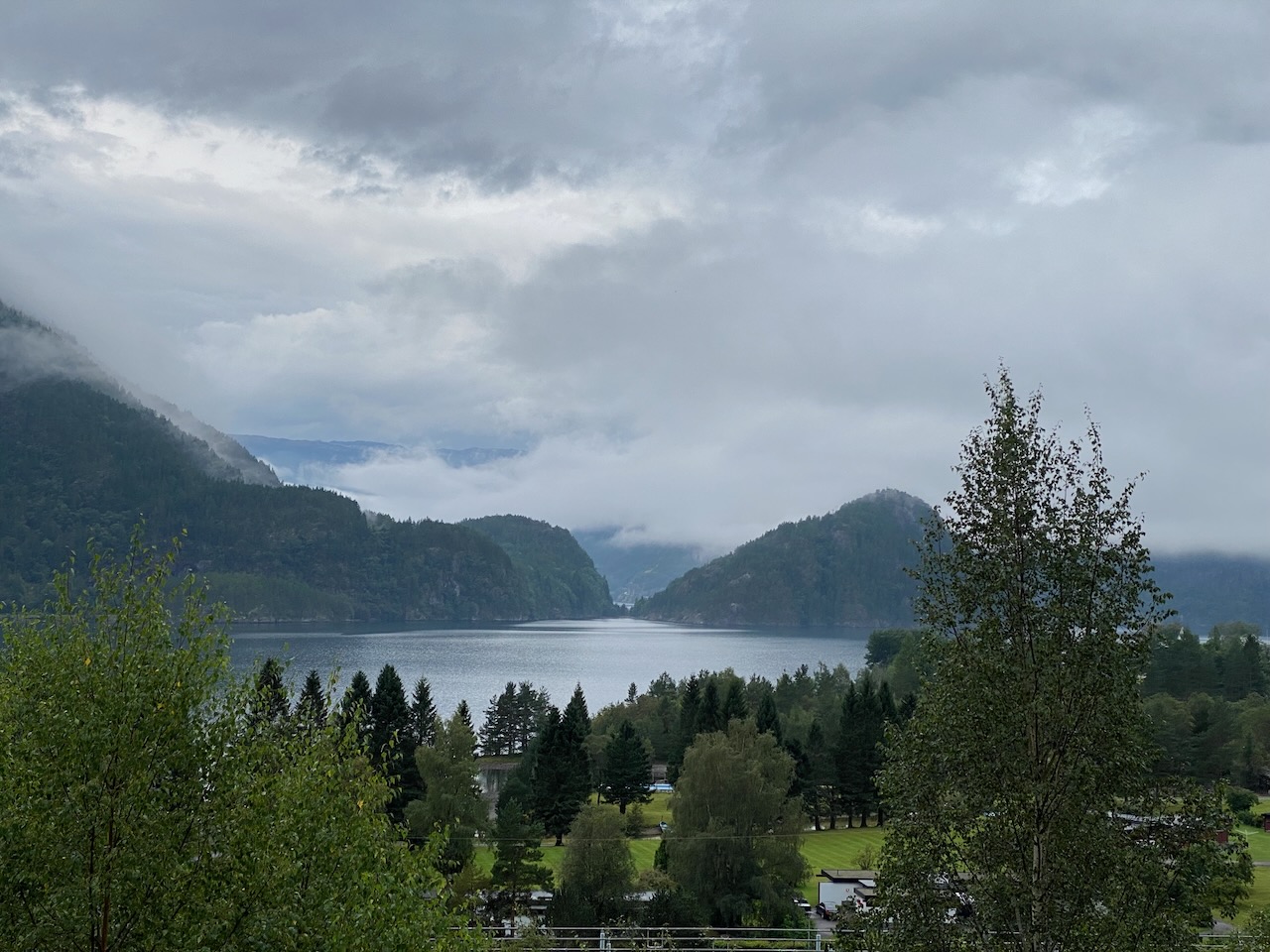
The waterfall is accessible via a short walk from the road in the Hølland area of Sauda. A path leads down to viewing points both above and below the falls. Water volume varies significantly with season: the Storelva carries substantial meltwater in spring and early summer, while late summer and autumn flows depend on rainfall. The surrounding terrain is steep, forested valley typical of inner Ryfylke.
Quambe was a local builder known for his stonework in the Ryfylke region. The bridge is a dry-stone arch, constructed without mortar in the traditional Scandinavian technique, using carefully shaped stones that lock together under their own weight. Despite more than 160 years of exposure to spray, frost, and spring floods, the bridge remains structurally sound and is still in use as a footbridge. It was protected as a cultural heritage structure.
The waterfall is accessible via a short walk from the road in the Hølland area of Sauda. A path leads down to viewing points both above and below the falls. Water volume varies significantly with season: the Storelva carries substantial meltwater in spring and early summer, while late summer and autumn flows depend on rainfall. The surrounding terrain is steep, forested valley typical of inner Ryfylke.