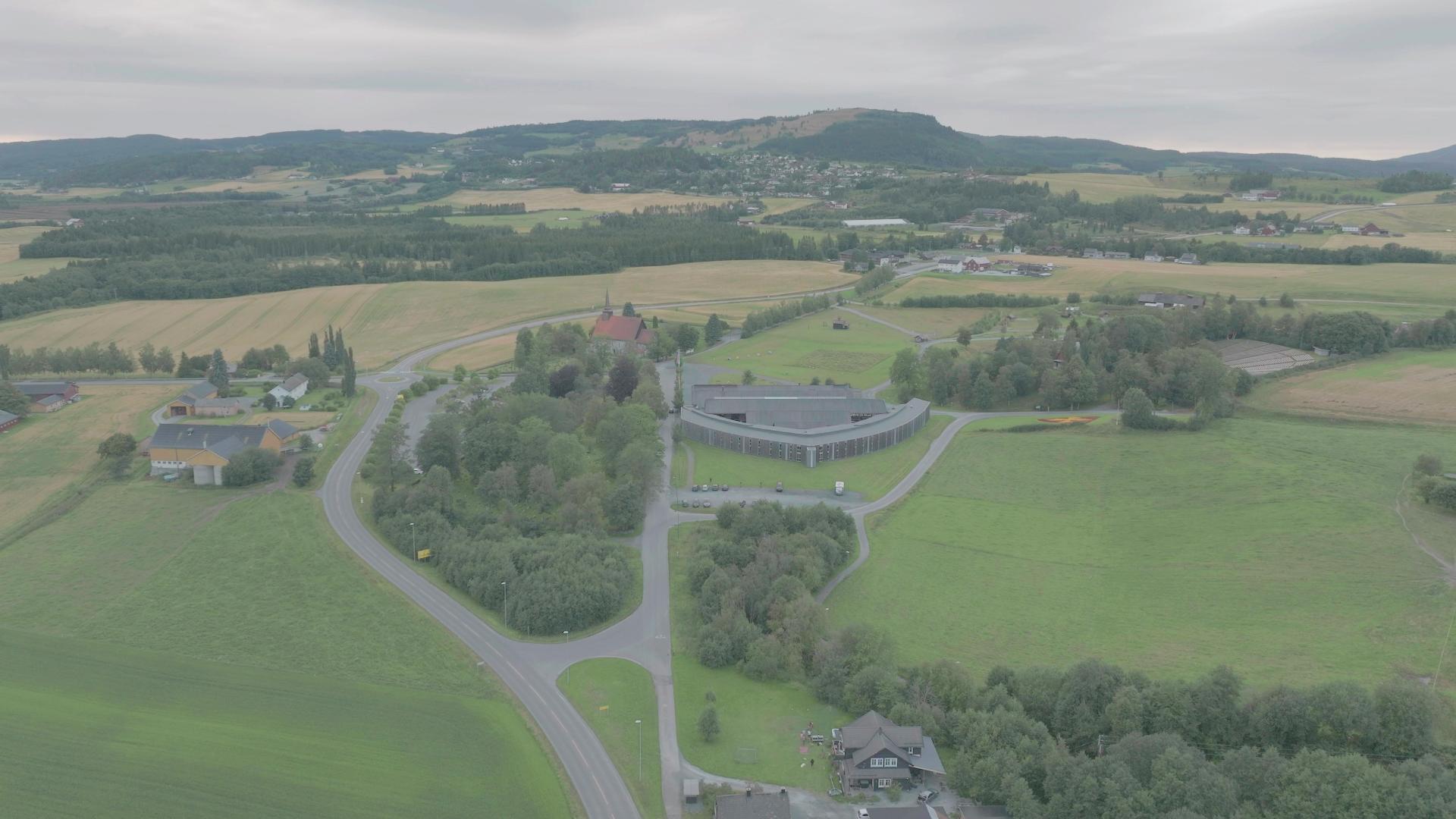
Just east of Stiklestad, a cluster of 13 burial mounds rises from the farmland. The largest is 46 metres across, the smallest six. This may be the greatest concentration of monumental burial mounds anywhere in Norway, and it tells a story of power that predates the famous battle by centuries.
Between the mounds, archaeologists have found the foundations of four or five buildings arranged around a ring-shaped courtyard, dating to the 900s and 1000s AD. Ring courtyards like this are associated with regional assemblies and military gatherings in pre-Christian Scandinavia. The combination of enormous grave monuments and a formal meeting place suggests that whoever controlled Hegstad was no ordinary farmer.
A nature and culture trail with 20 information signs loops through the site, connecting the burial field to the wider landscape around Stiklestad. The mounds are freely accessible year-round, about 1.5 kilometres east of the Stiklestad cultural centre.
Between the mounds, archaeologists have found the foundations of four or five buildings arranged around a ring-shaped courtyard, dating to the 900s and 1000s AD. Ring courtyards like this are associated with regional assemblies and military gatherings in pre-Christian Scandinavia. The combination of enormous grave monuments and a formal meeting place suggests that whoever controlled Hegstad was no ordinary farmer.
A nature and culture trail with 20 information signs loops through the site, connecting the burial field to the wider landscape around Stiklestad. The mounds are freely accessible year-round, about 1.5 kilometres east of the Stiklestad cultural centre.