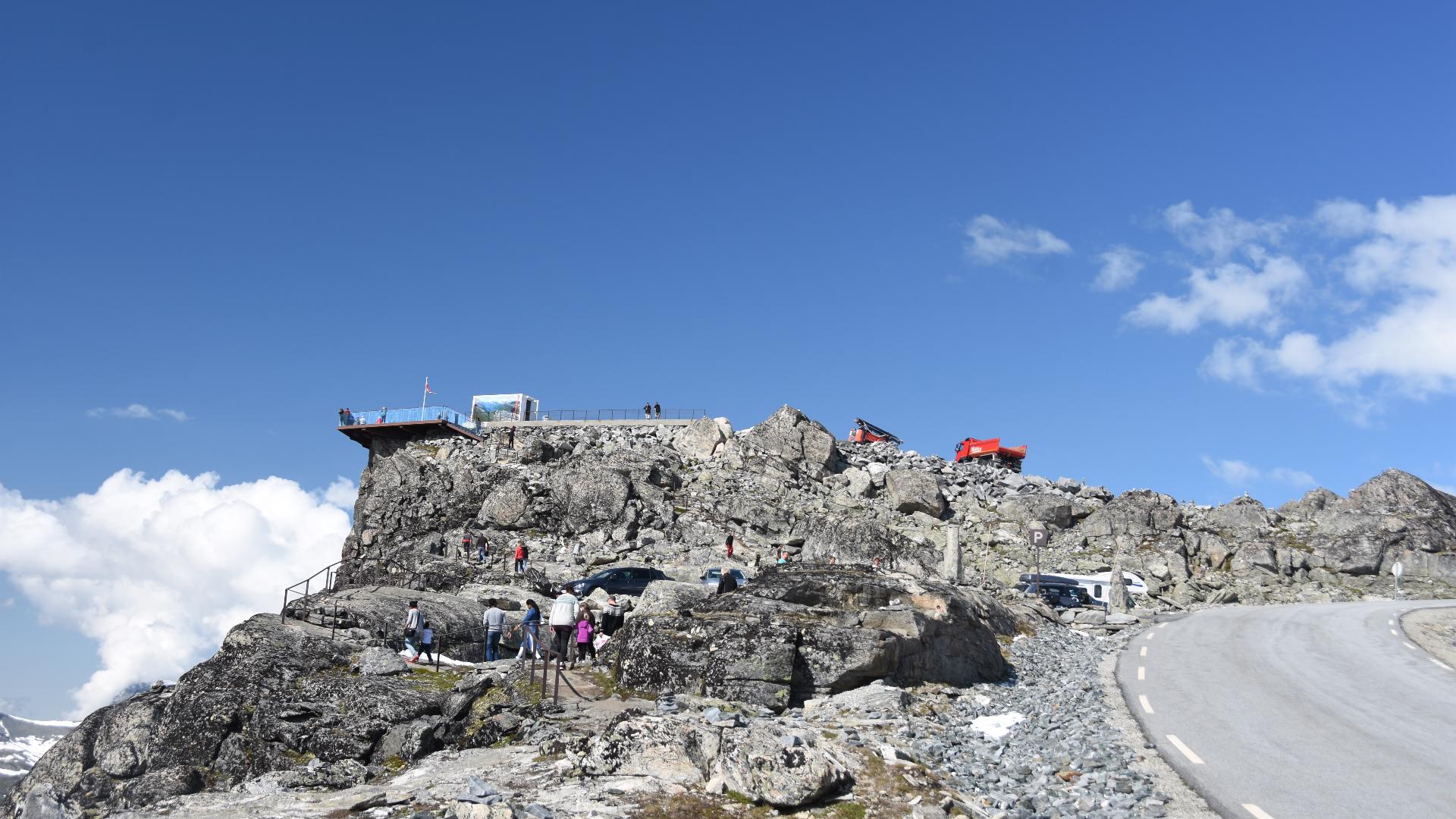
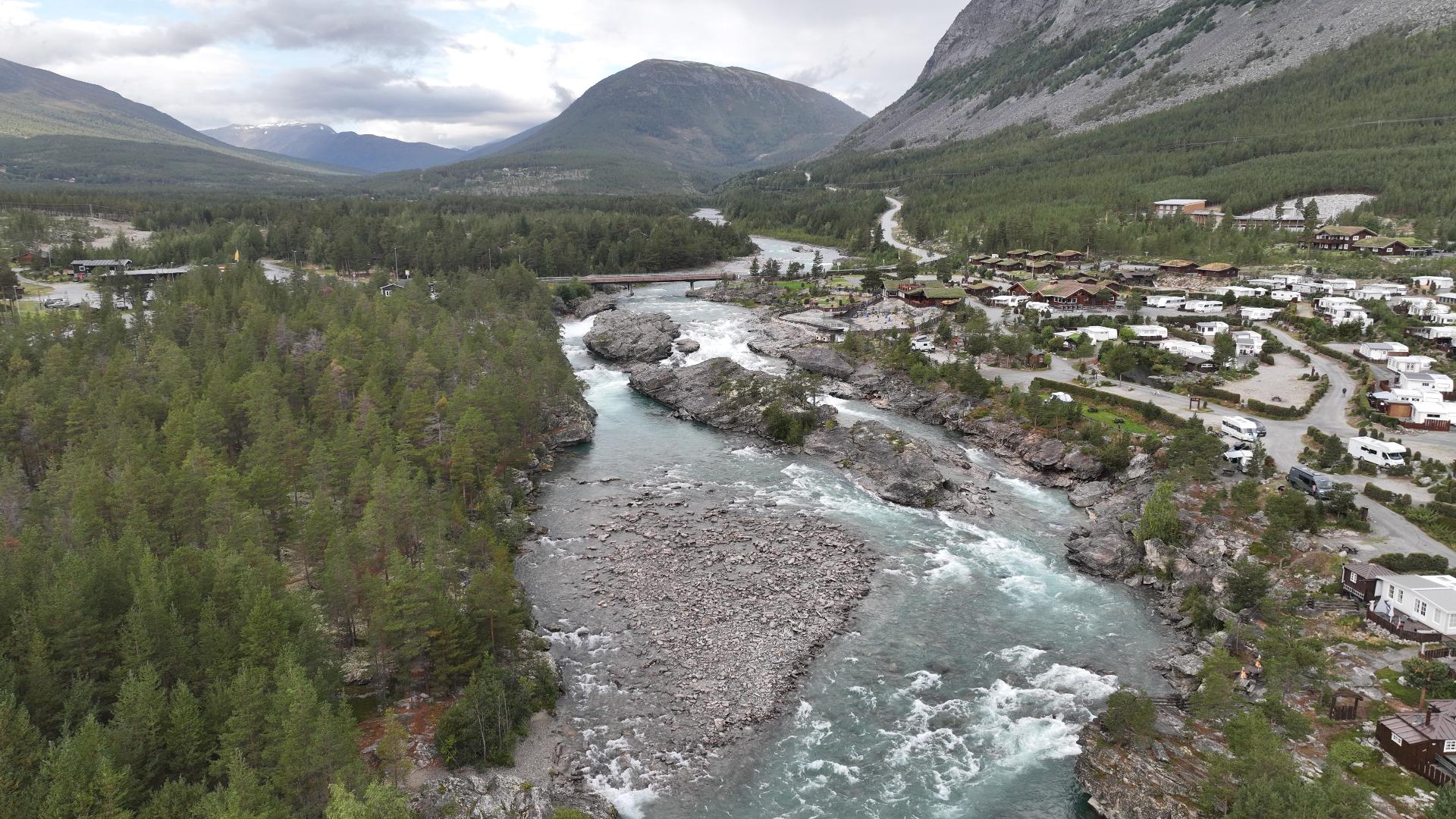
Grotli is a tiny mountain settlement at about 900 metres elevation. The name comes from the Old Norse word "grjot", meaning stone. For centuries there was nothing here but a stone shelter for travellers crossing the mountains.
When the road westward to Stryn was being built in the 1870s, the shelter was upgraded to a state-run mountain inn. Then between 1903 and 1905 the Grotli Høyfjellshotell was built. It's still run by the Bergheim family, now in the fifth generation. Over the years, the hotel has hosted some notable guests, including the writer Bjørnstjerne Bjørnson in 1896 and reportedly the King of Siam, Chulalongkorn, around 1907.
Grotli is also the location of a remarkable story from the Second World War. On 27 April 1940, during the Norwegian Campaign, a British Blackburn Skua fighter shot down a German Heinkel He 111 bomber in the mountains nearby. But the British plane was also damaged and had to crash-land on a frozen lake not far away. The German tail gunner was killed on impact, but the remaining crew members from both planes survived.
The survivors found their way separately to the Grotli Hotel, which was closed for the winter. The next morning both crews sat down together for breakfast. With no way to reach civilisation in the deep snow, British and German airmen had no choice but to cooperate to stay alive.
Eventually, British Captain Partridge and German Sergeant Strunk set out together on skis to find help. They ran into a Norwegian ski patrol. Unfortunately, Strunk was shot dead by the patrol when he appeared to reach for his pistol. The German pilot Schopis and another crew member were taken prisoner and sent to a POW camp in Canada.
Many years later, in 1977, Schopis received a phone call from Partridge. The two former enemies met again as friends. Partridge died in 1990, and Schopis in 2011 at the age of 99. The story was turned into the 2012 film "Into the White", starring Rupert Grint, which was partly filmed on location at Grotli. Partridge's Skua was later recovered and is now on display at the Fleet Air Arm Museum in Yeovilton, England. The wreck of Schopis's Heinkel reportedly still lies in the mountains near Grotli, one of several aircraft wrecks scattered across Norway's remote highlands.