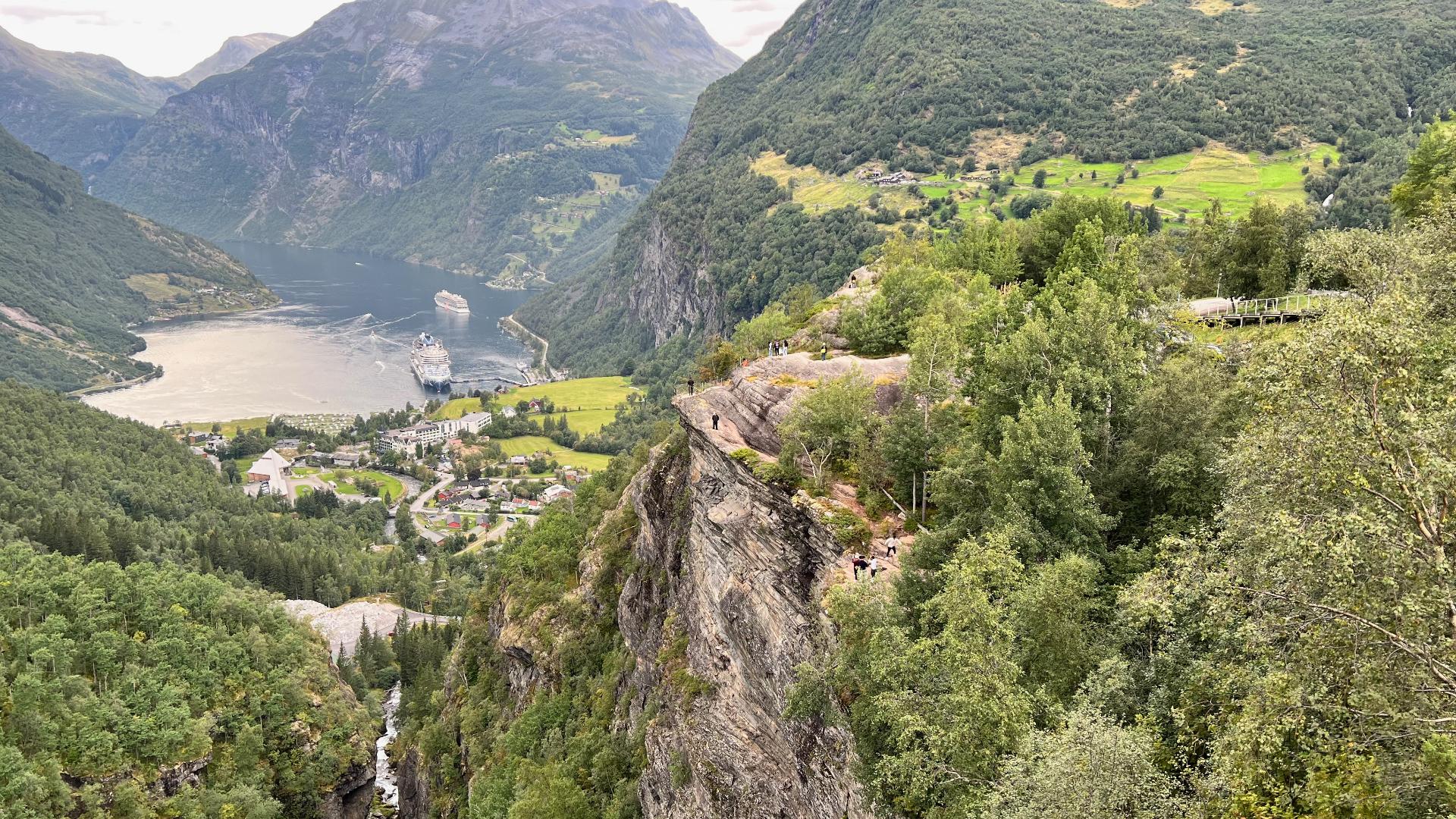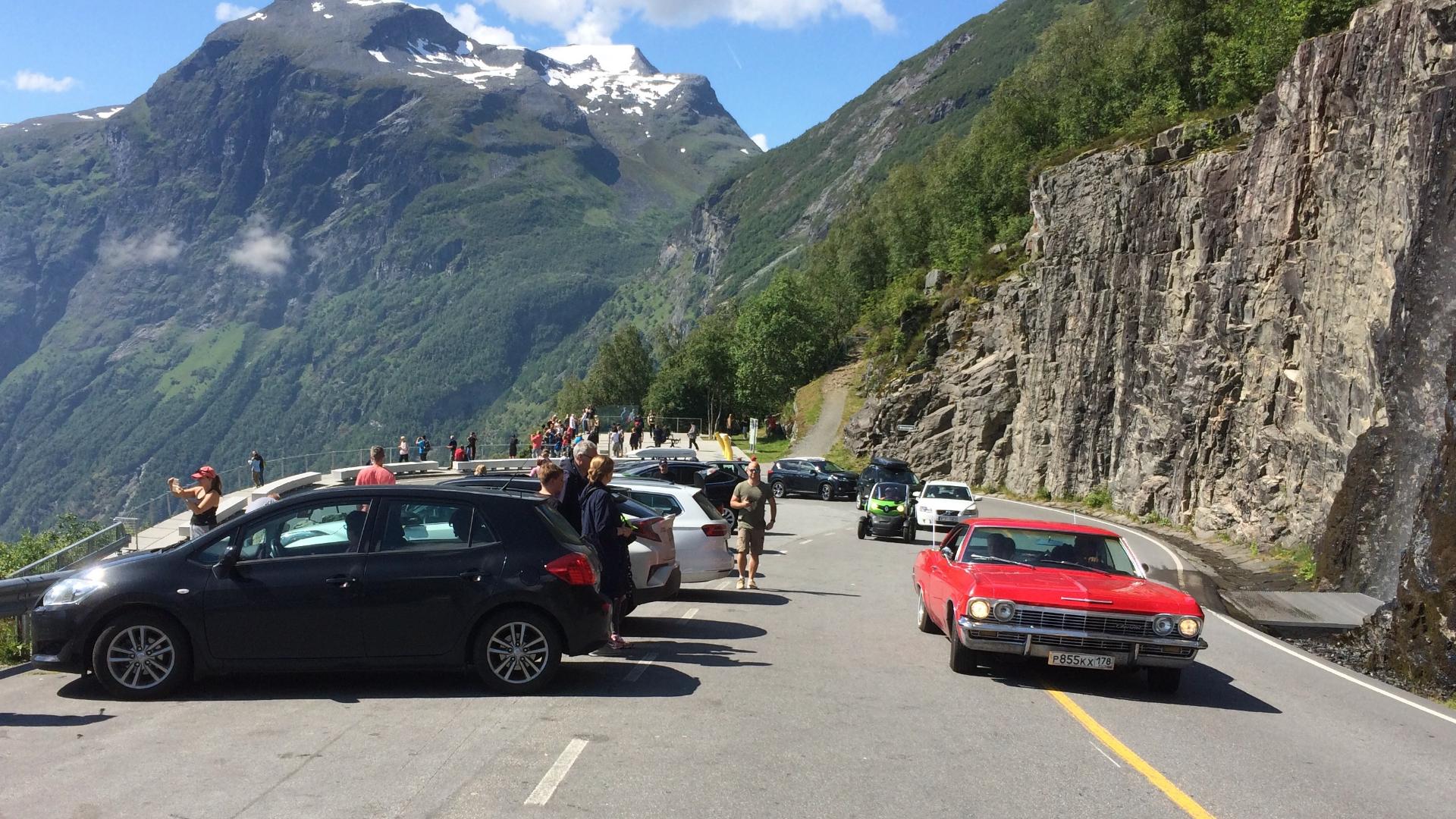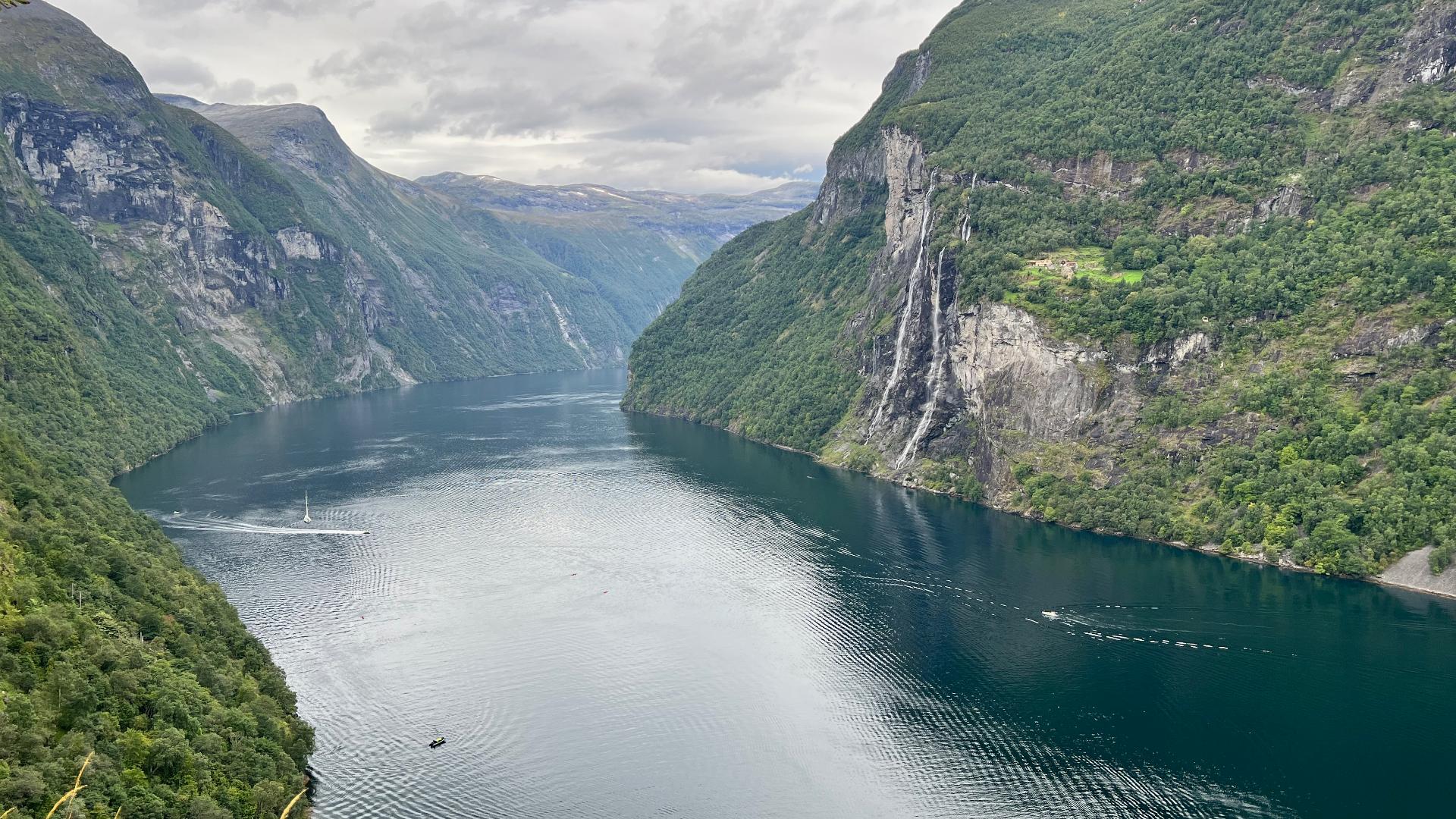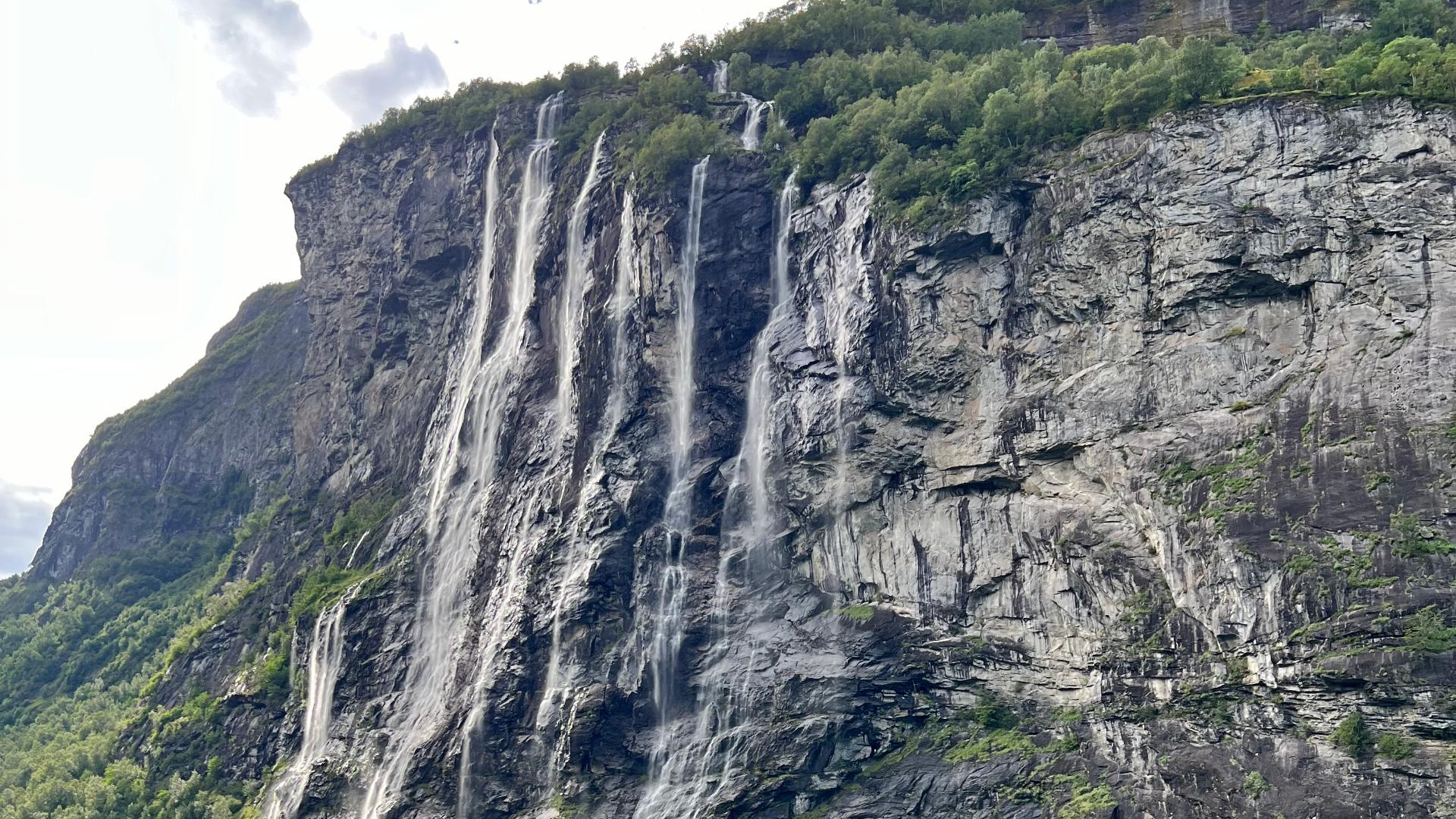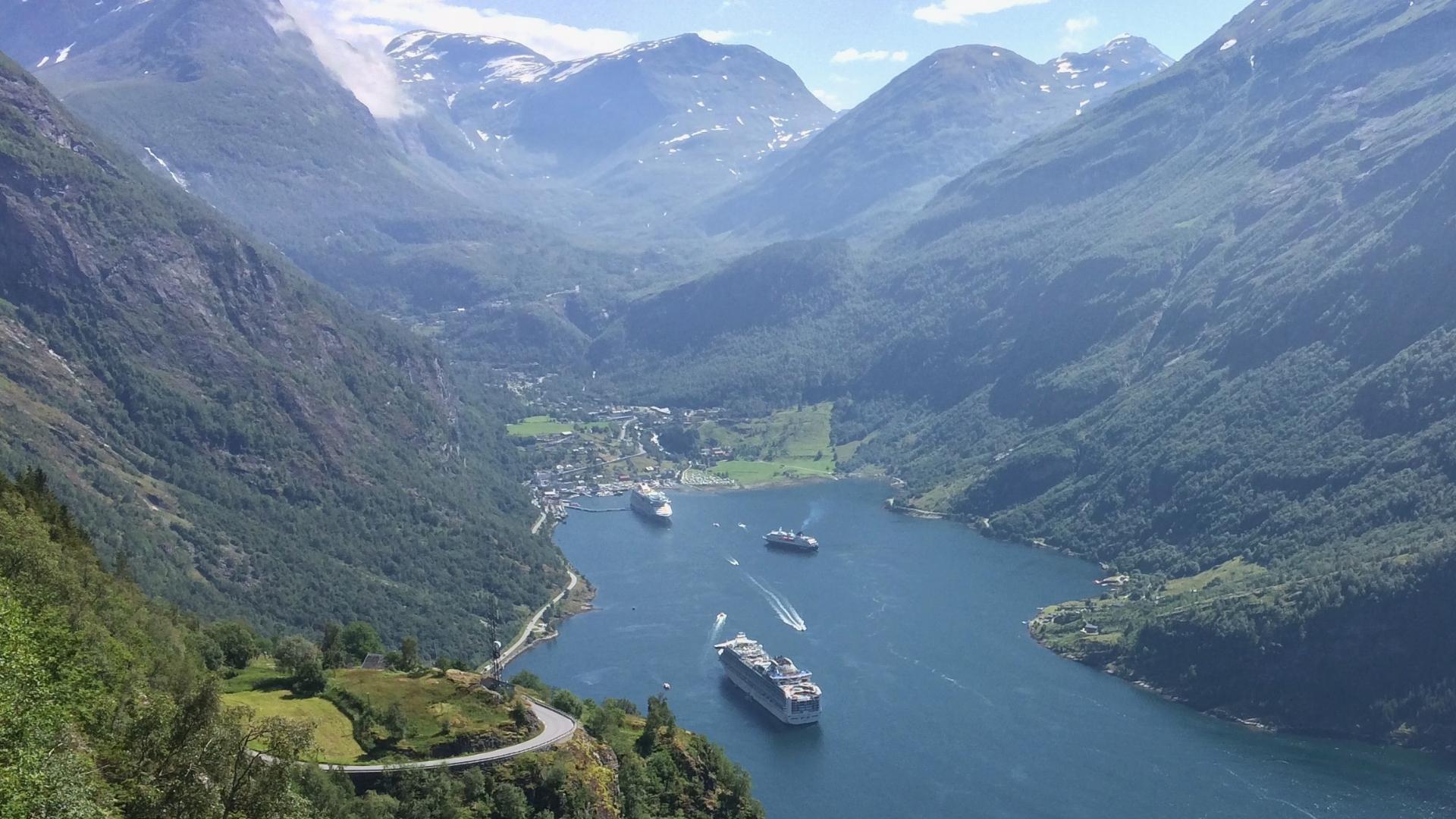
Geiranger is a tiny village at the head of the Geirangerfjord, which together with the Nærøyfjord became a UNESCO World Heritage Site in 2005. About 250 people live here year-round. In summer that number explodes, as up to 700,000 tourists visit each year. On busy days, several cruise ships can dock at once, bringing thousands of passengers ashore. That can be 30 times the local population in a single morning.
Tourism here is not new. The first tourists arrived in 1869, when a British family sailed in on their private yacht. By 1888, around 39 cruise steamers were visiting each summer. Then in the 1890s, Kaiser Wilhelm the Second arrived. He was so taken with the fjord that he came back nearly every summer until the First World War broke out. His visits put Geiranger on the map for European aristocrats and wealthy travellers.
Before the road was built, Geiranger was almost completely isolated. Everything went by water. The Geirangerstrasse over the mountains was completed in 1889, and that changed everything. Within a decade, the village had transformed from a remote farming settlement into a proper tourist destination.
The white church on the hillside dates from 1842. It is an octagonal timber building with seating for about 200 people. There has been a church on this site since around 1450.
What most visitors don't know is that Geiranger lives under a real threat. The mountain Åkerneset, further up the fjord, has a crack that grows up to 15 centimetres per year. If the mountainside collapses into the fjord, it could trigger a wave of up to 80 metres. The village sits at around 30 metres above sea level. It is one of the most monitored mountains in the world, and there is an early warning system in place. The 2015 Norwegian disaster film Bølgen, "The Wave", is based on this very scenario.
The river Geirangelva runs straight through the village and into the fjord. If you walk along it, you will find Geiranger Sjokolade, a chocolate shop in an old boathouse. Worth a stop.