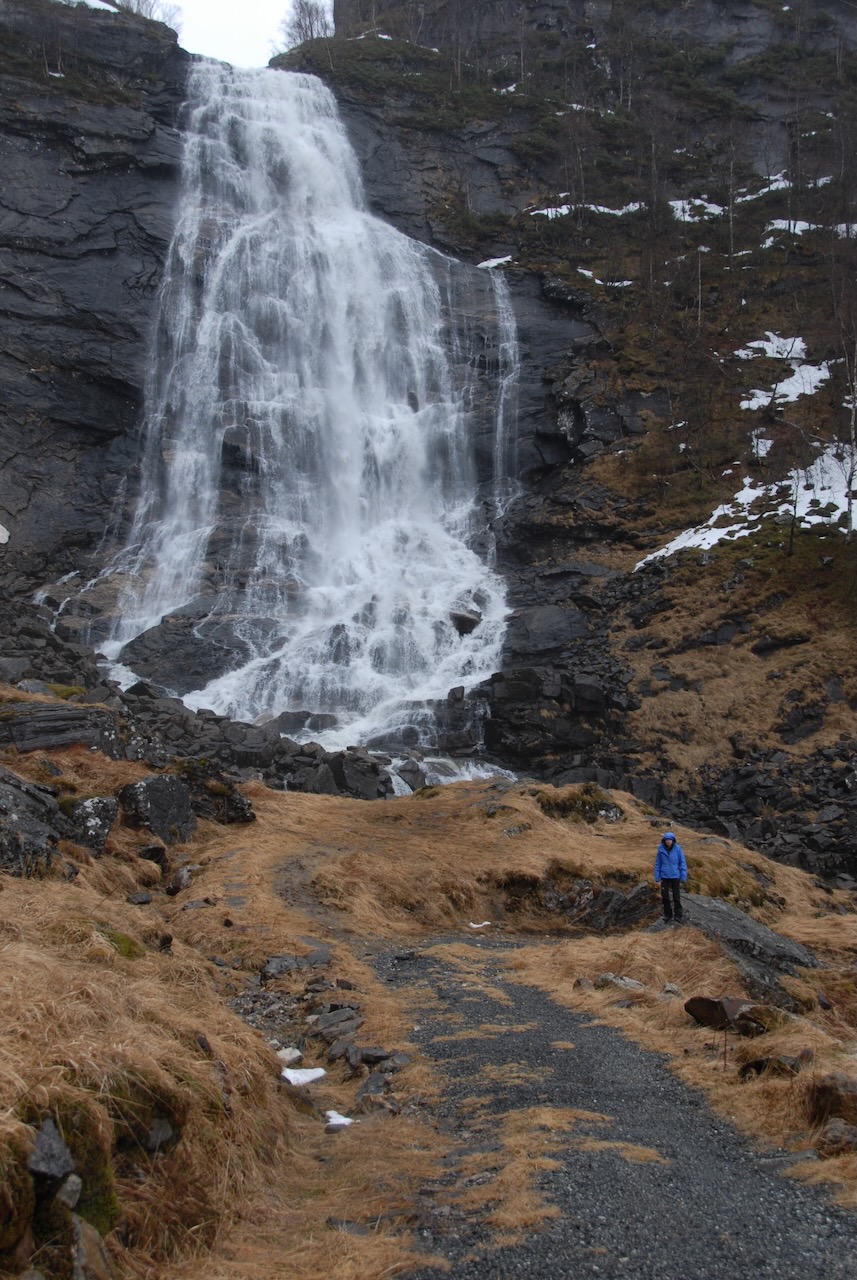
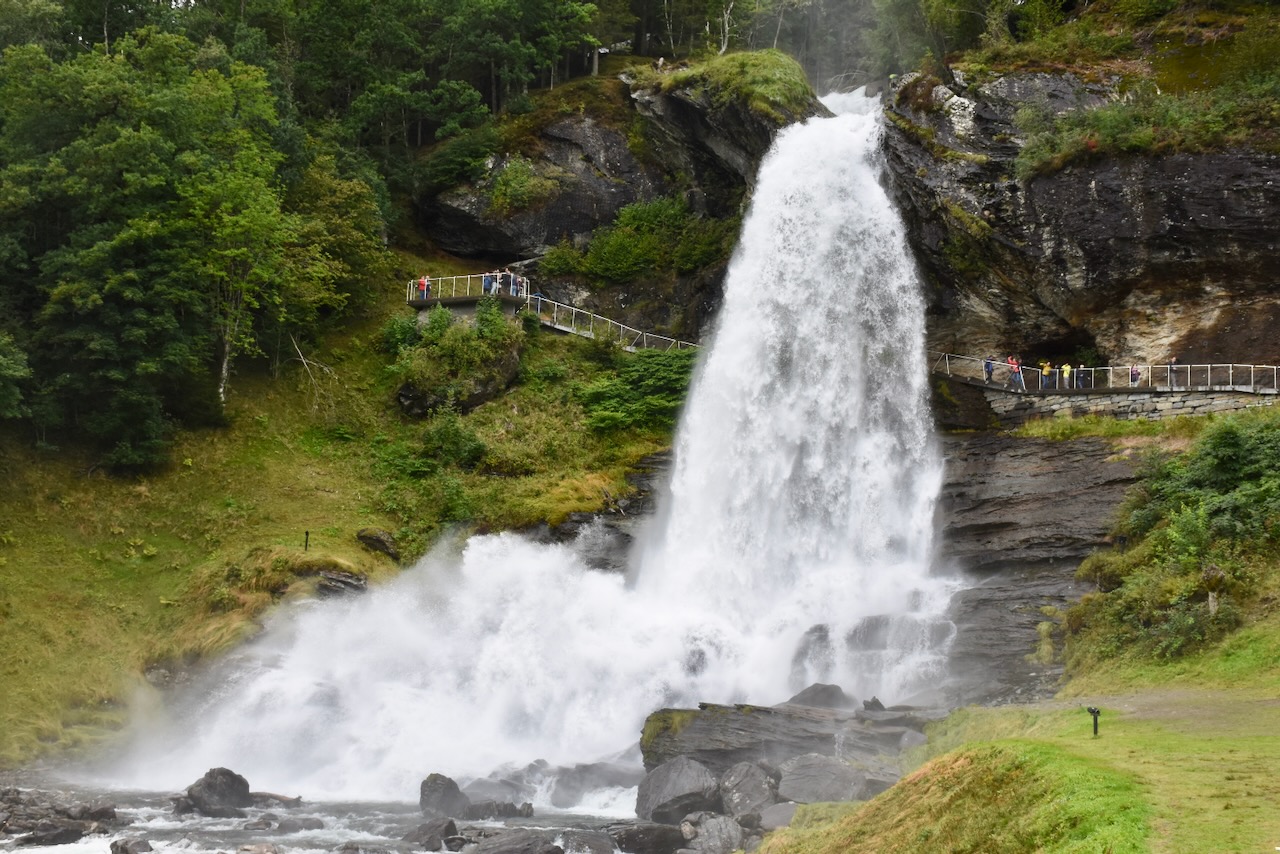
In May 2015, two landslides came down the mountainside at Boge here within days of each other. They buried both E16 and the Bergen Railway under tonnes of rock and debris. No one was hurt, but suddenly Norway's two largest cities were cut off from each other.
The problem was that when both road and rail are blocked, there's no good alternative. The detour through Hardanger adds hours to the journey. And 55 percent of all freight between Oslo and Bergen travels by rail, so within days Bergen was facing a logistics crisis. Goods simply weren't arriving.
NSB had to improvise. They came up with a solution never before used in Western Norway: "båt for tog" - boat for train. Passengers took the train from Bergen to Arna, then a bus to Garnes pier. From there, a speedboat carried them across the Sørfjord to Stanghelle, where another train waited to continue to Voss and beyond. The whole operation ran for several days while crews cleared the debris.
A local geologist, Trine Helle Simmenes, had actually written her master's thesis about this exact mountainside. She told NRK she wouldn't have kept the road open given the conditions - there was still heavy snow in the mountains and large amounts of rain forecast. She'd seen the warning signs days before.
These landslides became a turning point. Local politicians had been fighting for years to get a safer route, and now they had undeniable proof of the danger. Today, work has finally begun on the Fellesprosjektet Arna-Stanghelle - the largest transport infrastructure project in modern Norwegian history. Statens vegvesen and Bane NOR are building it together: almost 80 kilometres of new tunnels for both road and railway.
The new E16 will have four lanes from Arna to Trengereid and two lanes onward to Stanghelle - reducing 18 old tunnels to just three modern ones. The railway gets double track designed for 200 km/h, with two new tunnels: the 19-kilometre Arnatunnelen and the 8-kilometre Vaksdalstunnelen. New stations will be built at Vaksdal and Stanghelle. Where the tunnels run parallel, cross-passages connect them so people can evacuate from rail to road or vice versa in an emergency.
The price tag is around 40 billion kroner. Expected completion is 2039. Until then, this old road and single-track railway remain in use - and the mountains above still move from time to time.