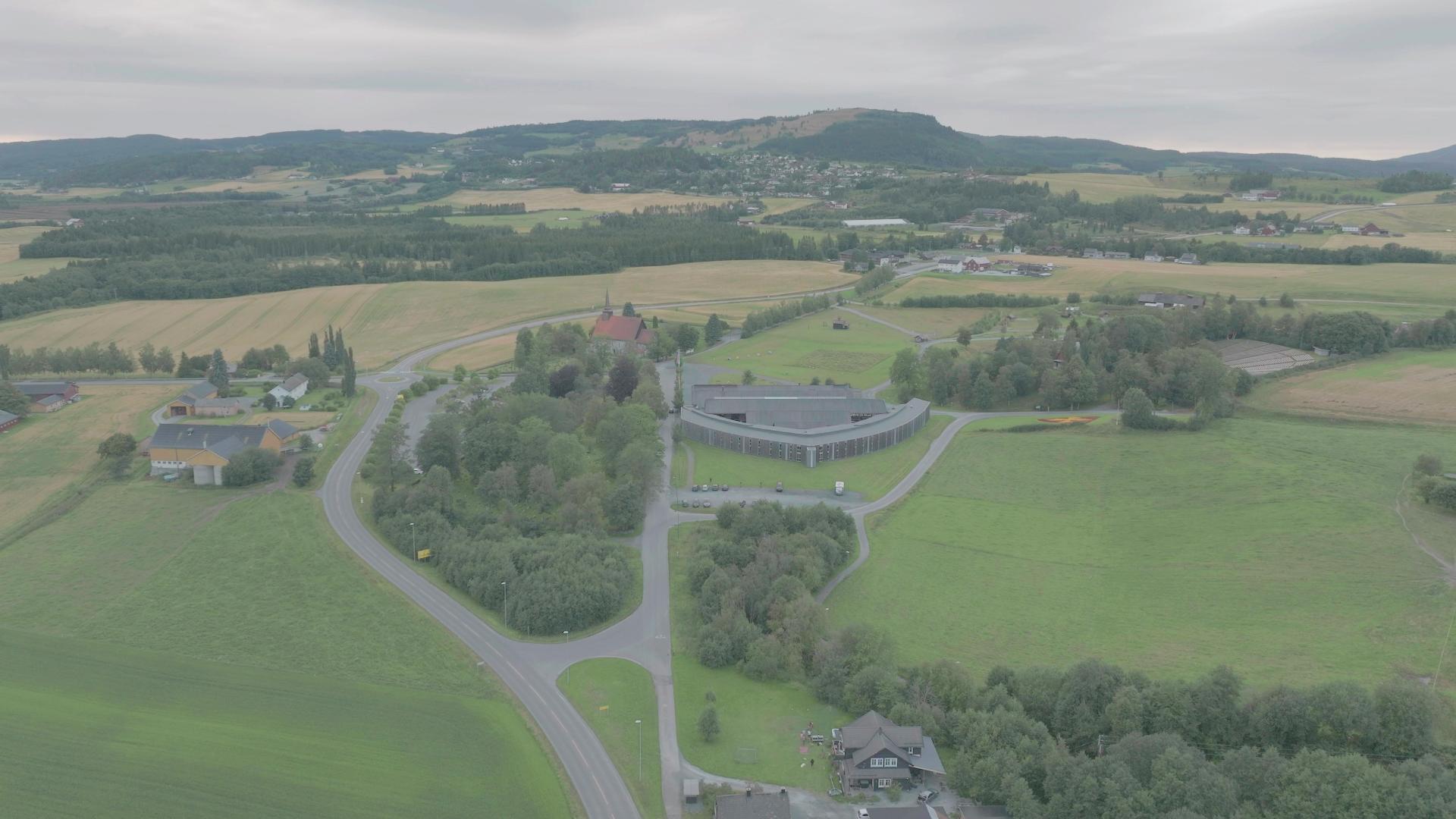
Deep in the Inndalen valley east of Verdal, a set of mountain galleries and a timber blockhouse guard the route from Sweden. The Værdalske Befestninger were built between 1908 and 1913, just a few years after Norway's independence from Sweden in 1905, when a Swedish invasion through the mountain passes was considered a real possibility.
The plan was straightforward: delay an advancing army long enough for Norwegian forces to mobilize. The northern gallery alone stretches 90 metres straight into the mountainside, with positions for two cannons and five machine guns. Together, the north and south galleries contain nearly 200 metres of tunnels. Further down the valley at Vaterholmen, a wooden blockhouse completed the defensive line.
The fortifications were never tested in the conflict they were designed for. By the time war came to Norway in 1940, it arrived from the sea and air, not overland from Sweden. The mountain galleries are currently closed for safety work, but the blockhouse at Vaterholmen is open to visitors. The site is managed by Forsvarsbygg, the Norwegian Defence Estates Agency.
The plan was straightforward: delay an advancing army long enough for Norwegian forces to mobilize. The northern gallery alone stretches 90 metres straight into the mountainside, with positions for two cannons and five machine guns. Together, the north and south galleries contain nearly 200 metres of tunnels. Further down the valley at Vaterholmen, a wooden blockhouse completed the defensive line.
The fortifications were never tested in the conflict they were designed for. By the time war came to Norway in 1940, it arrived from the sea and air, not overland from Sweden. The mountain galleries are currently closed for safety work, but the blockhouse at Vaterholmen is open to visitors. The site is managed by Forsvarsbygg, the Norwegian Defence Estates Agency.