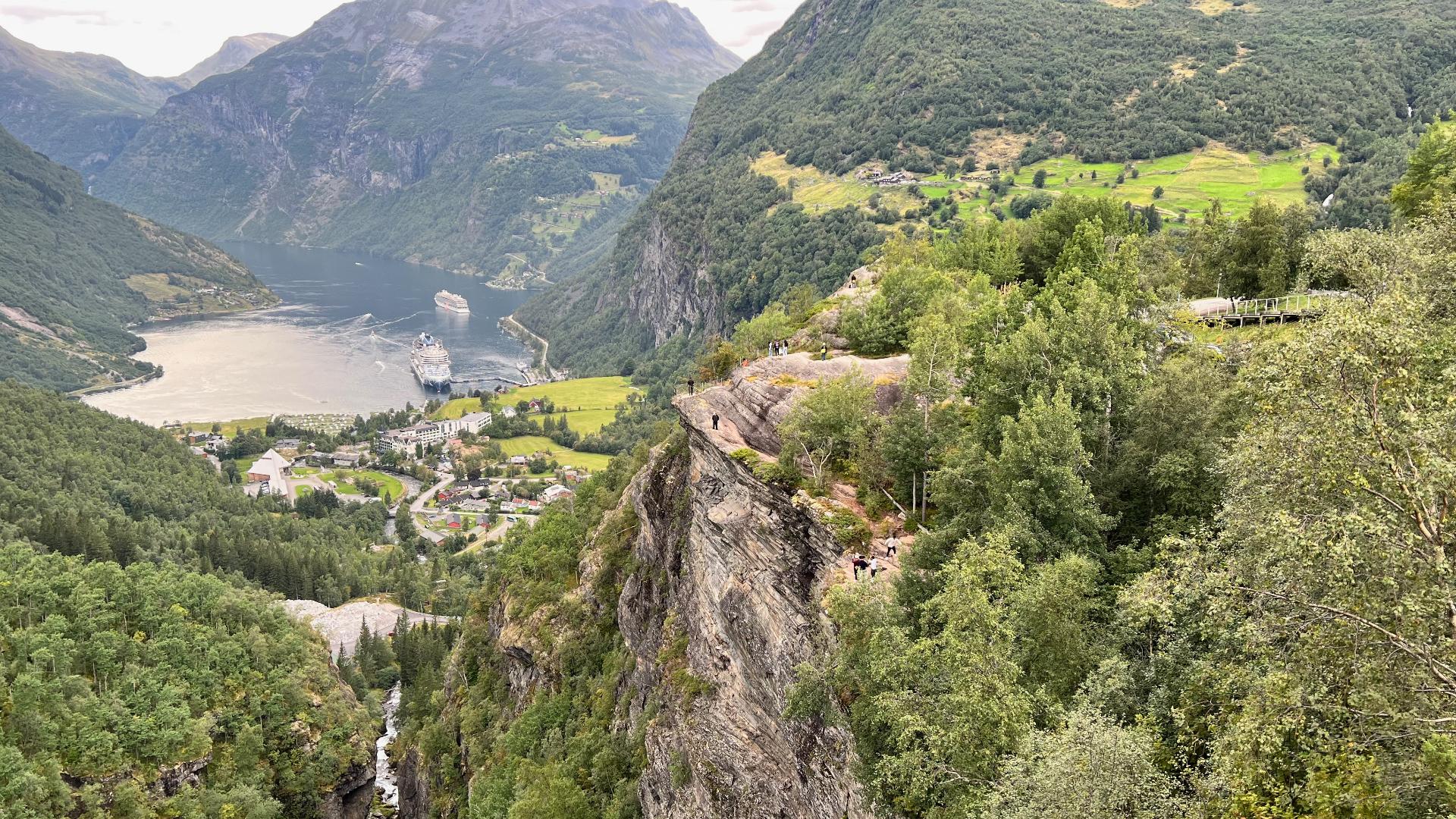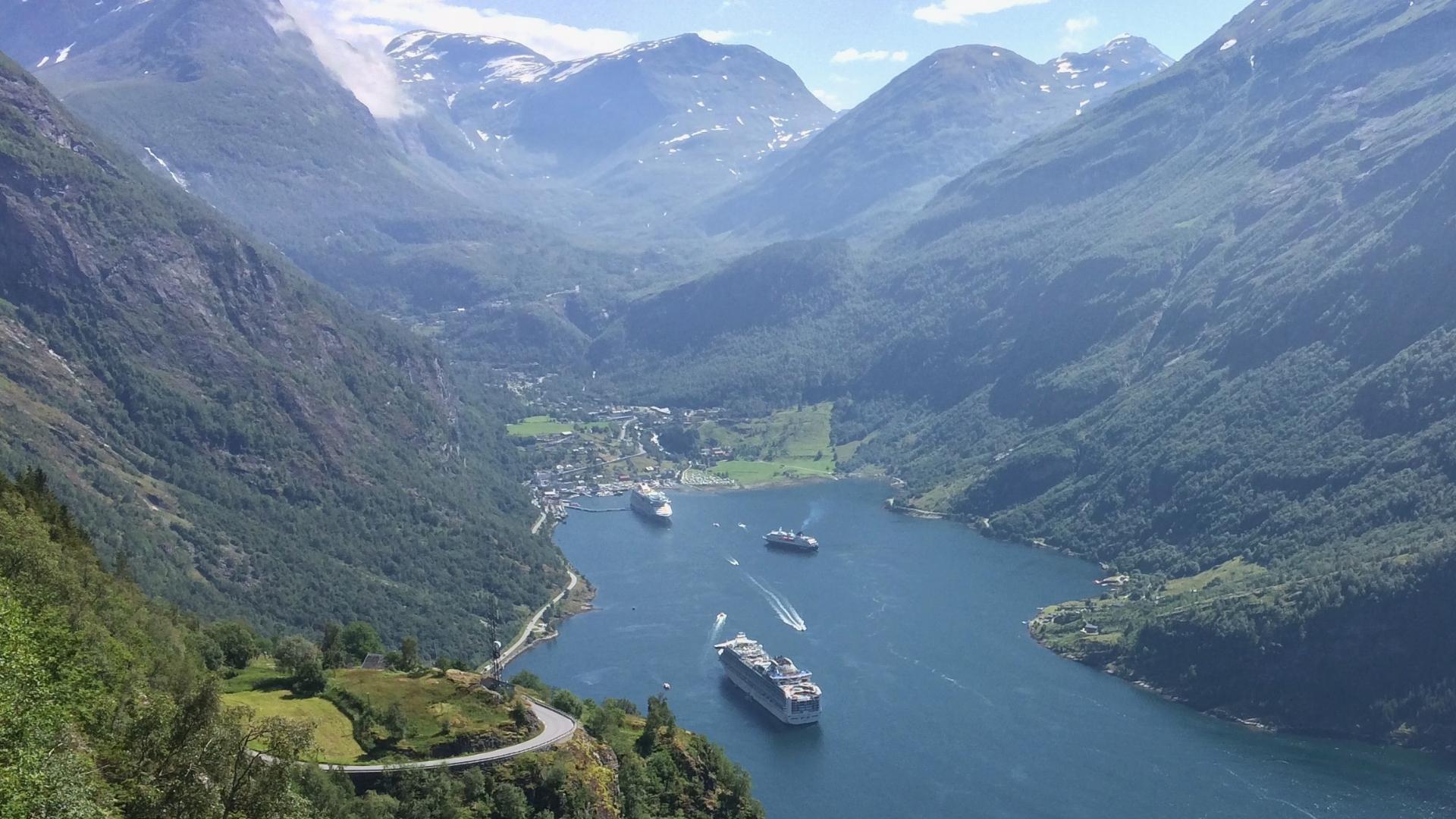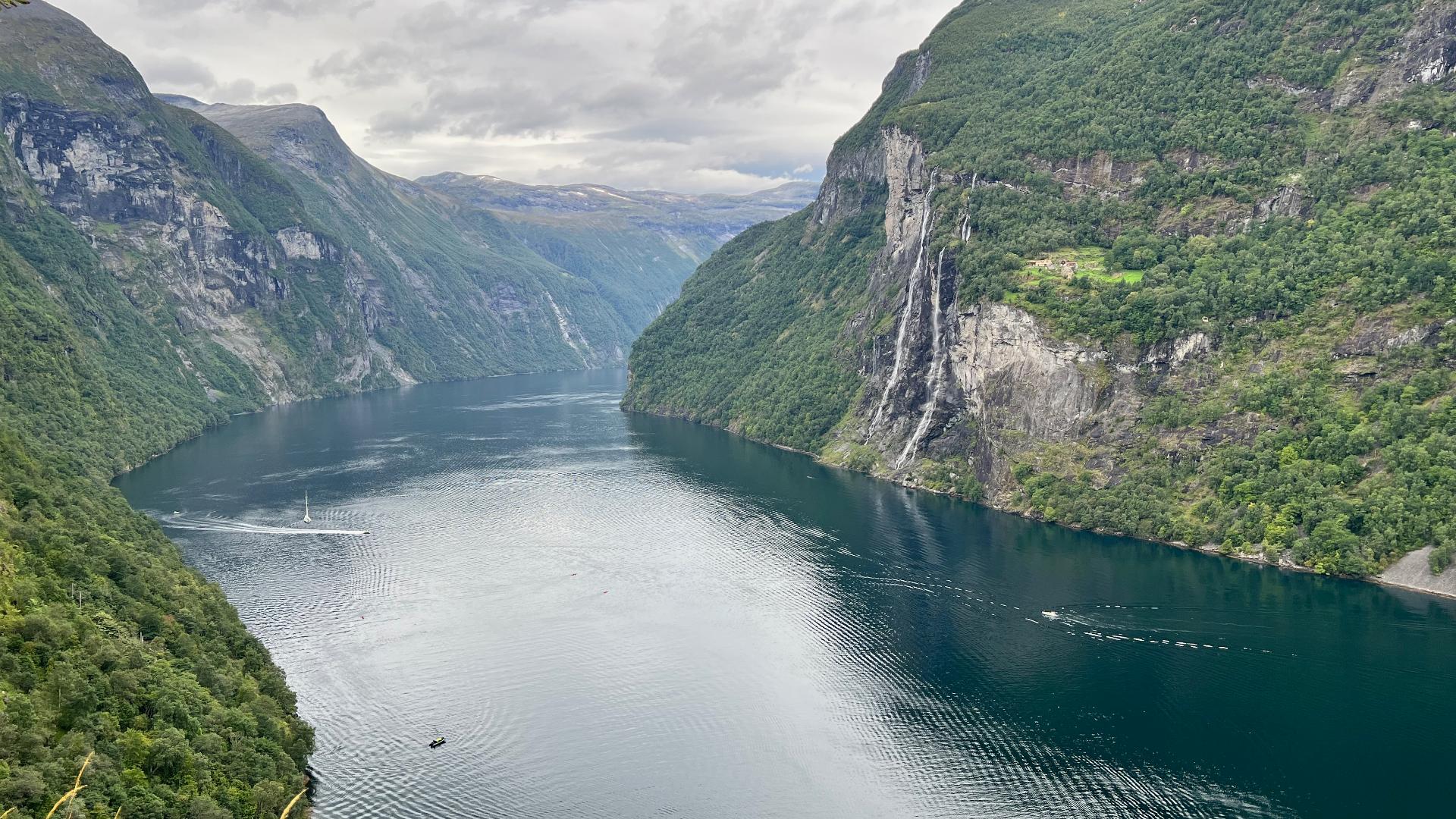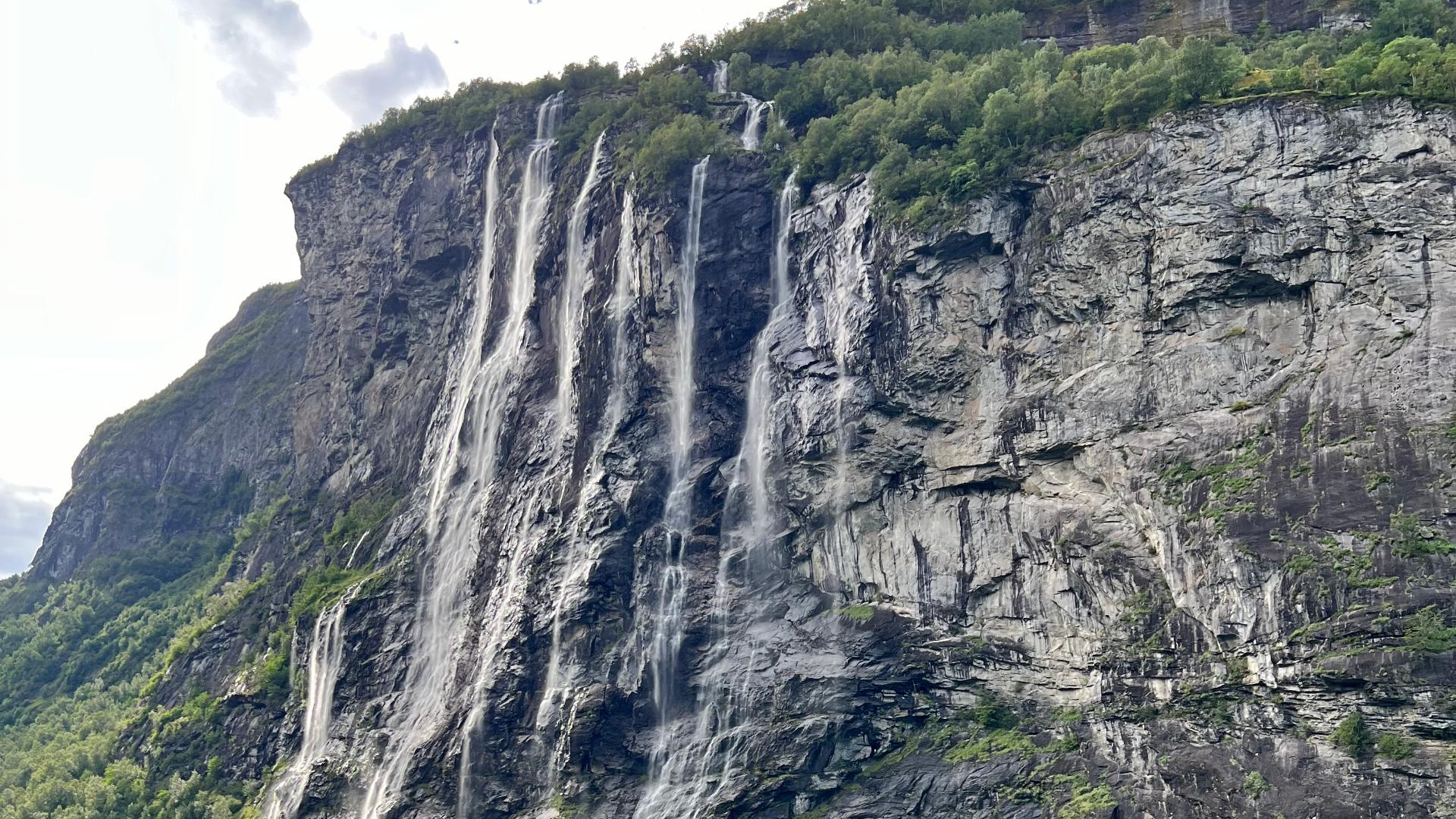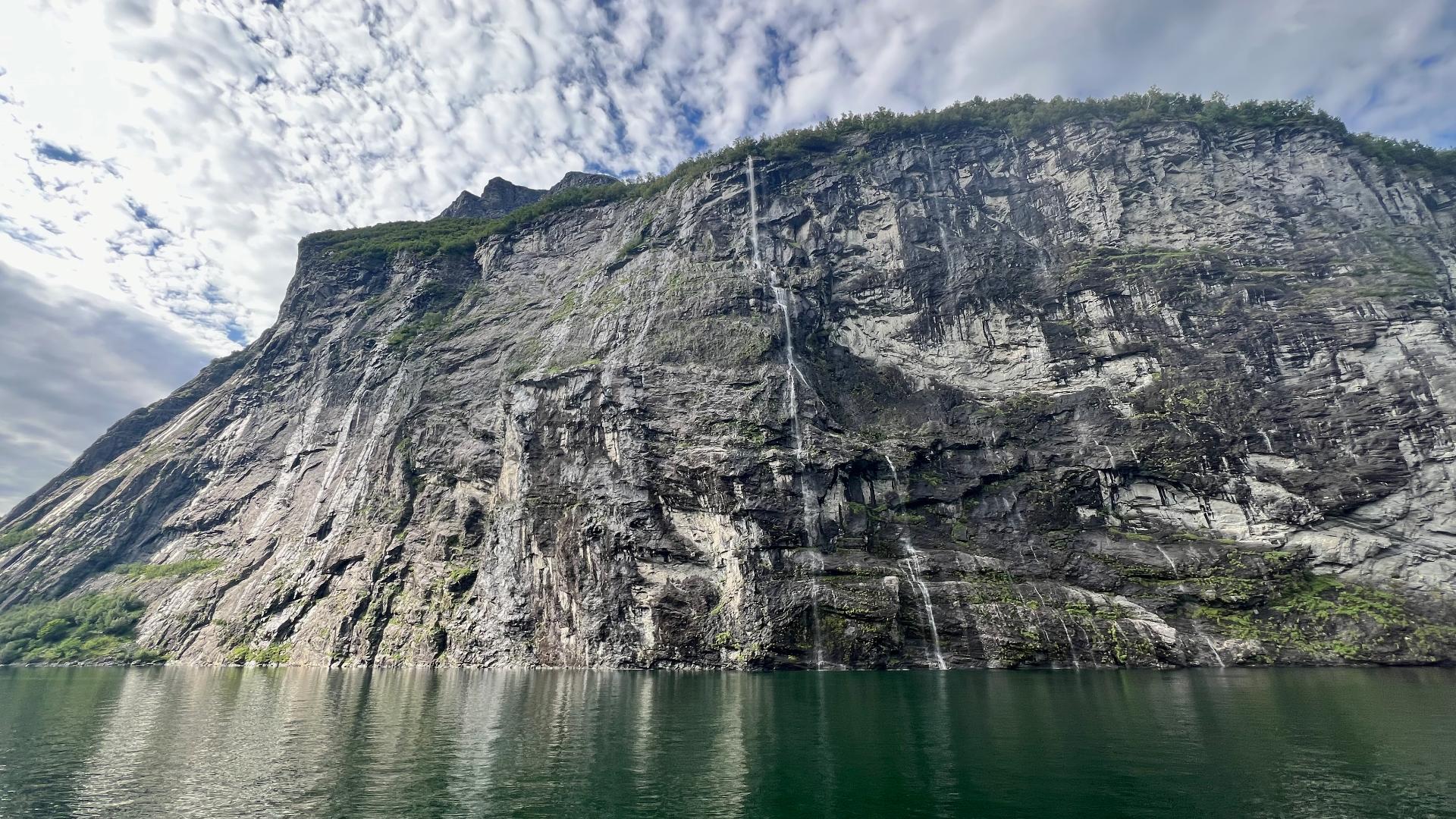
Dalsnibba is the mountain above Geiranger, and the road to the top gives you what is often called Europe's highest fjord view from a road. At 1,500 metres above sea level, you look straight down at the Geirangerfjord, the village, the cruise ships, and the surrounding mountains. On clear days you can also see the Blåbreen glacier.
The idea of building a road up here goes back to 1857, when a civil engineer named Hans Hagerup Krag was surveying a route over the Geiranger mountains. He had studied Swiss mountain roads and thought a road to the summit would be possible. Krag was no ordinary engineer. He went on to become the director of the entire Norwegian road system, heading the Directorate of Public Roads from 1874 to 1903. He also co-founded the Norwegian Mountain Touring Association, DNT, together with Thomas Heftye in 1868. If you have driven up to Holmenkollen in Oslo, you may have passed the Kragstøtten, a memorial to him at Voksenkollen. So the man behind the original Dalsnibba idea was one of the most important people in Norwegian road and mountain history. But his Dalsnibba vision was ahead of its time, and nothing happened for another fifty years.
In 1907 a local organisation called Geiranger Skysslag was formed. Their purpose was to develop transport and tourism in the area. They are still the owners of the road today. But it took another thirty years before construction actually started.
Work began in June 1937 with a workforce of fifty men. Many of them had just come from building the Trollstigen road, which opened in 1936, so they knew how to build mountain roads. Despite the difficult terrain, the road was finished by autumn 1938. But then the war came, and the official opening had to wait until 18 July 1948, when Transport Minister Nils Langhelle cut the ribbon. The first tourist ship after the war, the Stella Polaris, happened to arrive in Geiranger the same day.
What makes this remarkable is that Geiranger didn't even have year-round road access at the time. The road up the mountain existed seventeen years before there was a proper road to the village itself.
The toll road is called Nibbevegen. It branches off County Road 63 at the lake Djupvatnet, where the toll booth is located at Djupvasshytta. From there it is about 5 km to the summit. The road climbs roughly 450 metres with an average gradient of 9 to 10 percent, and a maximum of 14 percent in the steepest sections. There are 11 hairpin bends.
The road was originally gravel, but it was fully paved in the summer of 2013. Most of it is now two lanes wide with safety barriers on the exposed sections. It takes about 15 minutes to drive up without stopping, though you will probably want to stop, especially if you come early in the season when the snow walls along the road can be several metres high.
Djupvatnet itself is worth a look. It's a glacial lake at about 1,030 metres elevation. It's frozen for most of the year, and you can often see ice on it even in July and August. The water drains eastward and is actually part of the Otta river system, which eventually reaches the Glomma. So the rain that falls here ends up in the Oslofjord, not in the Geirangerfjord below.
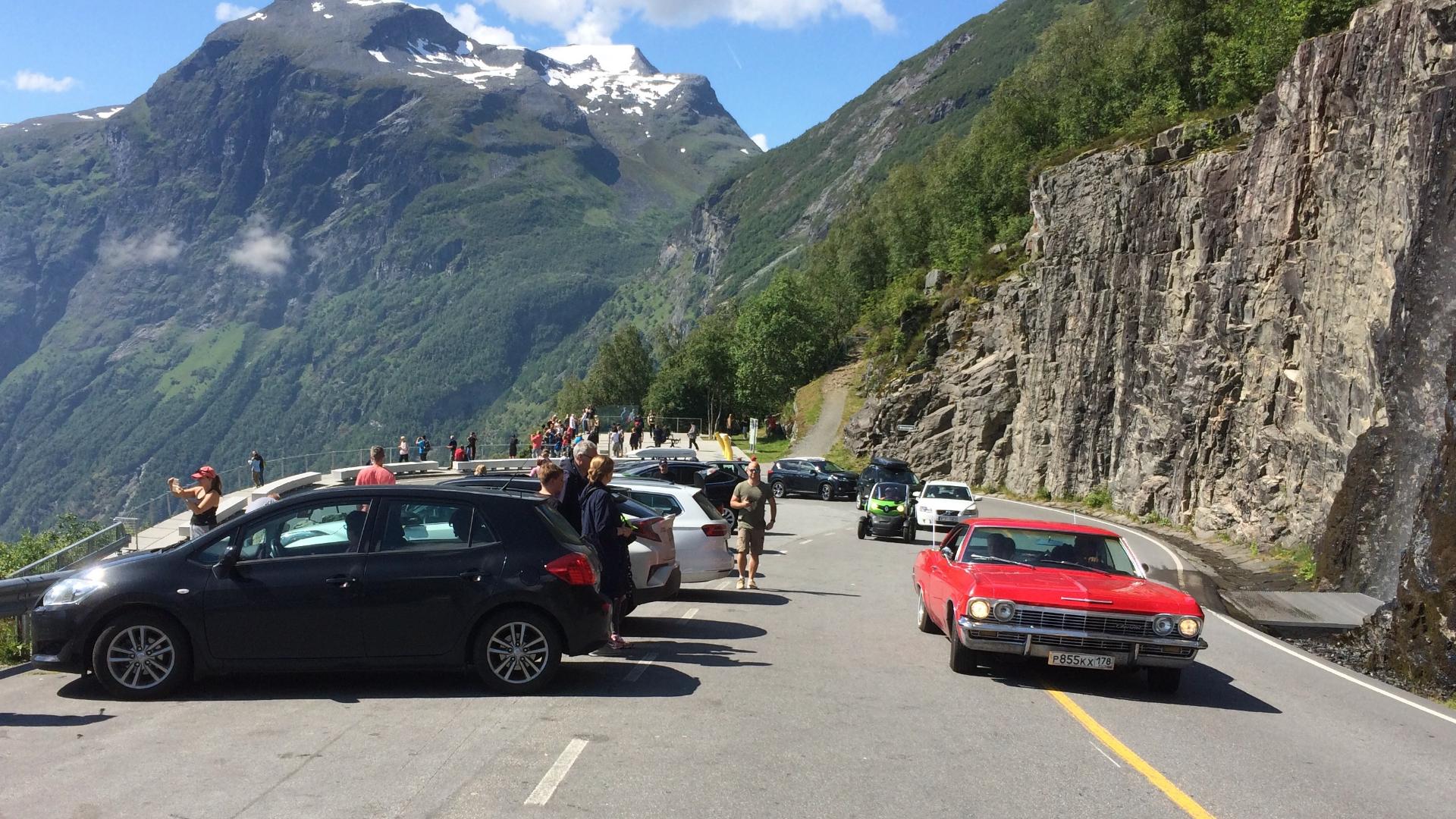
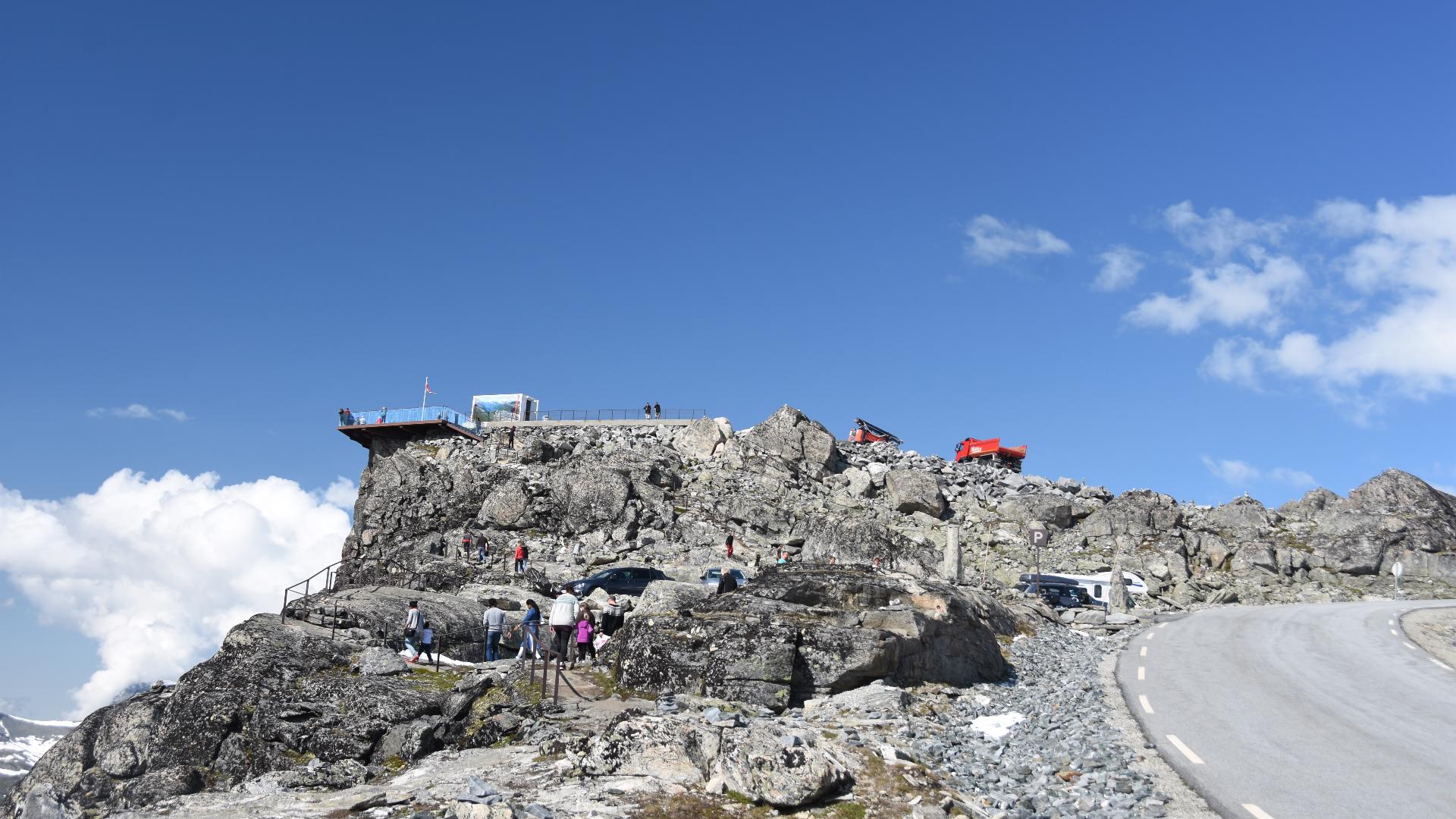
At the top there is a large car park and the Geiranger Skywalk viewing platform, which opened in August 2016. It's a cantilevered platform with a glass guard rail and an iron grid floor. It goes more or less straight down on the view side, about 500 metres to the valley floor. There is no entrance fee for the platform itself beyond the toll road charge.
The building at the top was originally built in 2004 with a small shop and toilets. It was significantly expanded in 2022 to about 500 square metres and is now called Geiranger Skyhouse. There is a café, a shop and a function room. The whole area is wheelchair accessible.
The toll is currently around 330 to 350 NOK per car. The price has gone up a lot in recent years. In 2021 it was 170 NOK. You can pay by card or cash at the toll booth, or buy in advance online. If you are cycling, you can pass the barrier without paying.
The road is open from late May to late September or early October, depending on snow conditions. The café and shop are open from 09:30 to 18:00 during peak season, mid-June to mid-August, and from 09:30 to 17:00 outside that window.
Be aware that the weather up here can change very quickly. It's entirely possible to have sunshine at the fjord and fog at the summit, or the other way around. Bring warm clothes even in summer. Snow is present for most of the season, typically only fully melted in July and August.
Over 200,000 people visit Dalsnibba each year. A large share of them are cruise ship passengers who come up by bus. If you want to avoid the crowds, try early morning or later in the afternoon. You can check the Flåm Port Authority website to see when cruise ships are docking in Geiranger.