 Very Easy
Over 17,000 posts on Instagram. Travel blogs call it a hidden gem. But 150 years ago, Bondhusvatnet was already one of Norway's most famous tourist destinations. Only back then, people did not come for the lake. They came for the glacier.
English tourists discovered this valley in the mid-1800s. Hotel Sundal opened in 1889 to receive them. The tourists arrived by ship in Sundal, were carried on horseback up to the Bondhusbreen glacier, and then pulled across on horse-drawn sledges to Odda on the other side. Their ships sailed around the peninsula to pick them up there. In 1893 a cabin called Breidablikk was built right at the edge of the ice, stocked with beer and wine for those making the crossing. It is said to be Norway's first self-service tourist cabin.
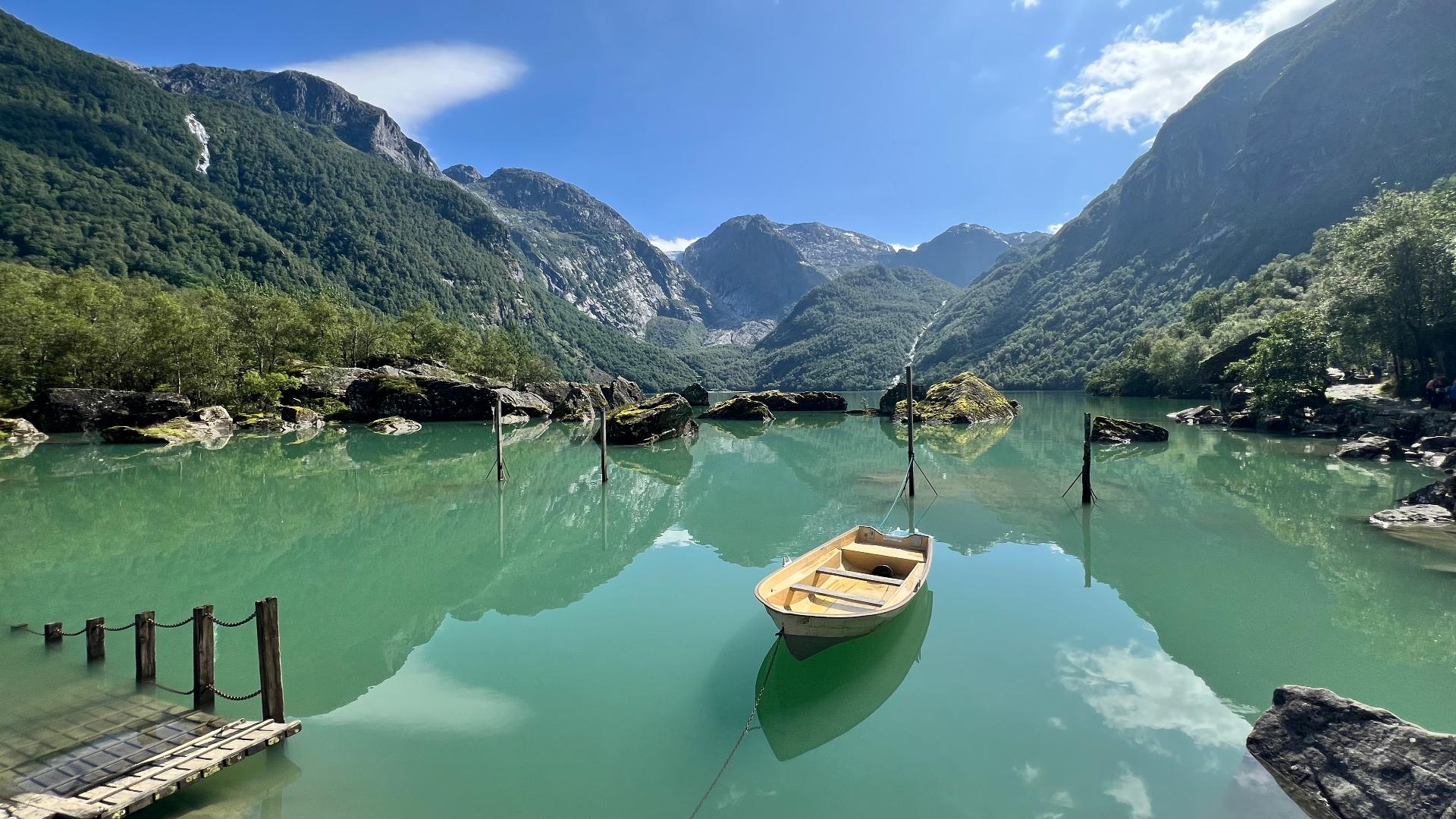
After the glacier retreated, tourists stopped coming. For decades, hardly anyone came here. Then one photo on social media changed everything. Not a photo of the glacier. A photo of the lake. One angle, one composition. And suddenly thousands of people drive here every summer to stand in that exact spot.
From road 550 along the Hardangerfjord, it is a short drive up the valley to the car park. Parking costs 100 kroner, paid at the automat. The walk is 2.5 kilometres on a wide gravel road, flat and easy. Suitable for strollers and wheelchairs. About an hour there and back. The road is called Isvegen, the Ice Road. It was built in 1863, not for tourists, but for transporting blocks of ice from the glacier down to the fjord. The ice was shipped to Europe. The business failed because it kept melting during transport. But the road is still here.
A serious warning about the river Bondhuselva that runs alongside the path. The current is strong, especially during high meltwater. In August 2024, a 13-year-old tourist fell in near the lake and did not survive. Stay away from the water's edge.
The glacier today is a white patch high up on the mountain. Between 2022 and 2023 alone, it retreated 92 metres. Walking past the lake to where the glacier used to be leads to a moraine, a pile of rocks. It is not really worthwhile anymore. If you actually want to see the glacier properly, there is a 10-hour black-rated mountain hike climbing 1,400 metres to the Fonnabu DNT cabin. That is the same category as Trolltunga.
Bondhusvatnet is a source of drinking water. Bathing in the lake is not allowed, and camping must be at least 50 metres from the water.
English tourists discovered this valley in the mid-1800s. Hotel Sundal opened in 1889 to receive them. The tourists arrived by ship in Sundal, were carried on horseback up to the Bondhusbreen glacier, and then pulled across on horse-drawn sledges to Odda on the other side. Their ships sailed around the peninsula to pick them up there. In 1893 a cabin called Breidablikk was built right at the edge of the ice, stocked with beer and wine for those making the crossing. It is said to be Norway's first self-service tourist cabin.
After the glacier retreated, tourists stopped coming. For decades, hardly anyone came here. Then one photo on social media changed everything. Not a photo of the glacier. A photo of the lake. One angle, one composition. And suddenly thousands of people drive here every summer to stand in that exact spot.
From road 550 along the Hardangerfjord, it is a short drive up the valley to the car park. Parking costs 100 kroner, paid at the automat. The walk is 2.5 kilometres on a wide gravel road, flat and easy. Suitable for strollers and wheelchairs. About an hour there and back. The road is called Isvegen, the Ice Road. It was built in 1863, not for tourists, but for transporting blocks of ice from the glacier down to the fjord. The ice was shipped to Europe. The business failed because it kept melting during transport. But the road is still here.
A serious warning about the river Bondhuselva that runs alongside the path. The current is strong, especially during high meltwater. In August 2024, a 13-year-old tourist fell in near the lake and did not survive. Stay away from the water's edge.
The glacier today is a white patch high up on the mountain. Between 2022 and 2023 alone, it retreated 92 metres. Walking past the lake to where the glacier used to be leads to a moraine, a pile of rocks. It is not really worthwhile anymore. If you actually want to see the glacier properly, there is a 10-hour black-rated mountain hike climbing 1,400 metres to the Fonnabu DNT cabin. That is the same category as Trolltunga.
Bondhusvatnet is a source of drinking water. Bathing in the lake is not allowed, and camping must be at least 50 metres from the water.