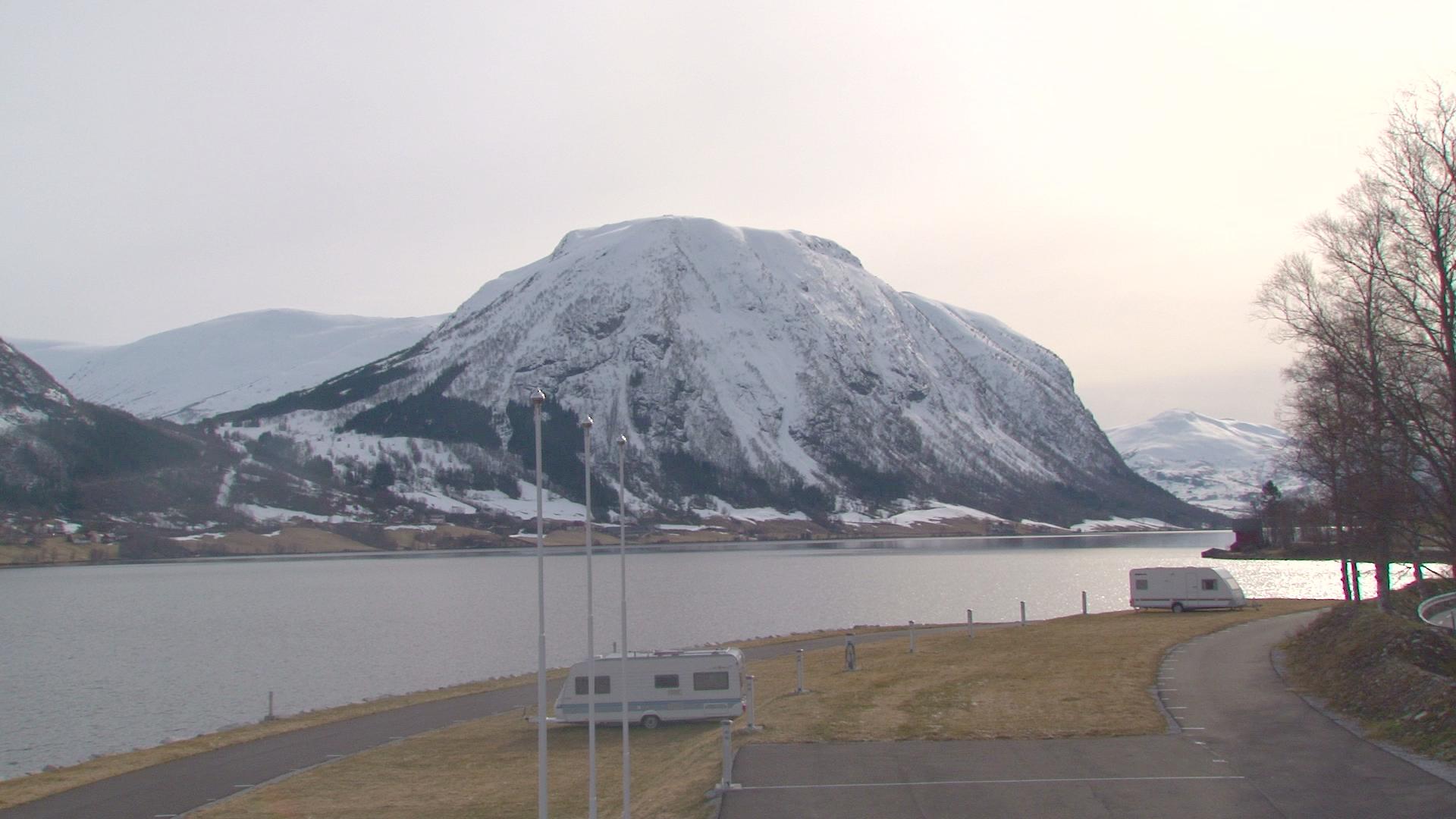
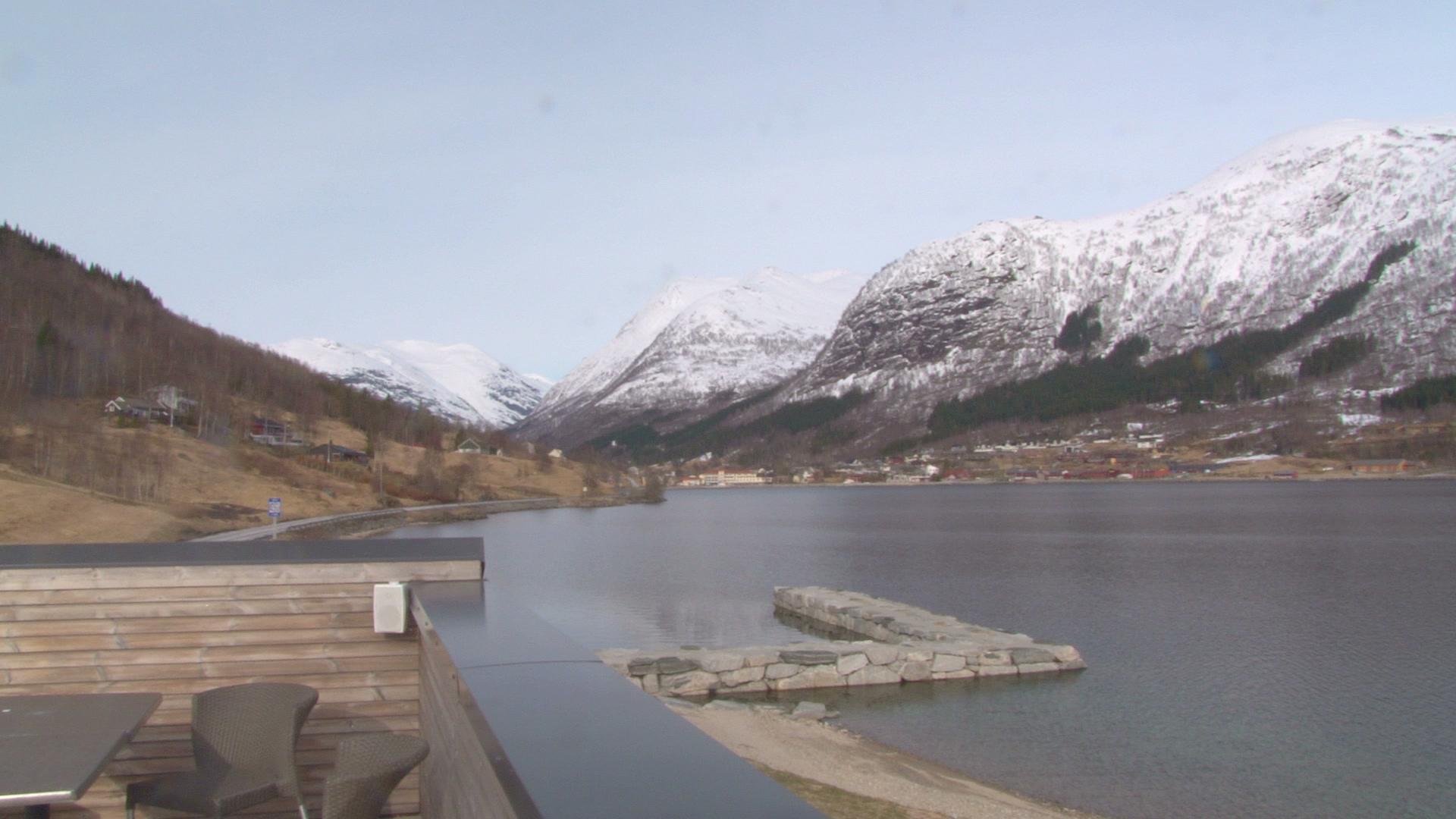
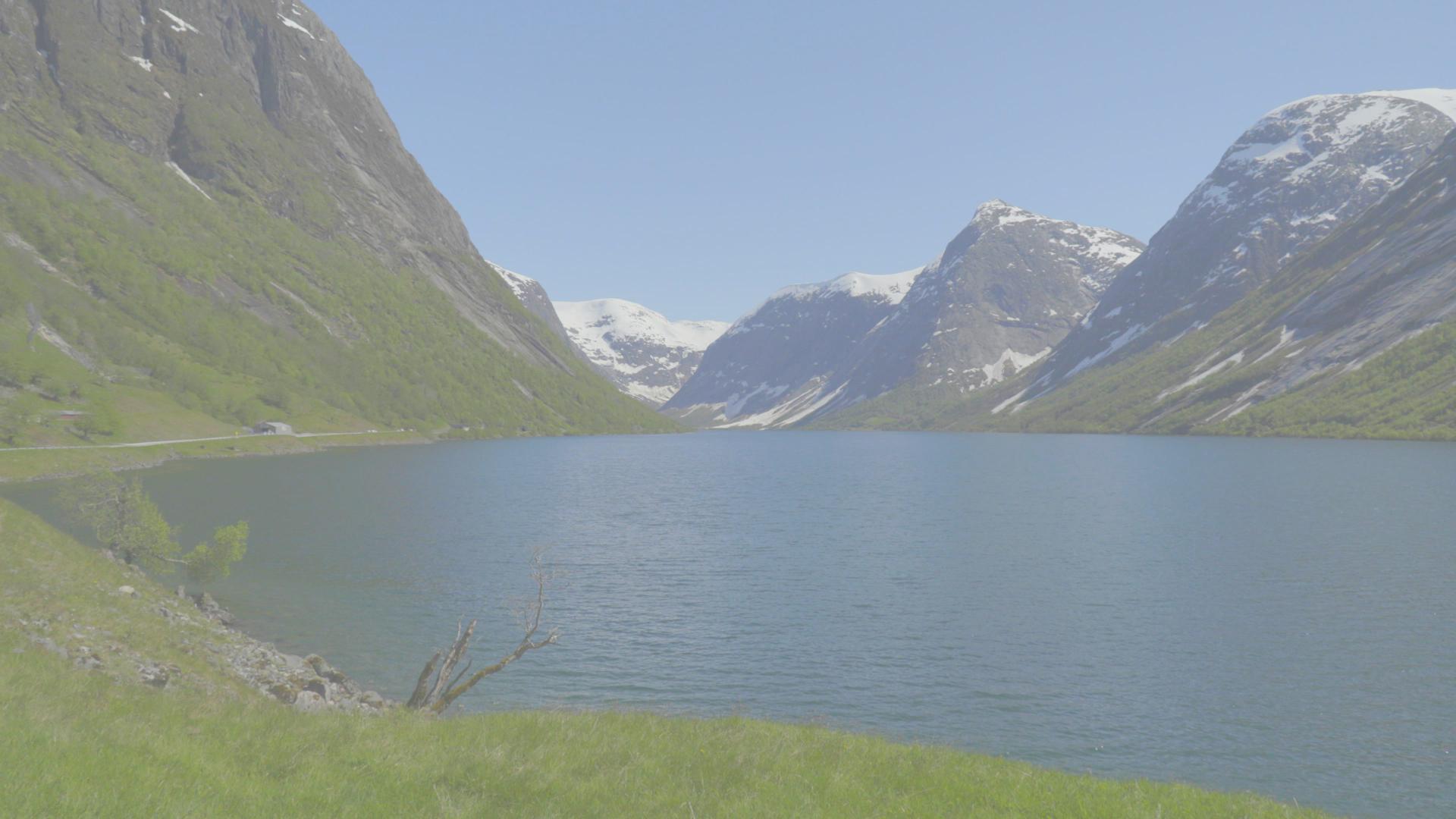
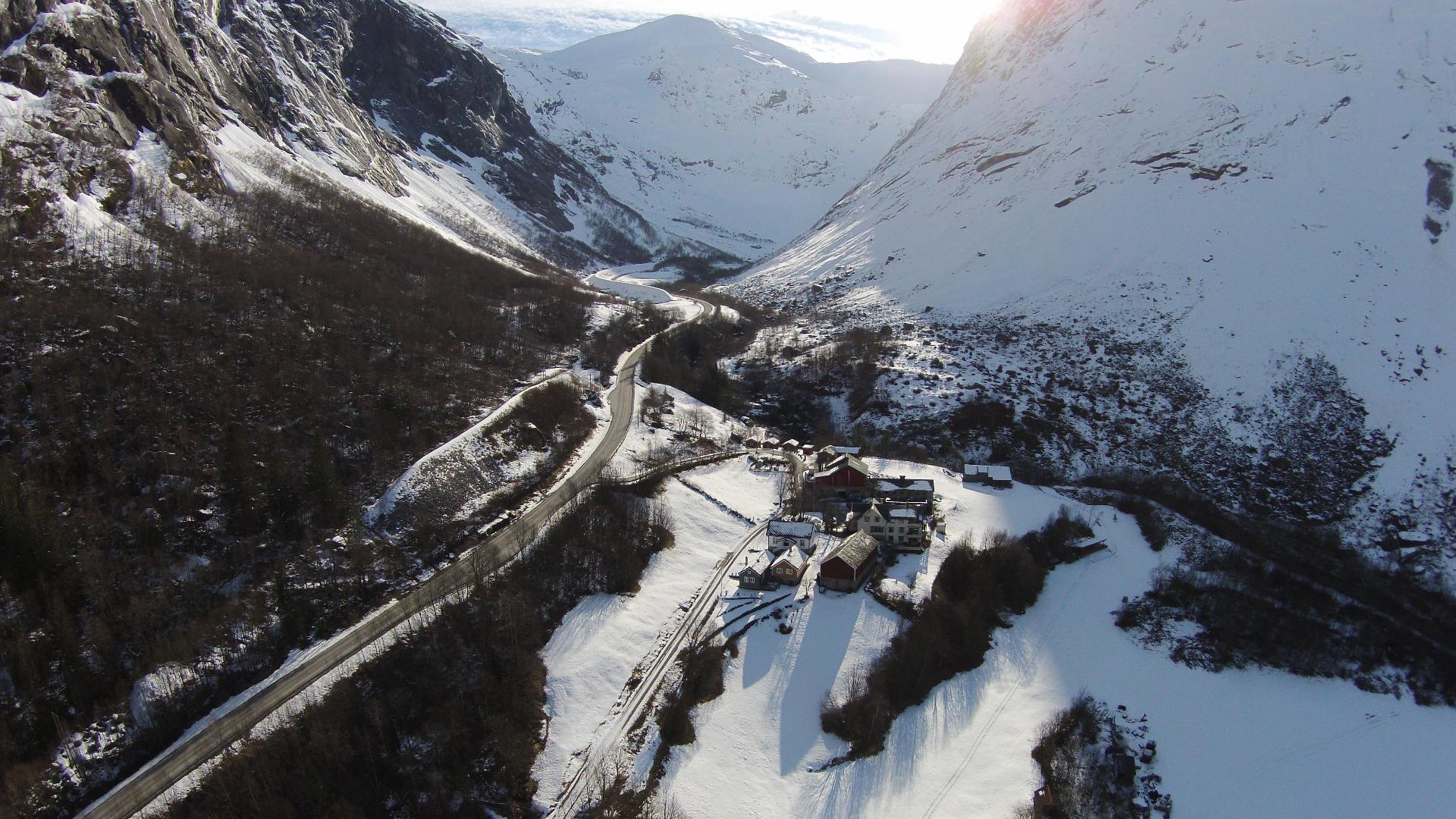
Astruptunet is the former home of Nikolai Astrup, the painter many Norwegians consider second only to Edvard Munch. The site sits on a steep hillside on the south shore of Jølstravatnet, at a place called Sandalstrand. Today it is a museum you can walk around.
A note on the name: this Astrup has nothing to do with the Astrup Fearnley contemporary art museum in Oslo. That museum was founded in 1993 by the shipowner Hans Rasmus Astrup, from a completely different family branch. The painter and the collector share a common Norwegian surname, not a bloodline.
Astrup bought the old homestead in 1912 and moved in with his family in early 1913. The buildings were falling apart, there was no road, and small landslides were a regular problem. Over the next fifteen years he built a proper access road, put up several new houses and a studio, and planted the garden that still grows around the courtyard. He died in 1928 at the age of 47.
Jølster municipality bought the property in 1965, while his widow Engel still lived there. The museum opened to the public in 1986 and was merged into Sogn og Fjordane Kunstmuseum in 2004.
The houses are kept as Astrup lived in them. The landscape he painted over and over is still right there, and in many cases almost unchanged. If you know his work, the experience of standing where he stood is unusual.
A note on the name: this Astrup has nothing to do with the Astrup Fearnley contemporary art museum in Oslo. That museum was founded in 1993 by the shipowner Hans Rasmus Astrup, from a completely different family branch. The painter and the collector share a common Norwegian surname, not a bloodline.
Astrup bought the old homestead in 1912 and moved in with his family in early 1913. The buildings were falling apart, there was no road, and small landslides were a regular problem. Over the next fifteen years he built a proper access road, put up several new houses and a studio, and planted the garden that still grows around the courtyard. He died in 1928 at the age of 47.
Jølster municipality bought the property in 1965, while his widow Engel still lived there. The museum opened to the public in 1986 and was merged into Sogn og Fjordane Kunstmuseum in 2004.
The houses are kept as Astrup lived in them. The landscape he painted over and over is still right there, and in many cases almost unchanged. If you know his work, the experience of standing where he stood is unusual.